Category Archives: 1960s

Posts are listed in chronological order based on date of posting – newest posts first.

Ski Club

In 1964, Bert learned of an opportunity to secure fill removed for the construction of the Spadina Expressway. The fill was essentially free and created yet another source of revenue โ€“ this time during the winter months.

An aerial shot showing the fill after delivery in 1964:

Photos from the top of the hill after fill was delivered (in foreground):

After the fill was in place. Winter 1964:

An aerial photo from 1966 showing the ski lift:

In 1965, a ski lift was added and operations began.ย  The tow motor was housed in a building (below) that was later was used as the Photography Hut.

Here is a video from 1965 showing the first year of operation:

Thanks to Jon Fine for the original 8mm film.

In order to serve patrons, a temporary building was used as a โ€œPro Shopโ€:

Snow-making equipment was also used:

The program was run as a private โ€œclubโ€ due to zoning regulations, but anyone could join.


Below are several items from The Toronto Star pertaining to the new Ski operations at Forest Valley:

February 26, 1965:

feb261965hill

February 1, 1965:

A Ski Report listing conditions for Forest Valley. February 24, 1966:

feb241966-2

Globe & Mail – November 1966:

An invitation to students to visit Forest Valley on a school holiday.  February 24, 1966:

The operation of the ski hill was not popular with the local residents. Among their concerns was the noise produced by the tow motor at the base of the hill. A challenge was brought against the operation in 1966. After much wrangling, he prevailed. The situation is described in the article below.

Despite this victory, the ski operation continued to be a sore spot with the neighbours and it was stopped in the early 1967.

Thereafter, the land at the top of the hill was sold for development. Bert continued to own several lots at the top of the hill until the late 1990โ€™s.

Camp Towels

Forest Valley provided clean white towels to campers for each swim – twice daily.  Keeping these towels clean was a major endeavour.  Laundry trucks made twice-daily visits to pick up and return towels.  

Towels were given to campers before each swim and were to be placed into steel baskets after use.  (below)

The maintenance staff collected the towels from the various locations and placed them into large bins for pick-up.

Brighton and Admiral were the laundry services used during the 70s and 80s:

 Original towel design. 1960’s:


Second towel design. 1970’s and 1980’s:


Third towel design. 1990’s:


The Terrace

The Terrace

Newly constructed auditorium and office in 1964.ย  The office window would be replaced by a door and a full kitchen installed to prepare food for the Swim/Weekend Club. The building was out-of-bounds during camp and was largely unused from the 80โ€™s onward.

Arts & crafts in front of the โ€œThe Terraceโ€.  Notice door instead of window.

All of the kitchen supplies were moved into two storage closets built on either side of the stage in the auditorium and remained there until camp closed.

Mini-Golf

The mini-golf course was located south of A-Frame 1.

The site of the mini golf course prior to construction in 1960 (similar angle):

The photo below is taken from the opposite direction to the one above – after the course was built:

Below, campers and staff prepare for work on the mini-golf course by digging sample trenches.  It will be built on the other side of the fence to the left. ca. 1961

JK-1981
JK-1981
1990
ca. 1983
page 6

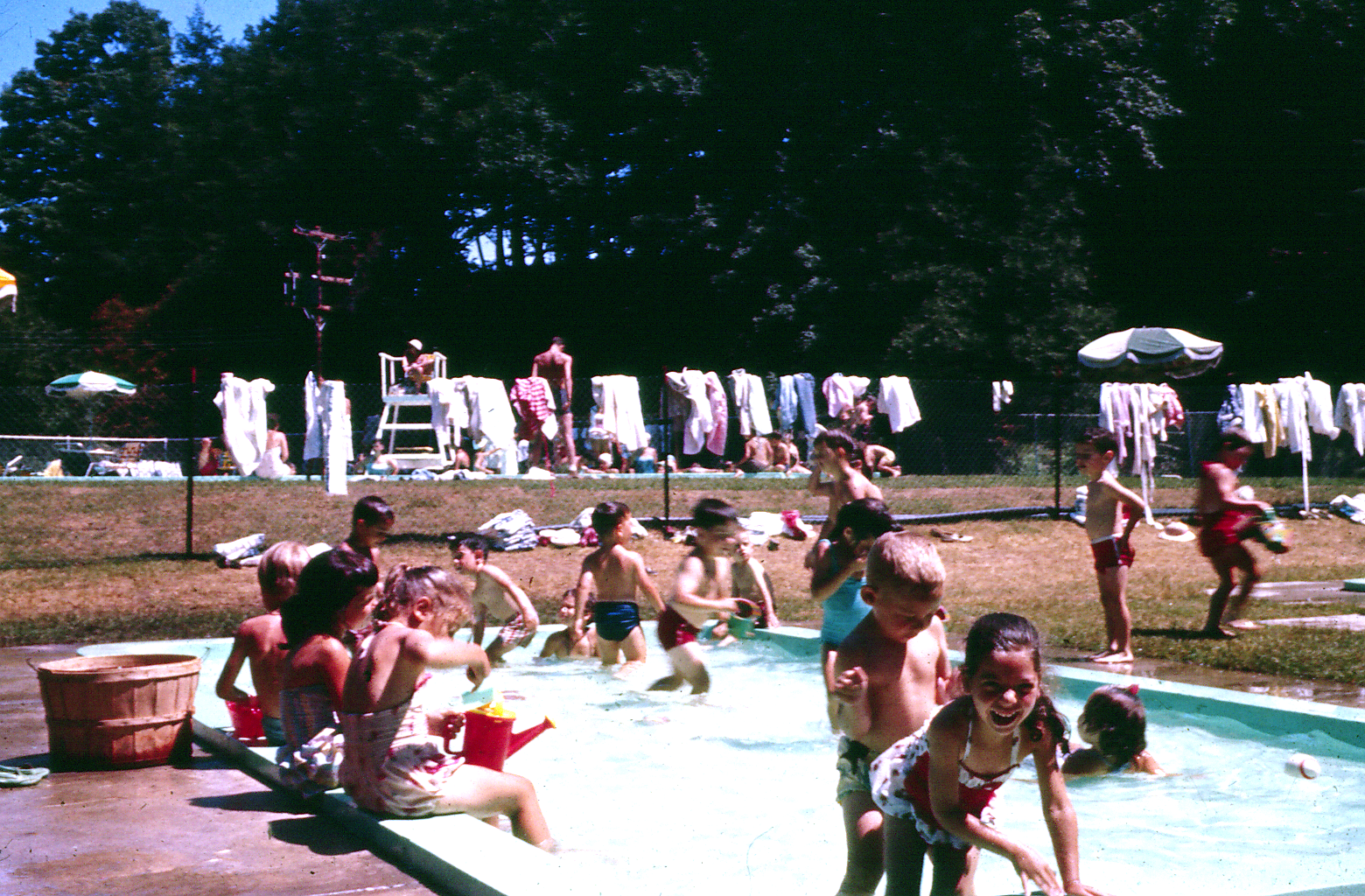
The T-Pool

Dimensions: 70′ x 60′

Built in 1964, the design was based on another pool:

The photo below was taken in 1961:

Dimensions:

Filtration:

(From David Morrison) The T-Pool water was kept clear by a diatomaceous earth filter housed underground, below the T-Pool Locker Room. The filter had to be backwashed, generally twice daily, and a new application of diatomaceous earth applied each time. During my tenure at the camp, it was mostly me or Dominic who performed this function.

Unfortunately, no one at the time fully understood the dangers of inhalation associated with crystalline diatomaceous earth (which, while not asbestos, is an asbestos-like substance), so we didnโ€™t wear masks to prevent it. In todayโ€™s environment, doing that kind of work without a mask would be unheard of. I shudder to think of how much of that stuff we inhaled. Fortunately, the summer was only 60-some-odd days long, so I doubt that any permanent harm was done to either of us, although the damaging effects are cumulative, since the fibres never really leave oneโ€™s system. In any event, whaddaya gonna do?

TRIVIA: The first people to swim in the T-Pool were  Ellen (Eli) Sobel, Jeff Levy, Jackie Sugarman, Janice Langer and Myrna Mosoff.

See also:

Cabin Photos

1950s

1960s

1970s

1980s

1990s

Staff Group Photos

Boat Races on the River

Before After Dam
1961-river

Boat races on the river. 1961. Before the G. Ross Lord Dam was built – just north of camp – the level of the river changed regularly with the rainfall.   When water levels were low, the river was accessible for activities like the one seen here.  After storms, the river would run very fast and very high and signs were posted warning campers and staff to stay away. After the dam was built in 1973, the water level was kept consistently higher and the river essentially became off limits to camp activities. The following aerial photos show camp before and after construction of the G. Ross Lord Dam:

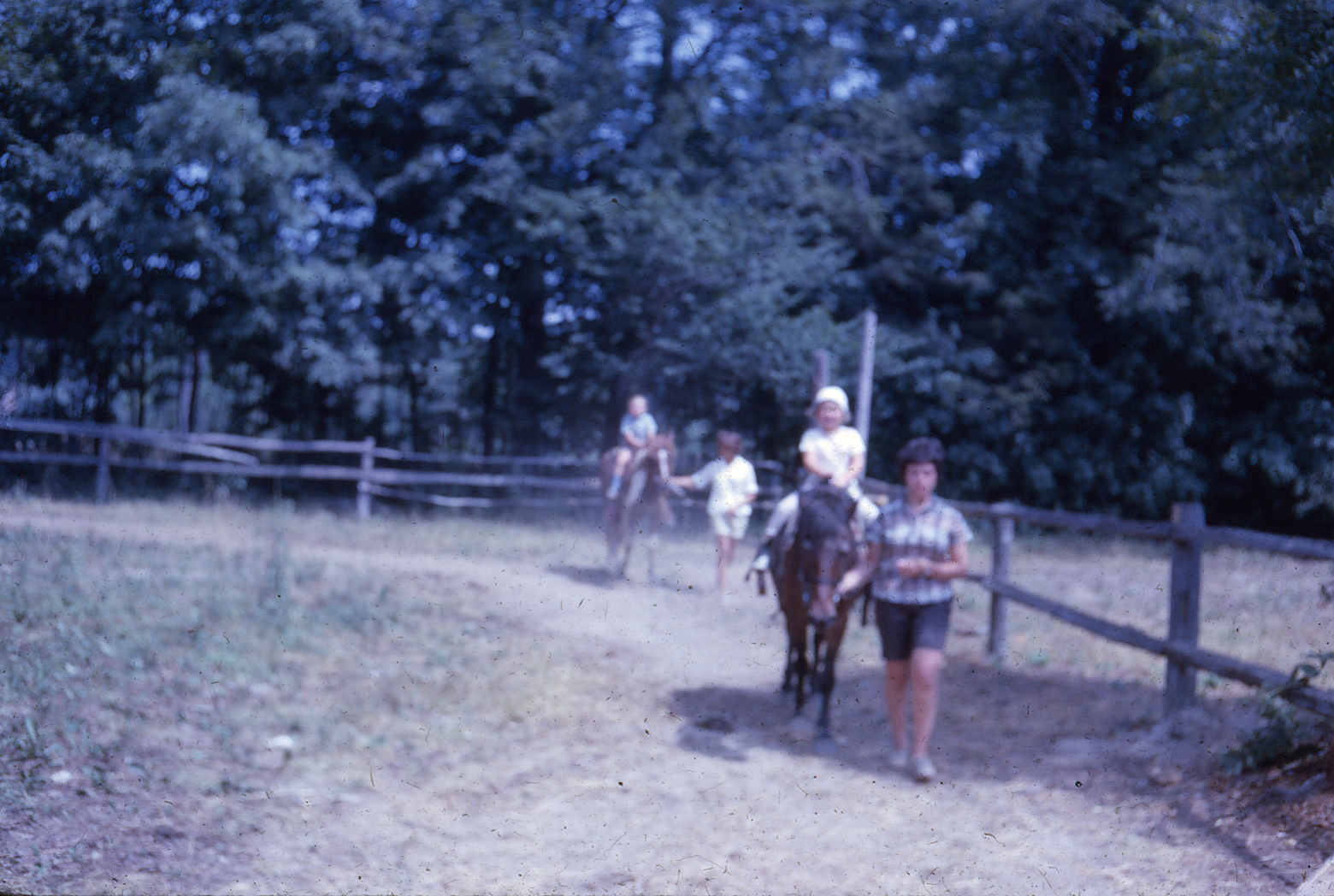
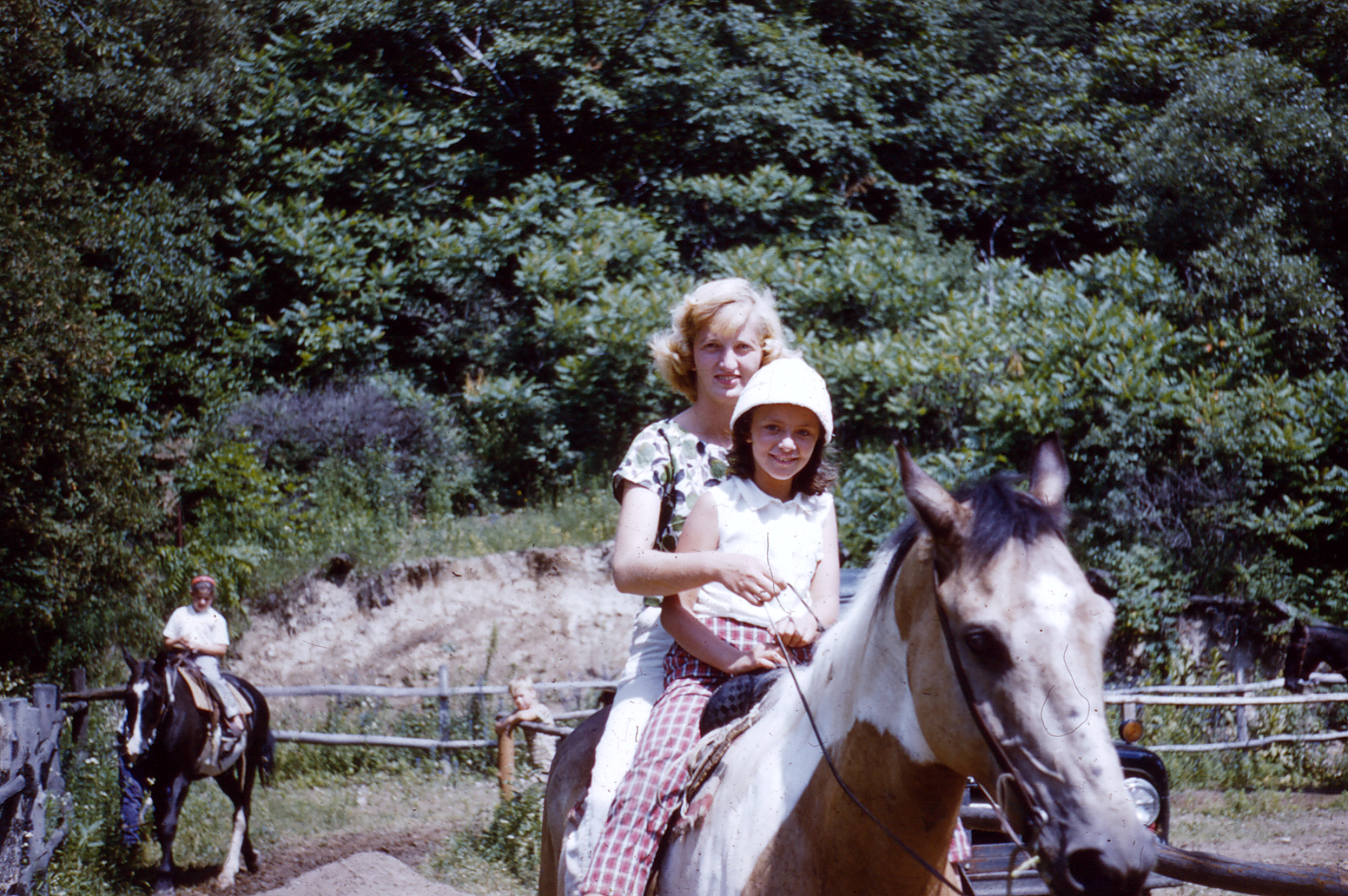
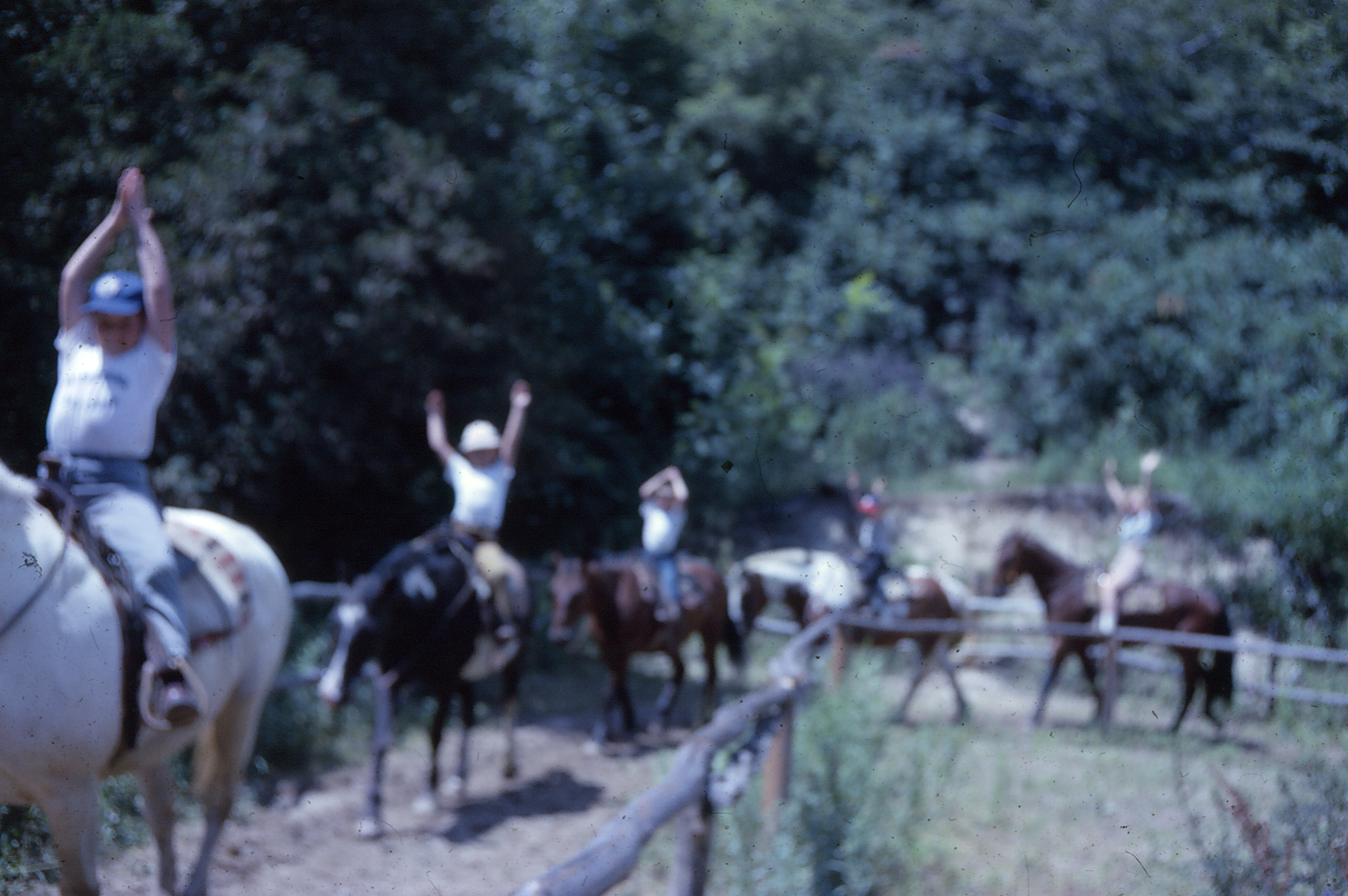
Horseback Riding / Stables

View across the river to the ponies grazing in what later became the Ranger Area. The stables were set back about 100 feet from this spot and were accessible along a path that met the original bridge.

The pony program was discontinued in mid-1970โ€™s.  Photo ca. 1969:

The Pony Carousel as shown in the second camp brochure.  ca. 1960.  Trivia: Bert received the carousel and a stagecoach as settlement on a debt.

1967: