With few exceptions, sending messages within the camp was a manual process.
Most messages originated in the main office as a result of communication with parents.
There were two methods of sending messages within camp. If the message was not urgent, a “TO/RE” form would be posted on the Supervisors Board in the office. The Supervisors routine required them to visit the office regularly at which time these messages were collected.
In the case of an urgent message, a “runner” (a member of the office staff) would be used to look for the recipient. The “runner” was an actual summer position in the office – typically someone over 14 who wanted to work at camp, but was too young to work as a counsellor.
Although they also assisted with administration, they would be the first person called upon to run errands since they were the least critical to operations.
Although most messages went to Supervisors, some needed to go to a specific counsellor. In these cases, the office referred to a master schedule which could often help the runner locate the cabin wherever they might be.
Telephones
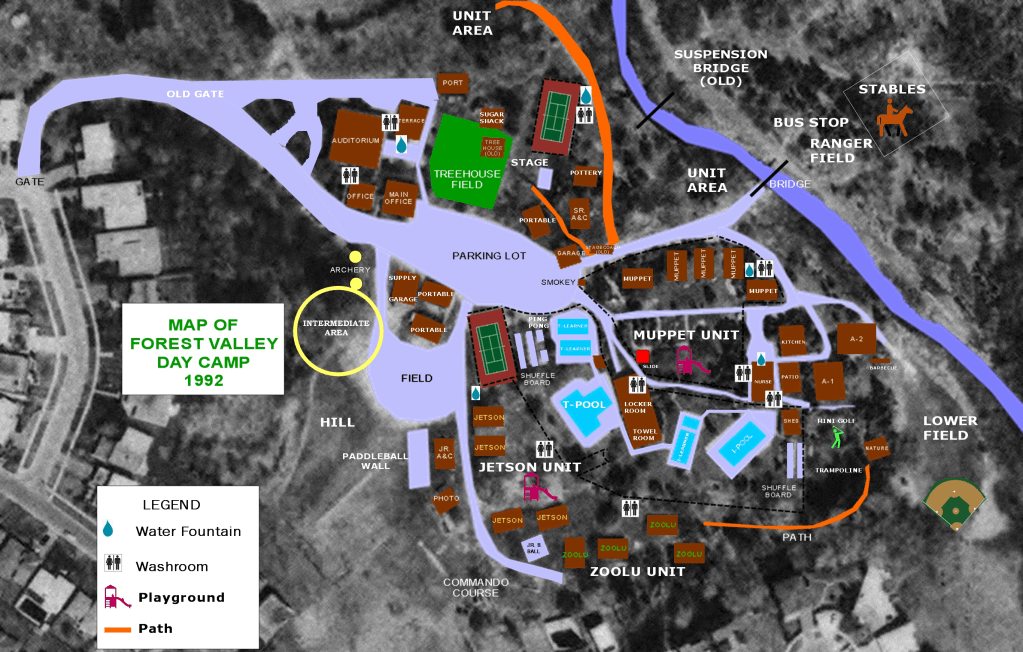
There were several exceptions to the manual systems since telephone lines were installed during the summer in the Kitchen, Nurse’s Office and Swim Office. Each had a different number so the office could use them to communicate with these areas in order to pass information.
If a unit happened to be at Lunch or Swim, the Supervisor could often be tracked down by calling the Kitchen or Swim Office. This would eliminate the need to send out a runner.
Wireless Communication
Beginning in the late 70s, walkie talkies were used by the hill and parking lot staff during arrival and departure of buses. At first, 3 units were rented, but in 1986 the number was increased to 6. In 1988, the number was increased to 12 allowing each Supervisor to have their own during the day. Obviously this was a game changer.
It should be noted that cell phones were uncommon until the early 1990s. Jennifer had one in 1986. Jay had one starting in 1987 to manage transportation, These were “brick” phones which sold for over $1,000 at the time. Airtime was 25 cents per minute!













 Forest Valley Day Camp 1956 - 1993