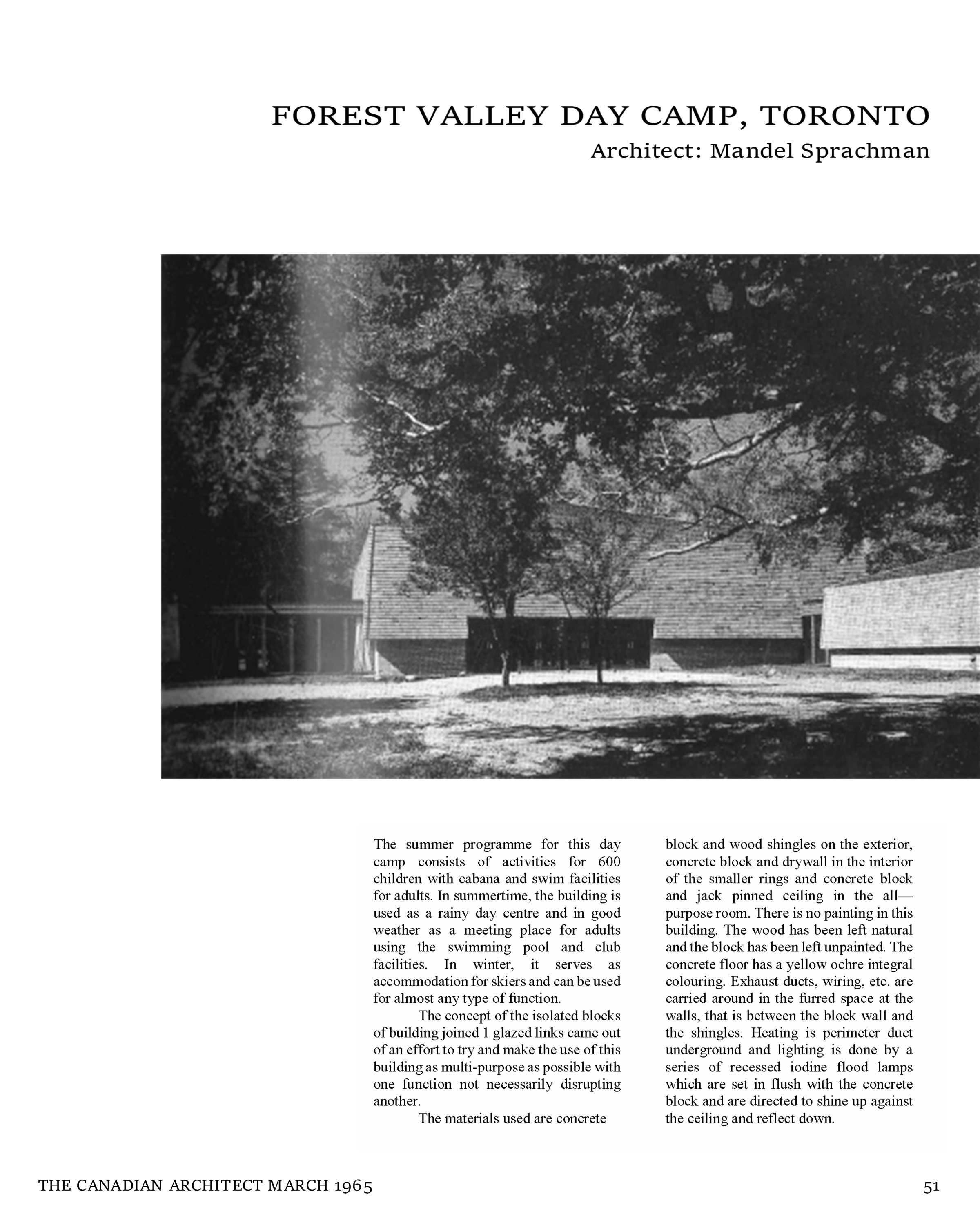
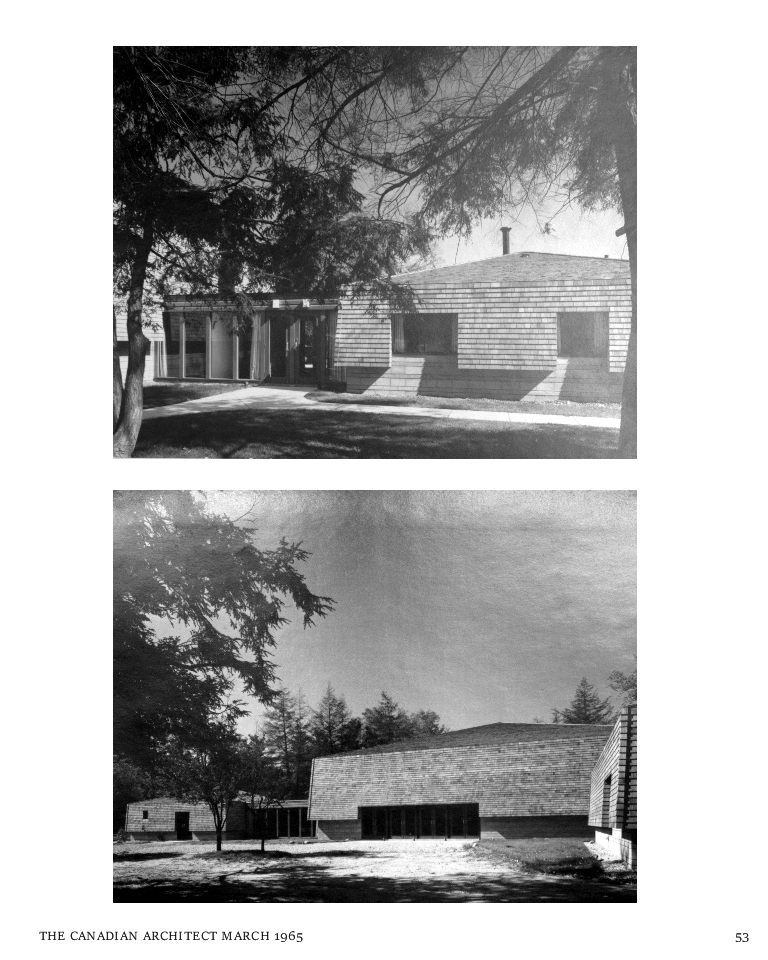
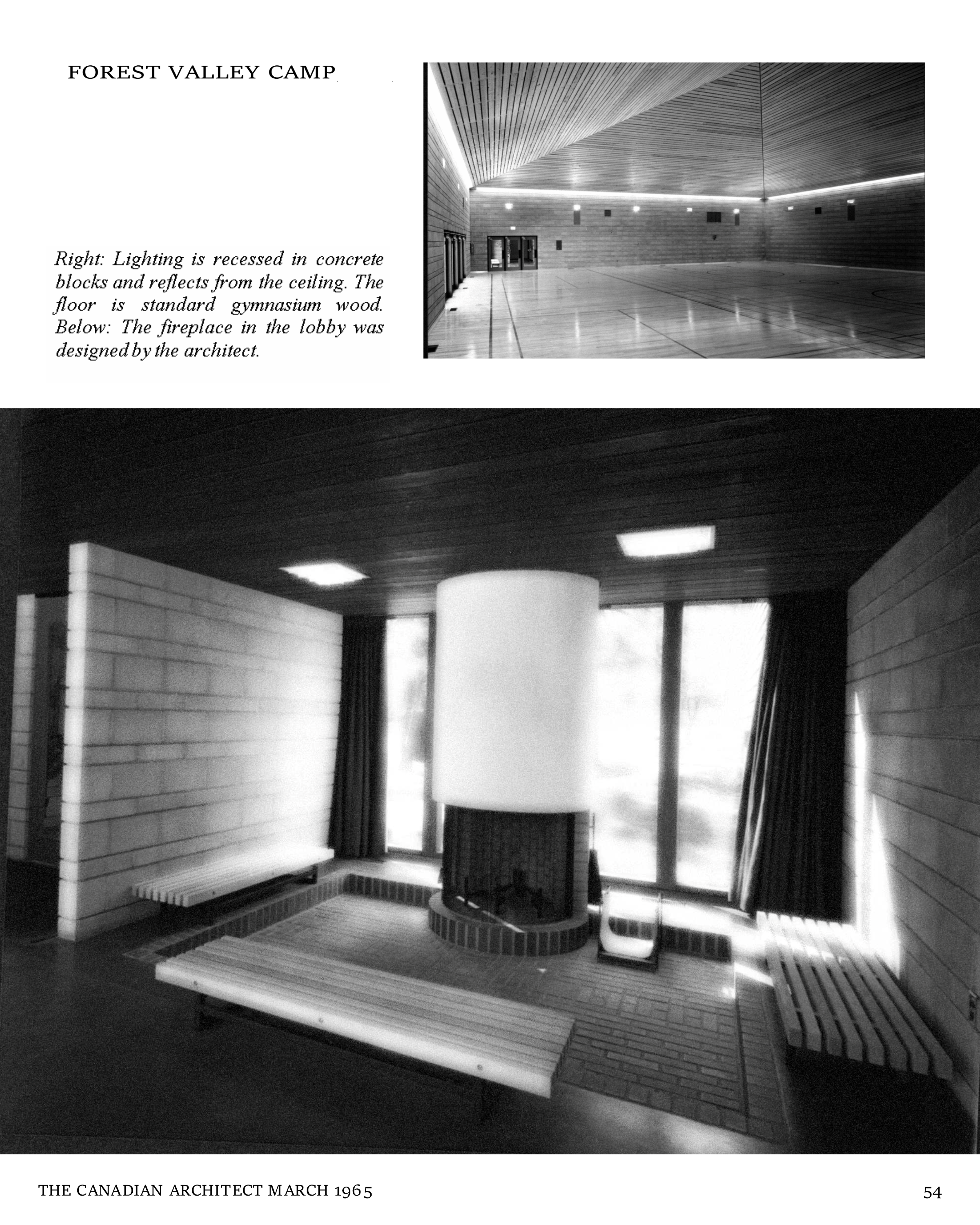
The design of the auditorium complex as featured in the March 1965 issue of The Canadian Architect.



Posts about specific locations at camp – primarily buildings and facilities.
Posts are listed in chronological order based on date of posting – newest posts first.
The design of the auditorium complex as featured in the March 1965 issue of The Canadian Architect.
1947
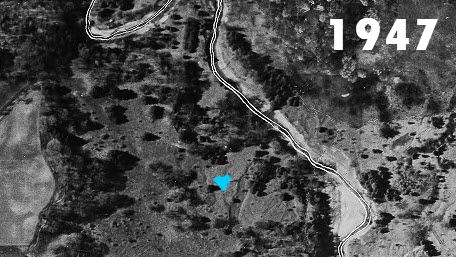
1957

1960
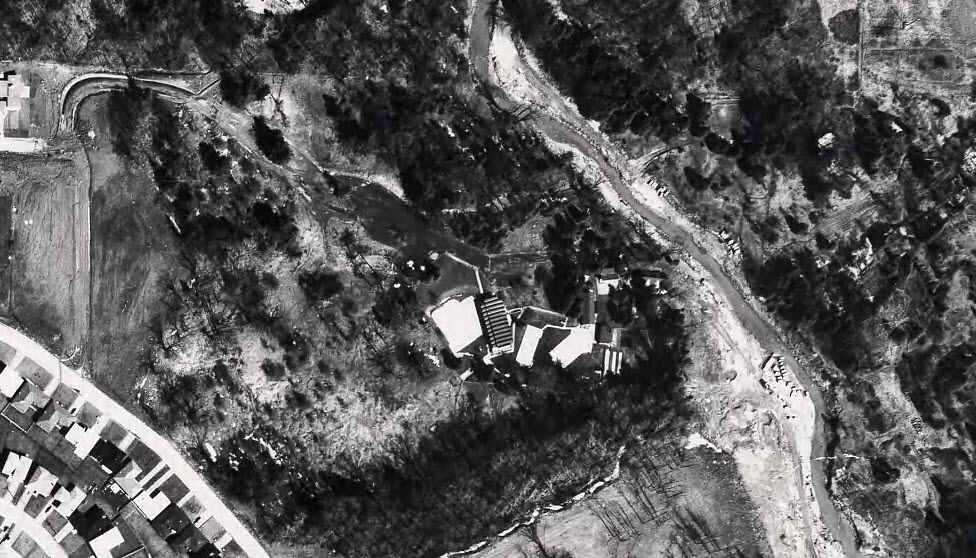
1962
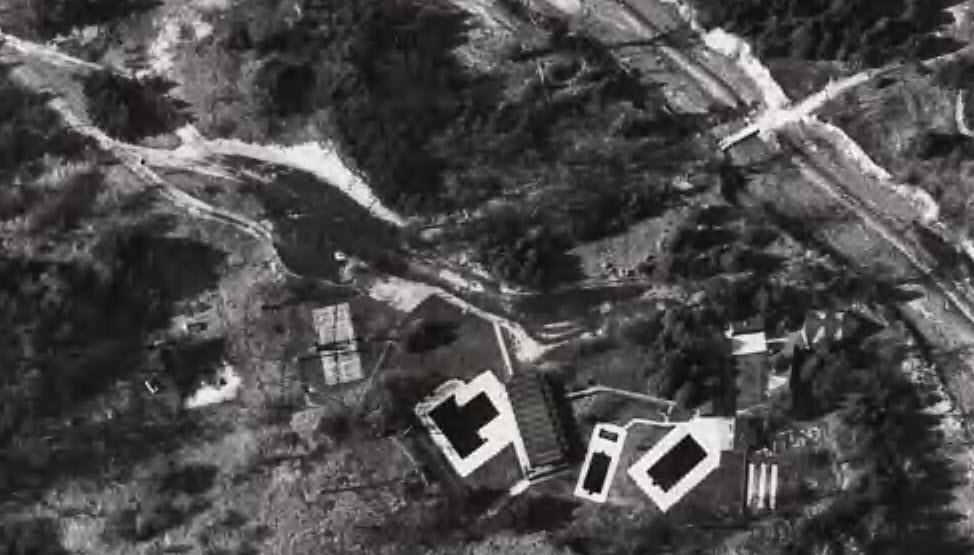
1967
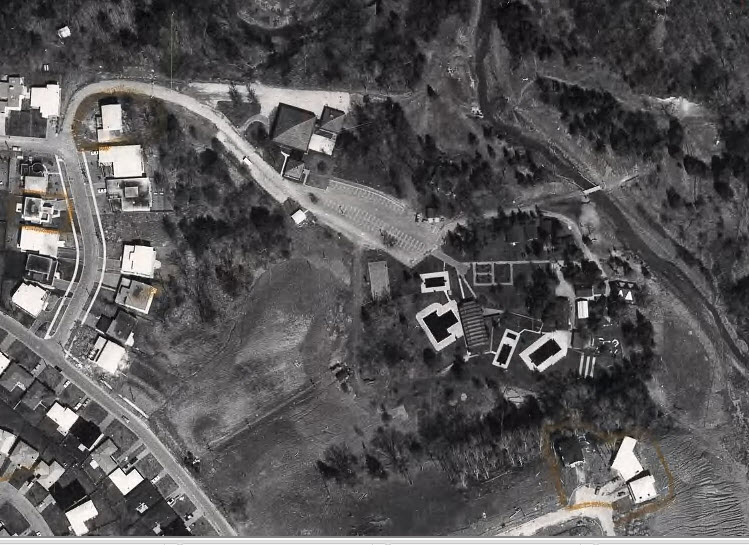
1971
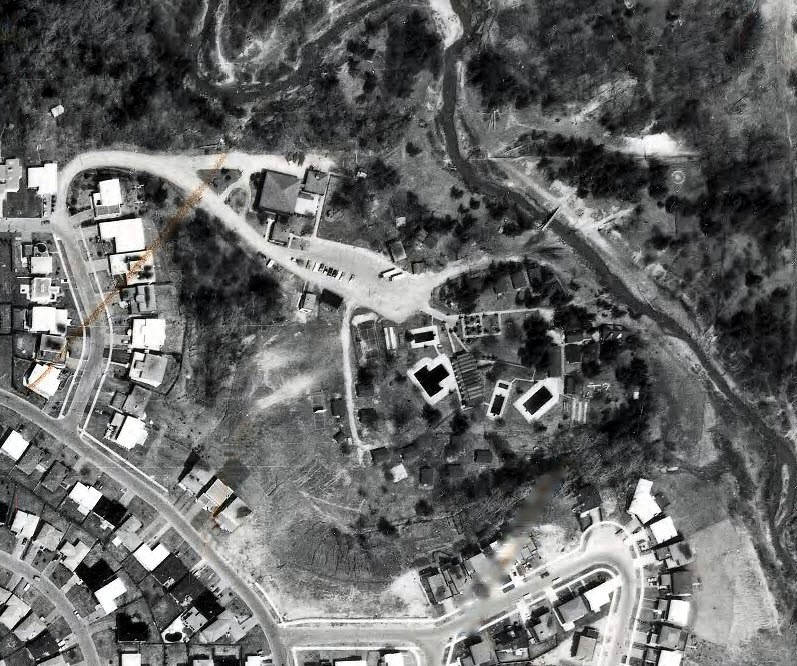
1979
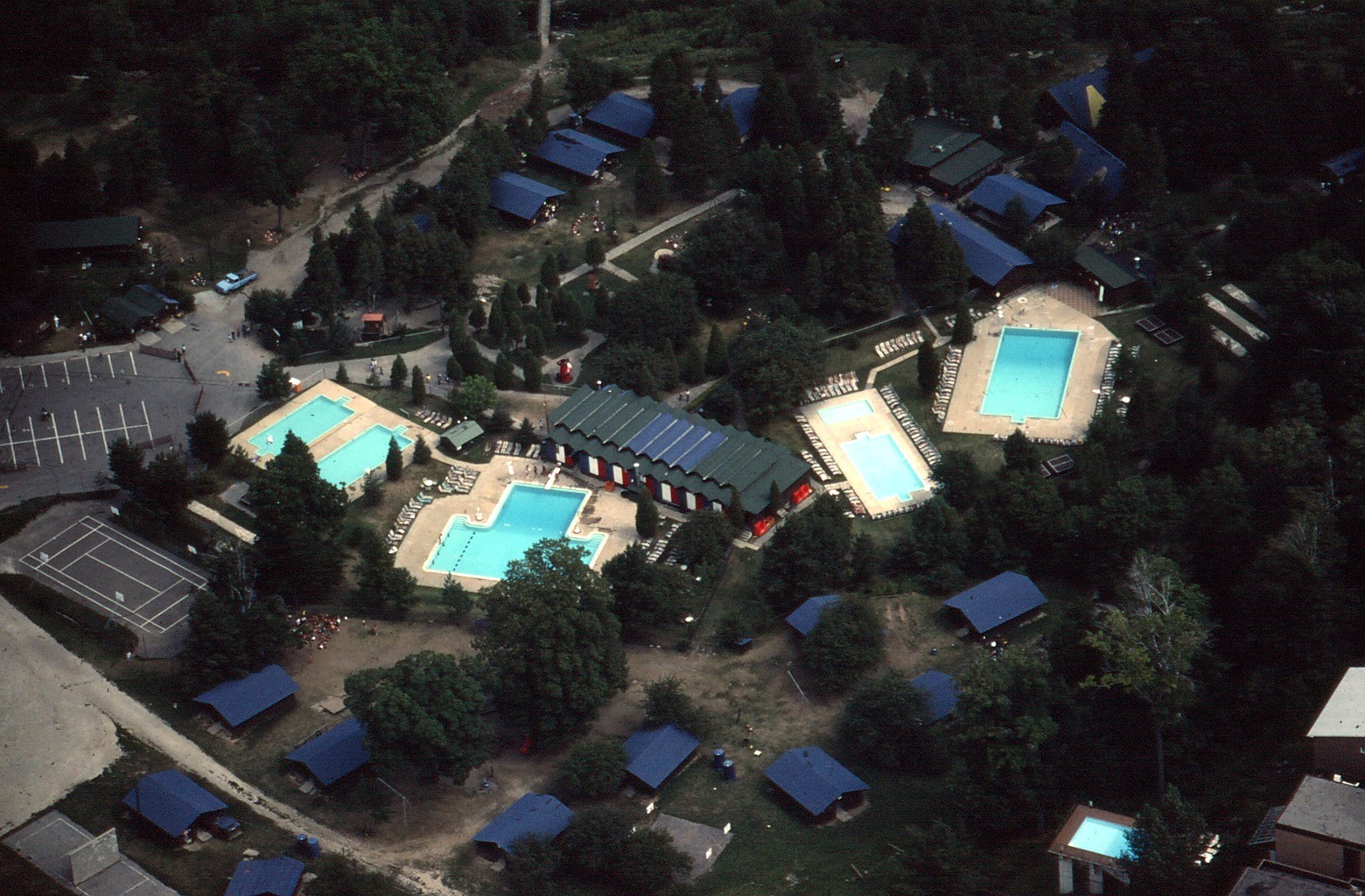
1983

1992
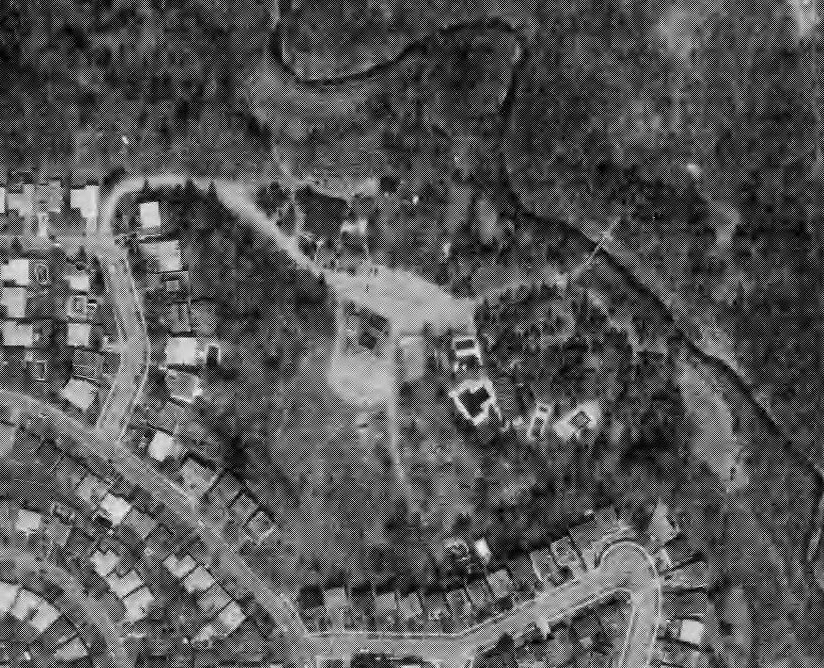
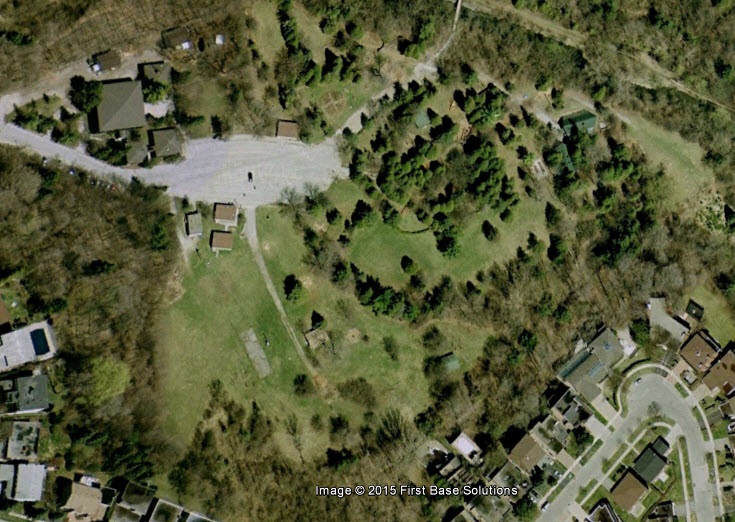
2013 (10 years after closing)
1979 vs 2013:
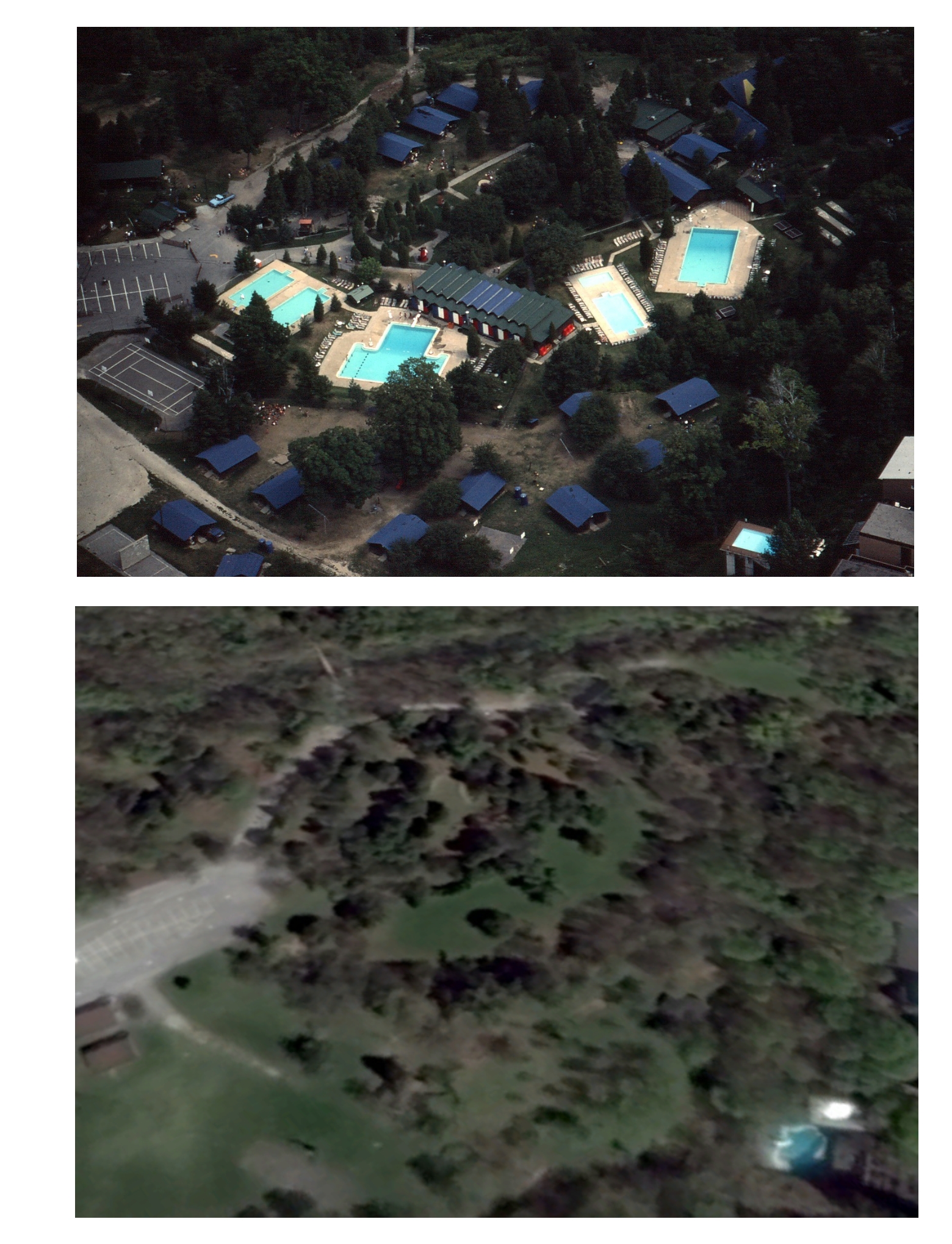
Aerial Photos 1947 – 2013. See photo captions for more information.aerial photomap
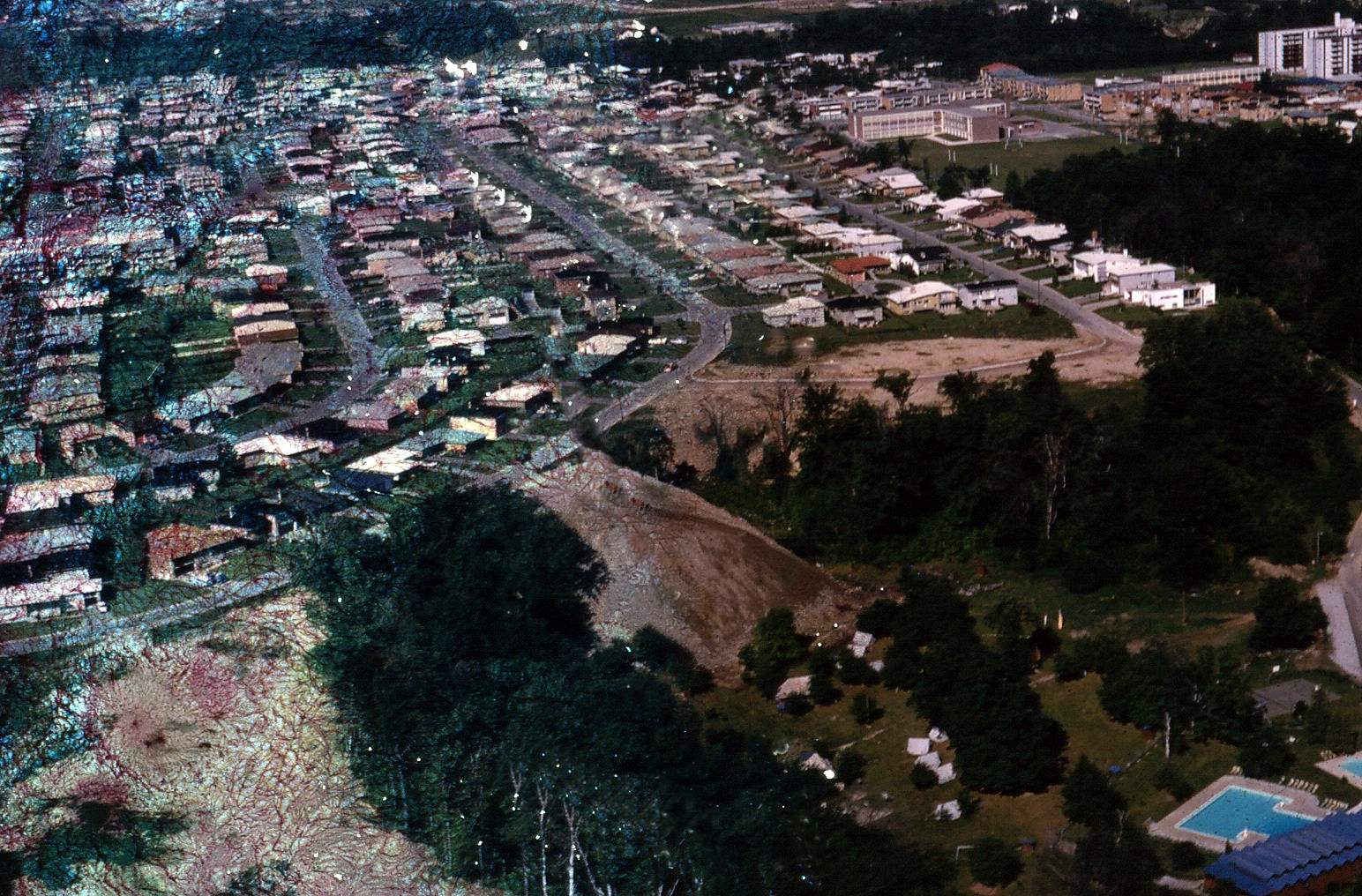
In 1964, Bert learned of an opportunity to secure fill removed for the construction of the Spadina Expressway. The fill was essentially free and created yet another source of revenue – this time during the winter months.
An aerial shot showing the fill after delivery in 1964:
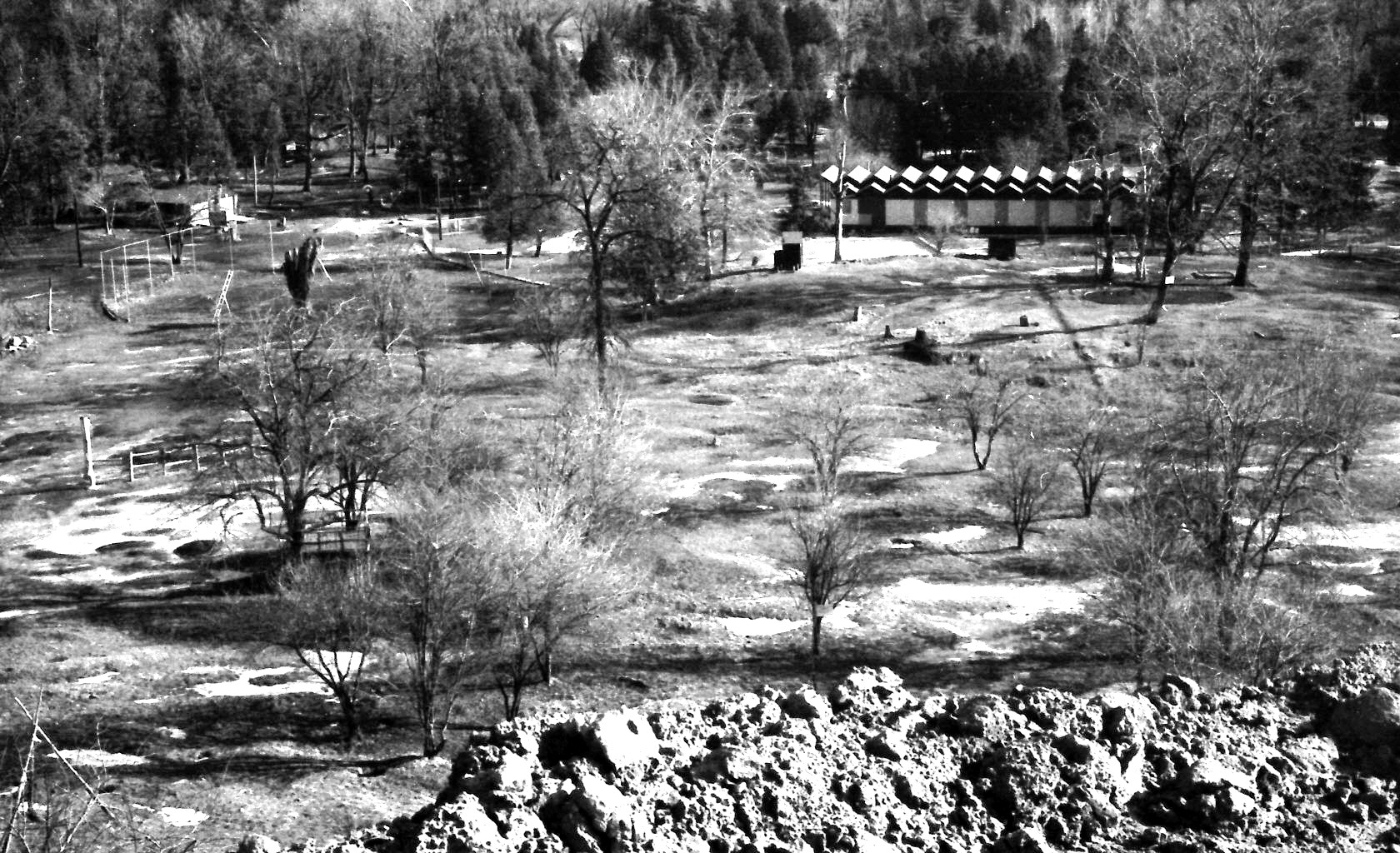
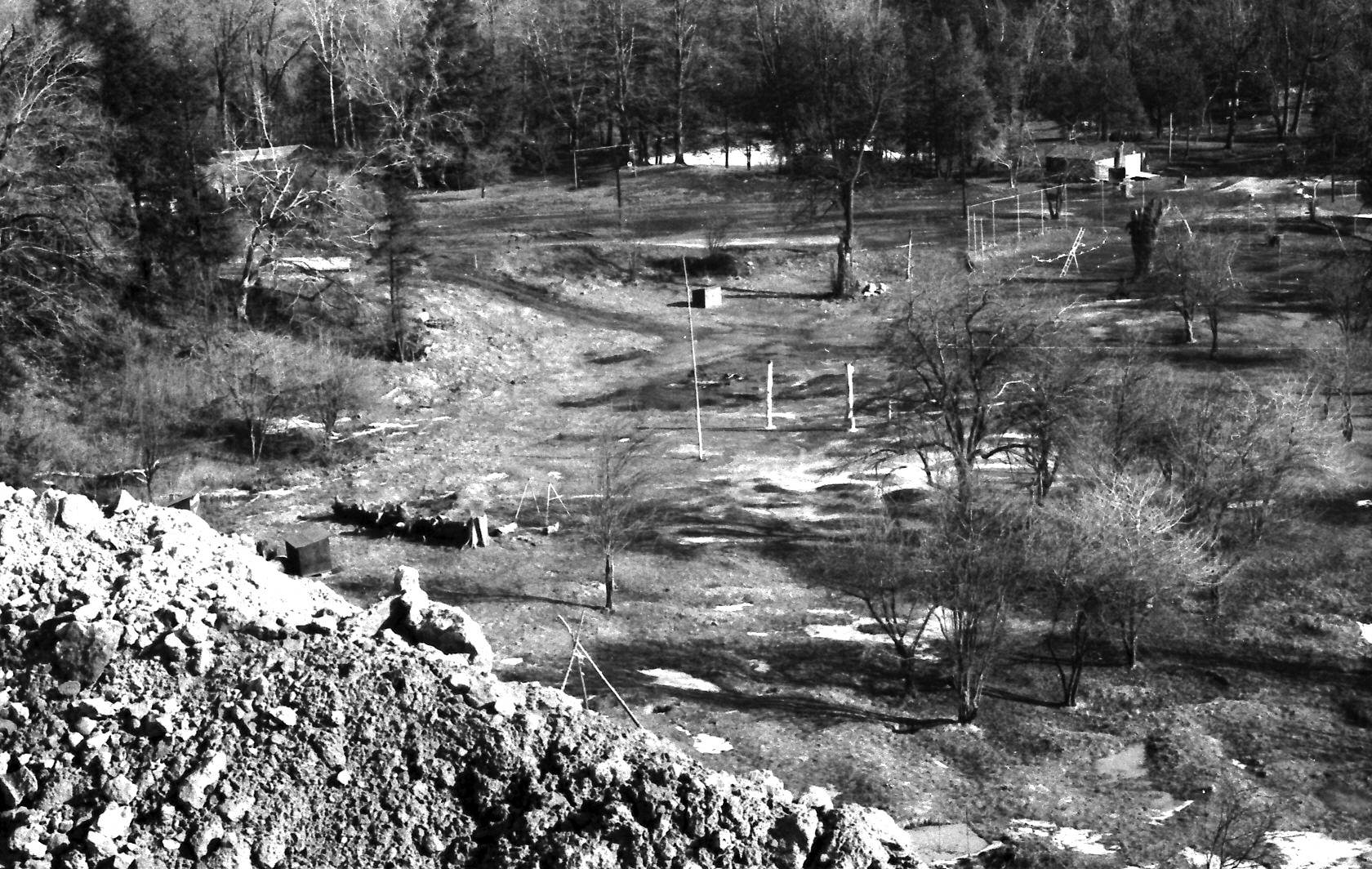
Photos from the top of the hill after fill was delivered:
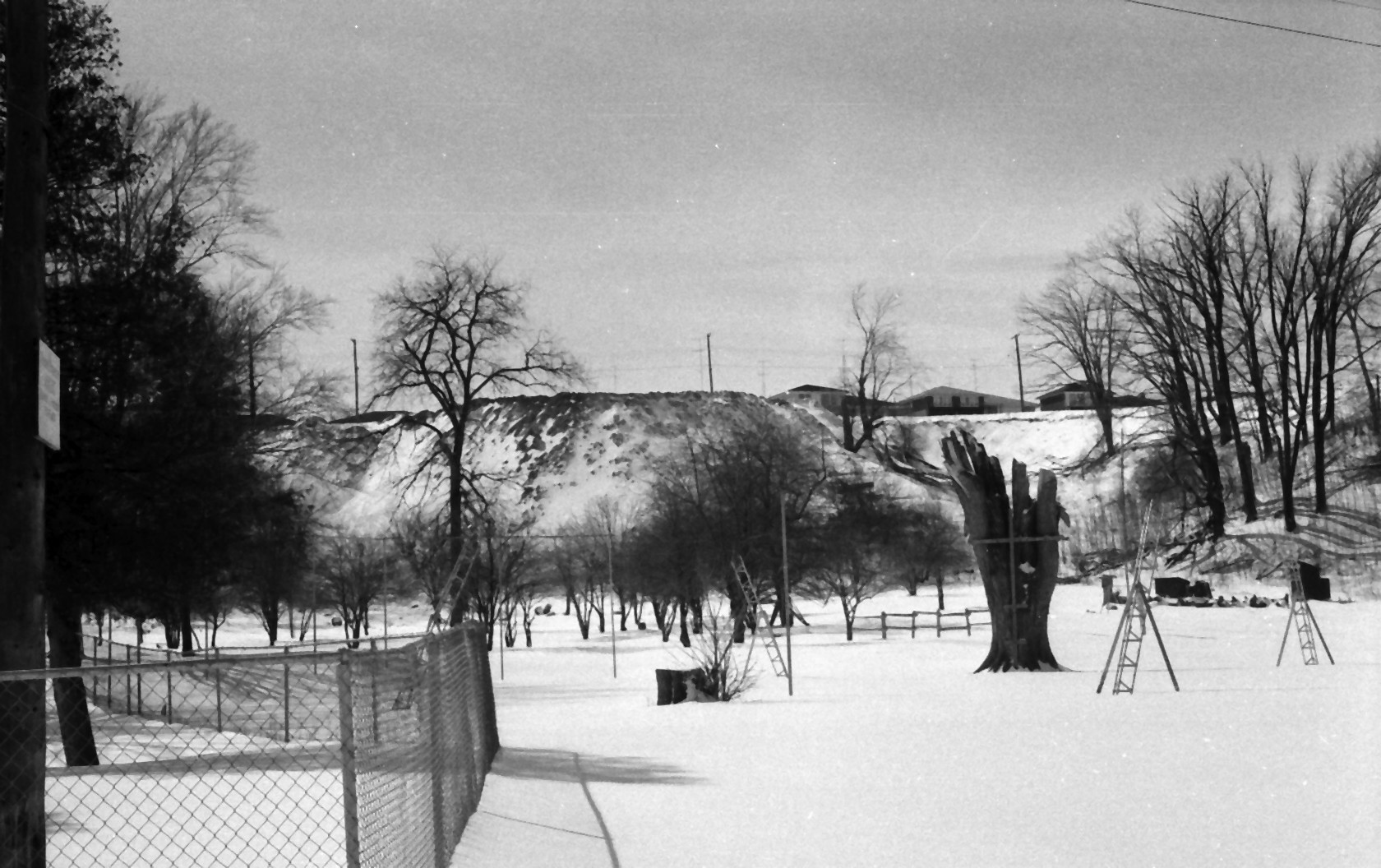
Winter 1964:
An aerial photo from 1966 showing the ski lift:
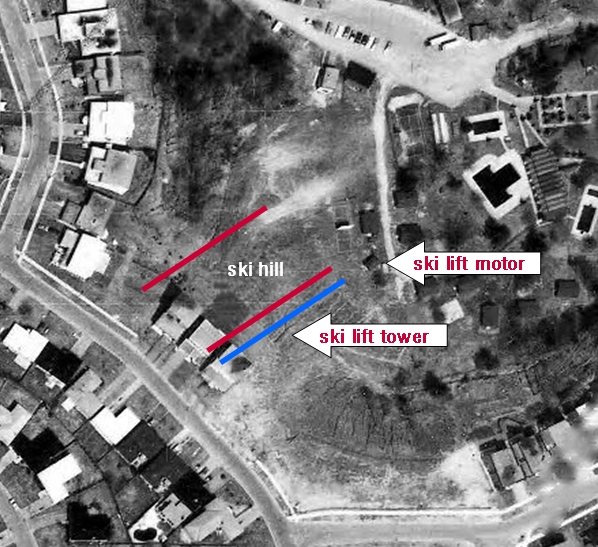
In 1965, a ski lift was added and operations began.

Here is a video from 1965 showing the first year of operation:
Thanks to Jon Fine for the original 8mm film.
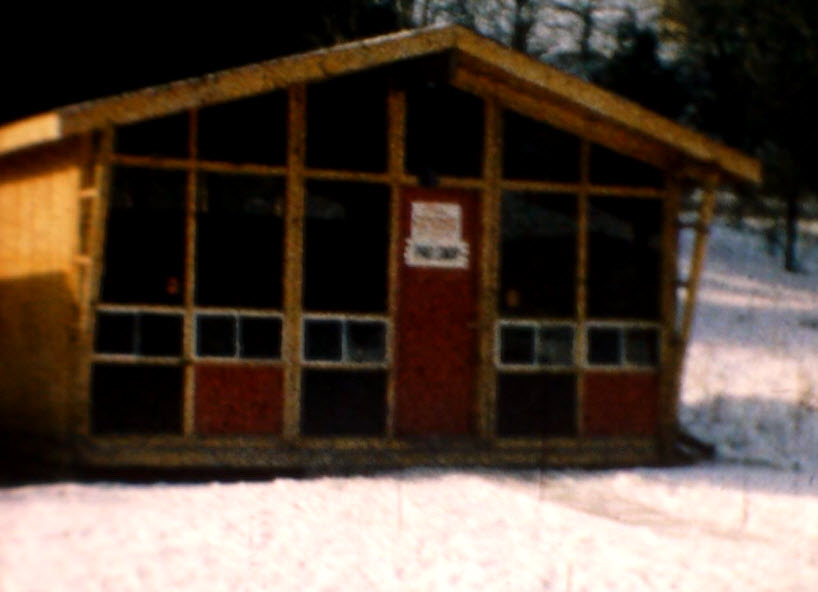
In order to serve patrons, a temporary building was used as a “Pro Shop”:

Snow-making equipment was also used:

The program was run as a private “club” due to zoning regulations, but anyone could join. A ski lift was built and the operation continued through the 1970’s when the land at the top of the hill was sold for development. Bert continued to own several lots at the top of the hill until the late 1990’s.
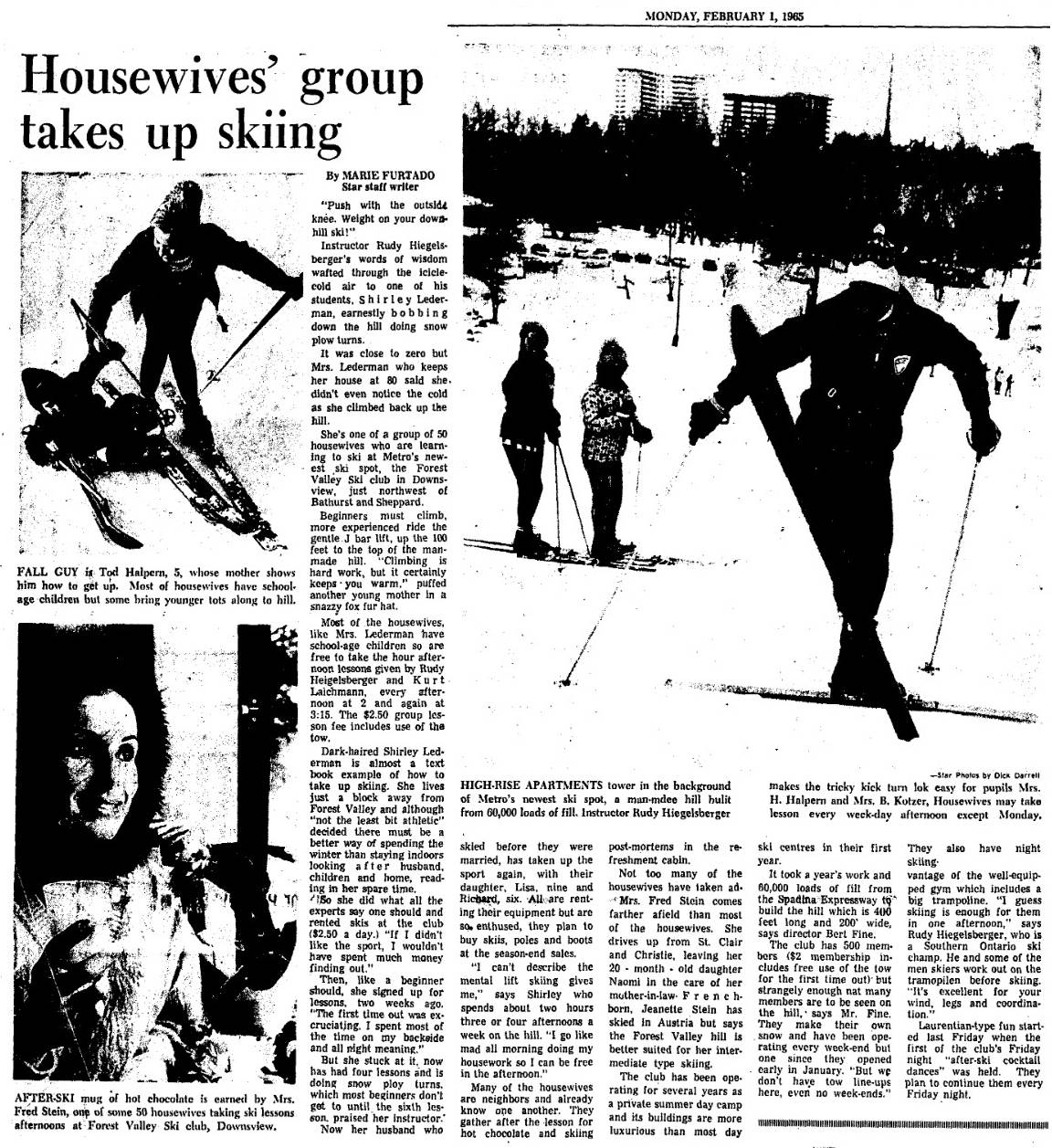
Several items from The Toronto Star pertaining to the new Ski operations at Forest Valley:
February 26, 1965:

February 1, 1965:
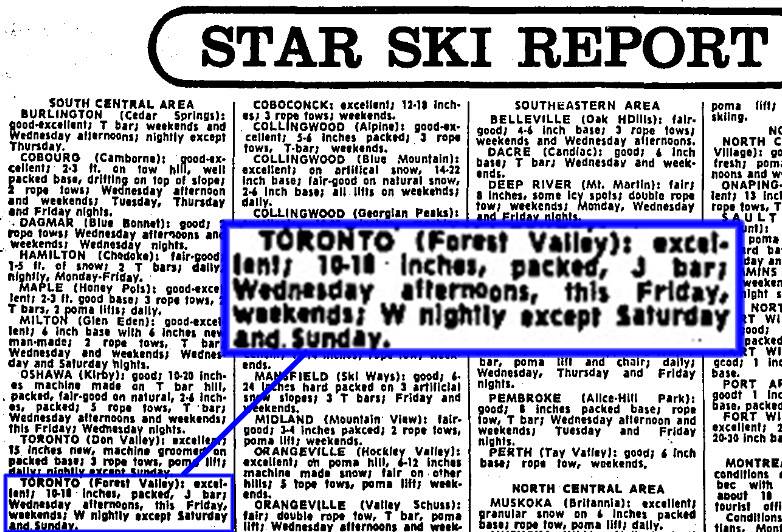
A Ski Report listing conditions for Forest Valley. February 24, 1966:
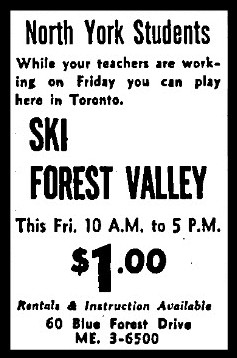
An invitation to students to visit Forest Valley on a school holiday. February 24, 1966:
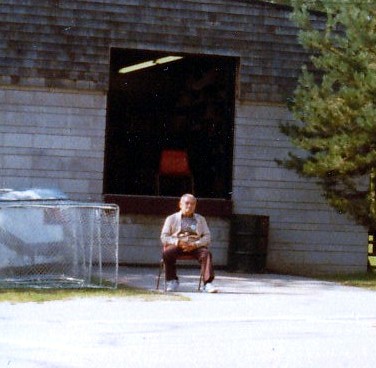
Art Perlmutar. ca. 1982
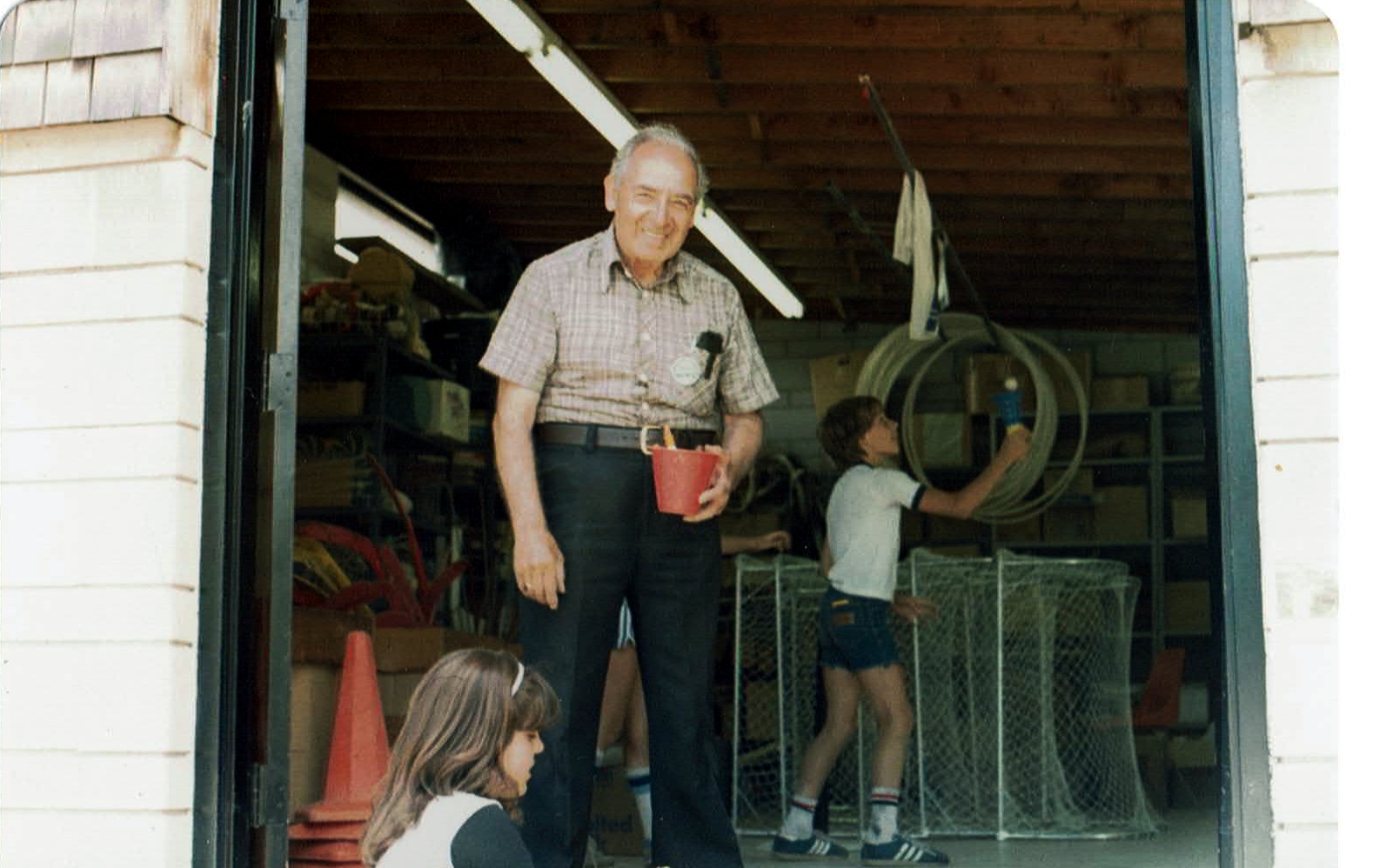
Art Perlmutar ca. 1982
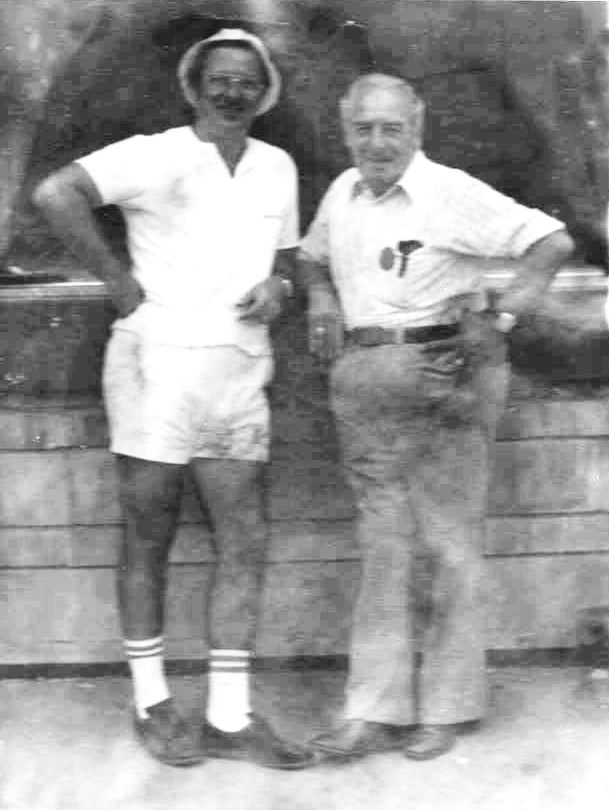
Jeff Perlmutar, Art Perlmutar ca. 1979
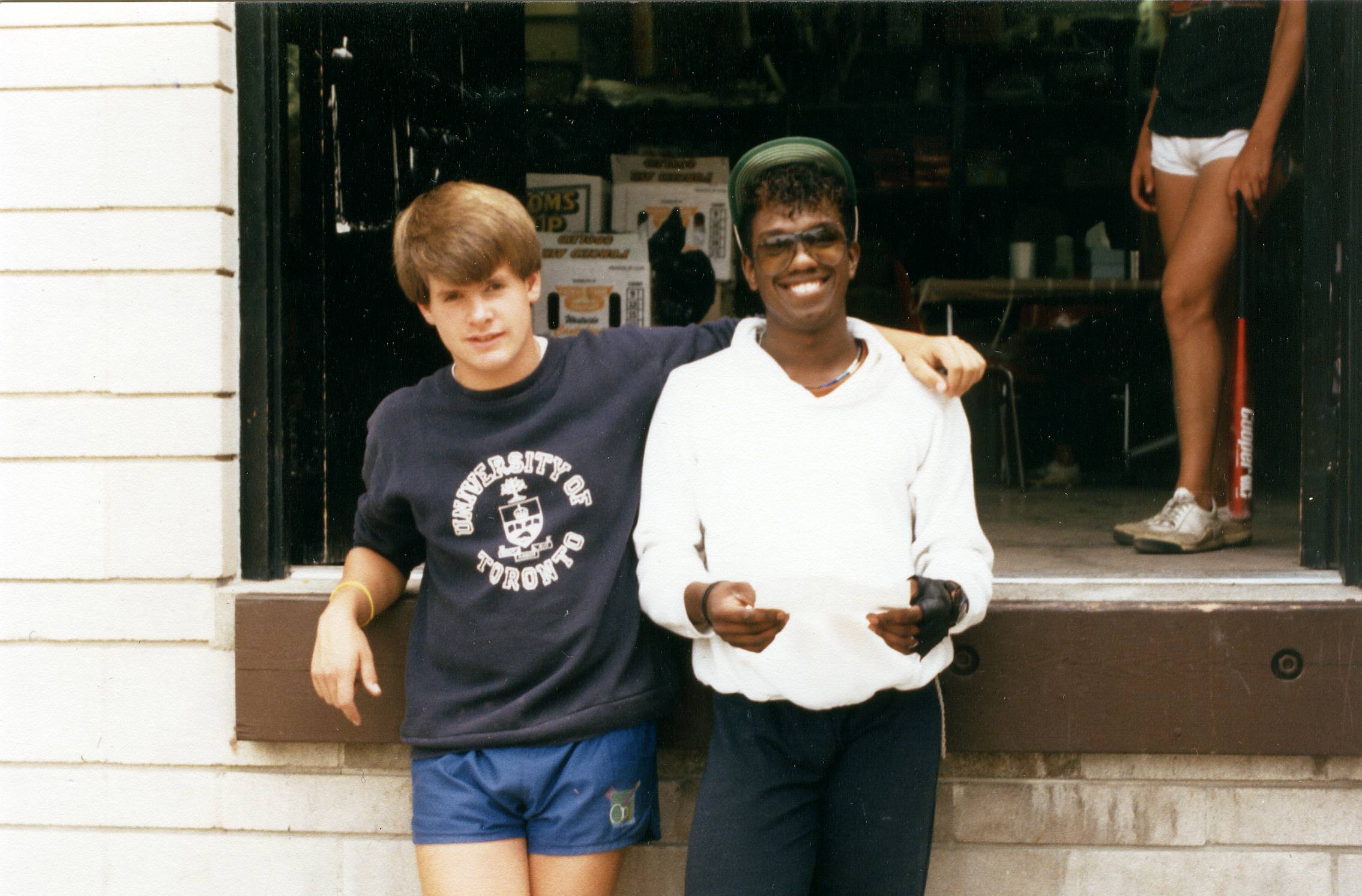
ca. 1986
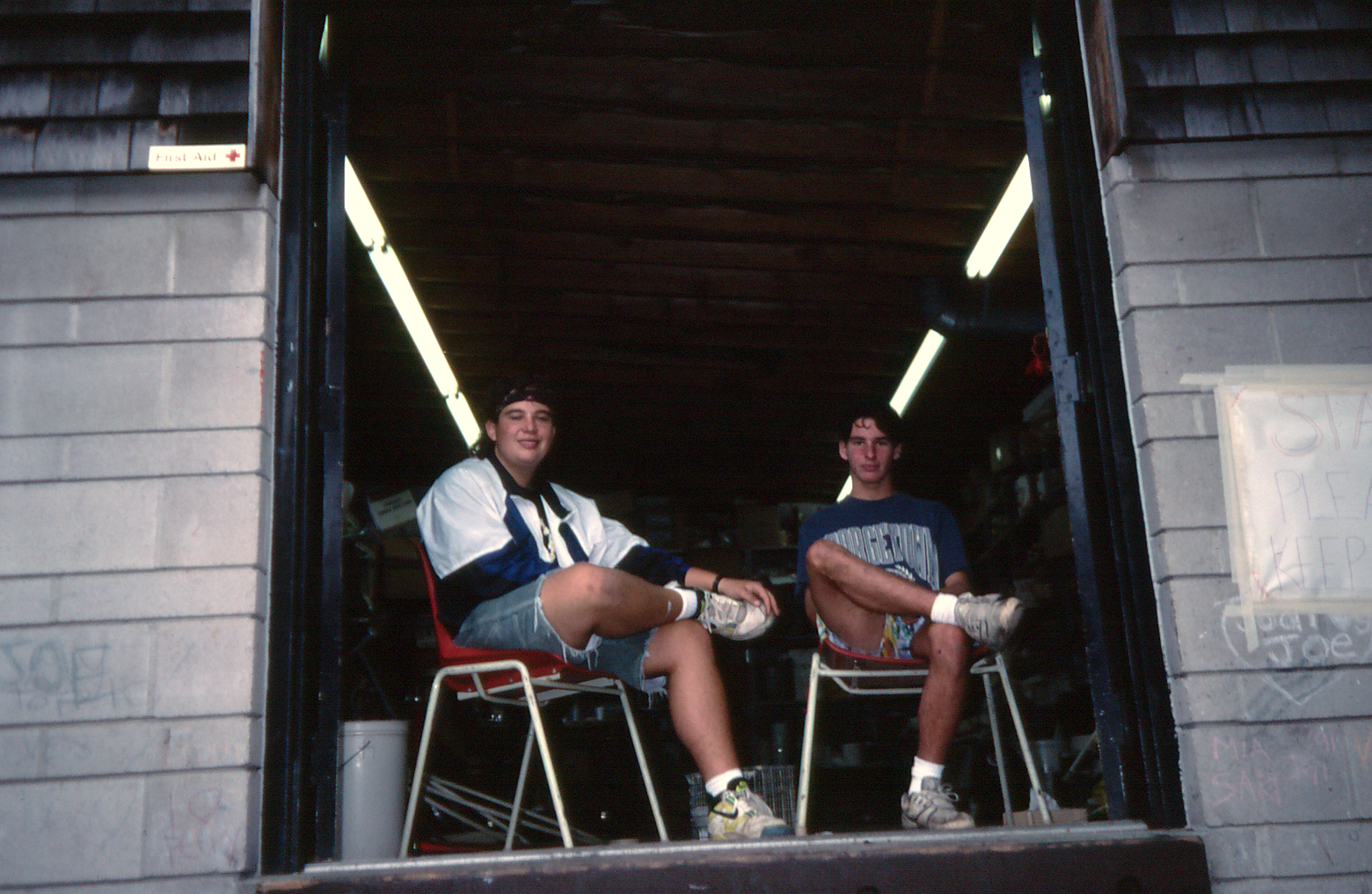
ca. 1991

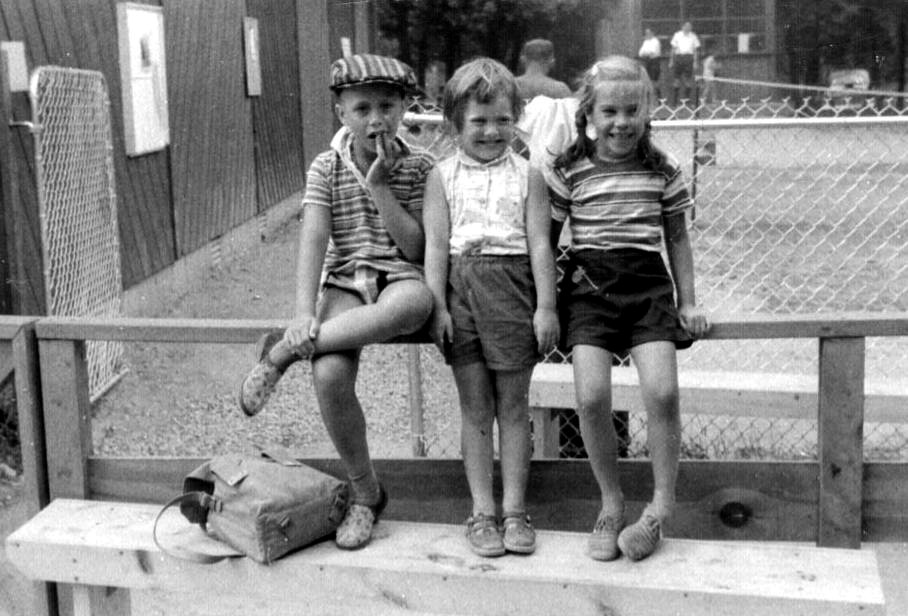
This photo is looking north. The campers are facing the I-pool. In the background is the snack bar for the swim club. More on the snack bar HERE. 1958.
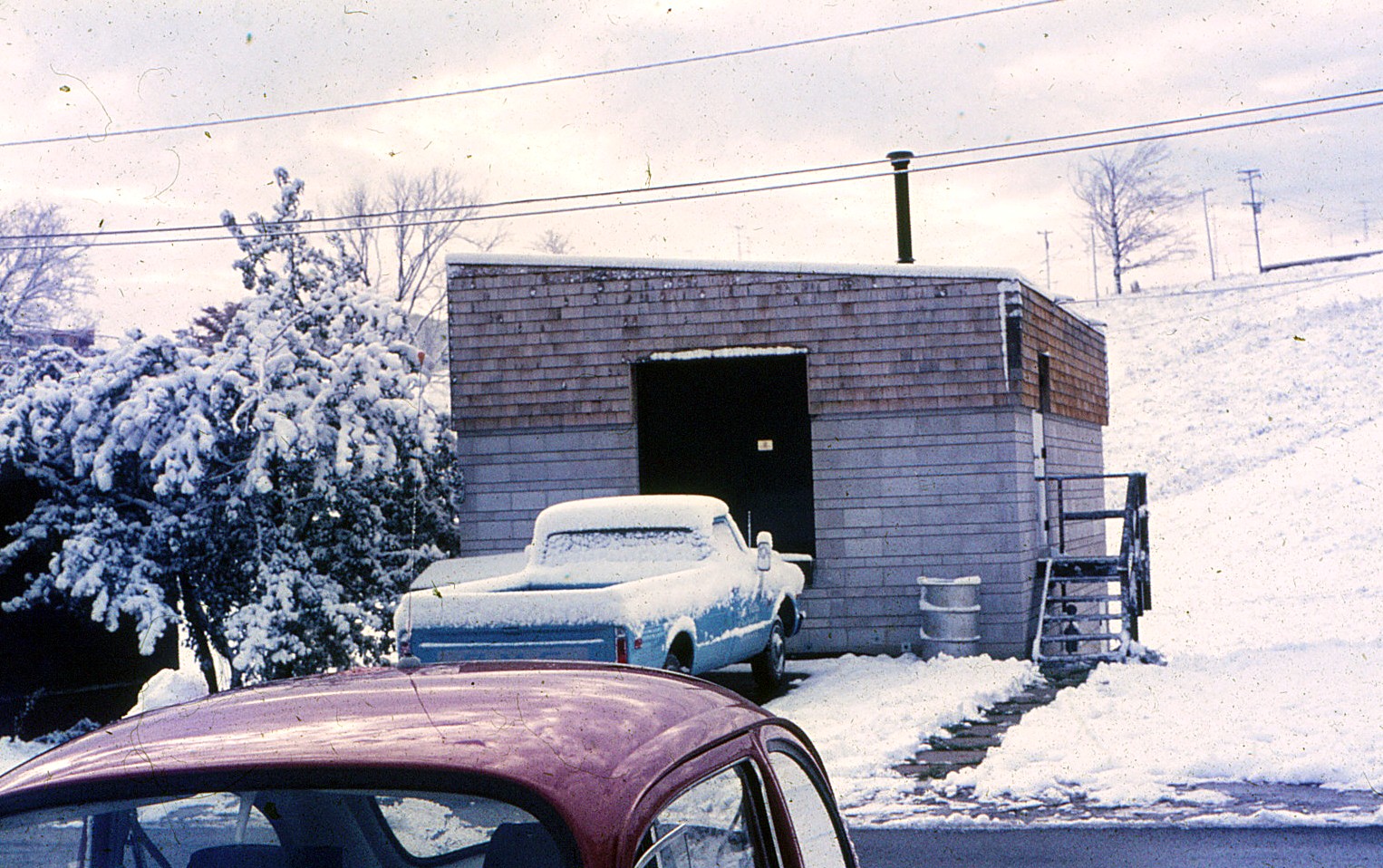
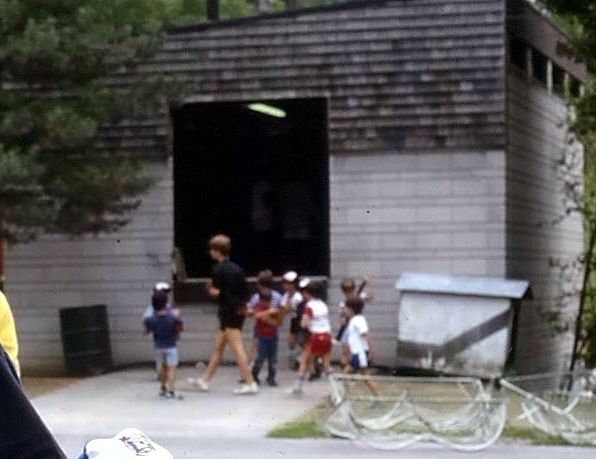
Built in the late 1970’s to support the Outdoor Education Program. Maple syrup made inside each spring. Located at the north end of the Treehouse Field.

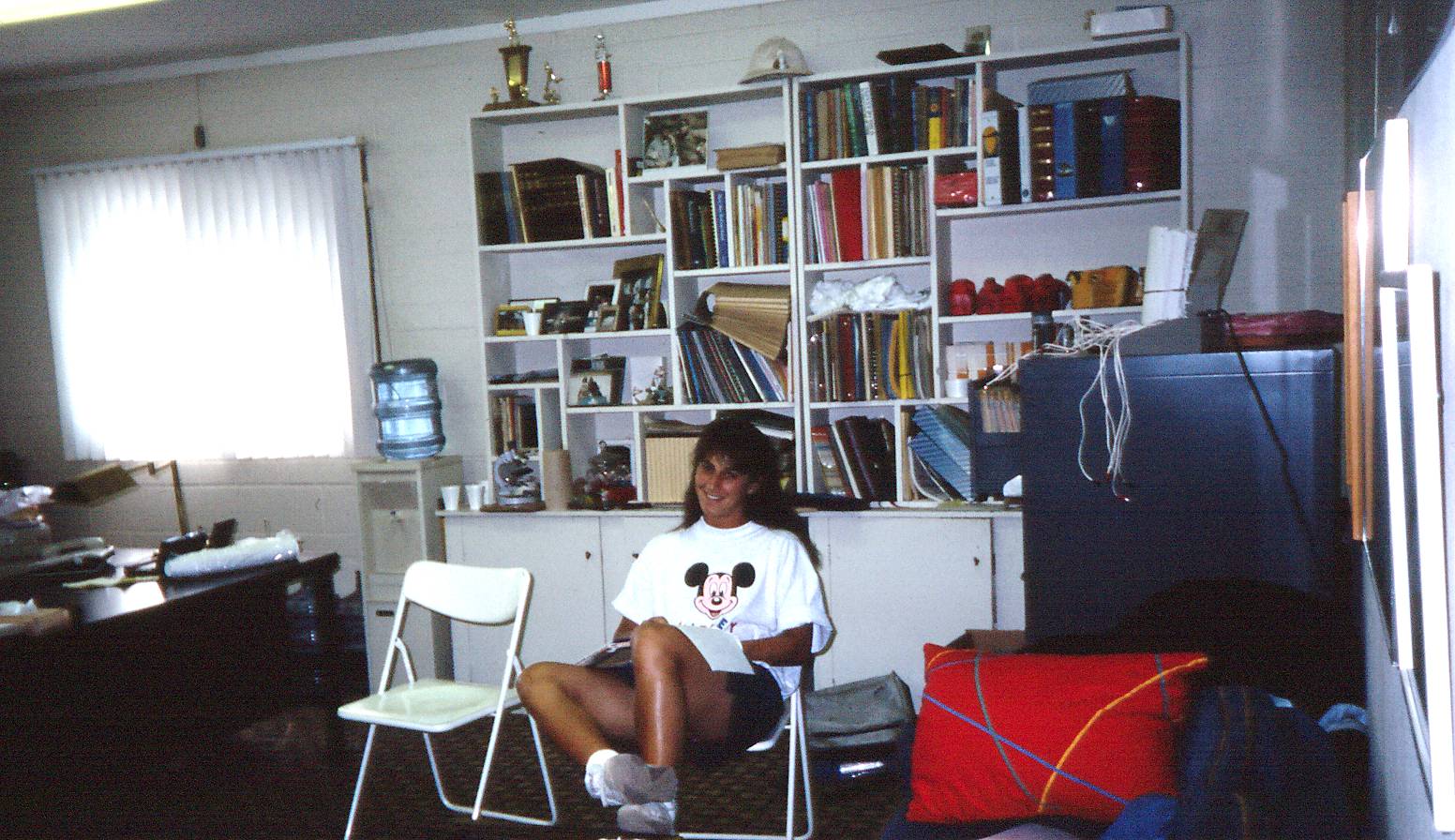
Inside the office. 1990

A look at the T-Pool, I-Pool and I-Learners in 1988.
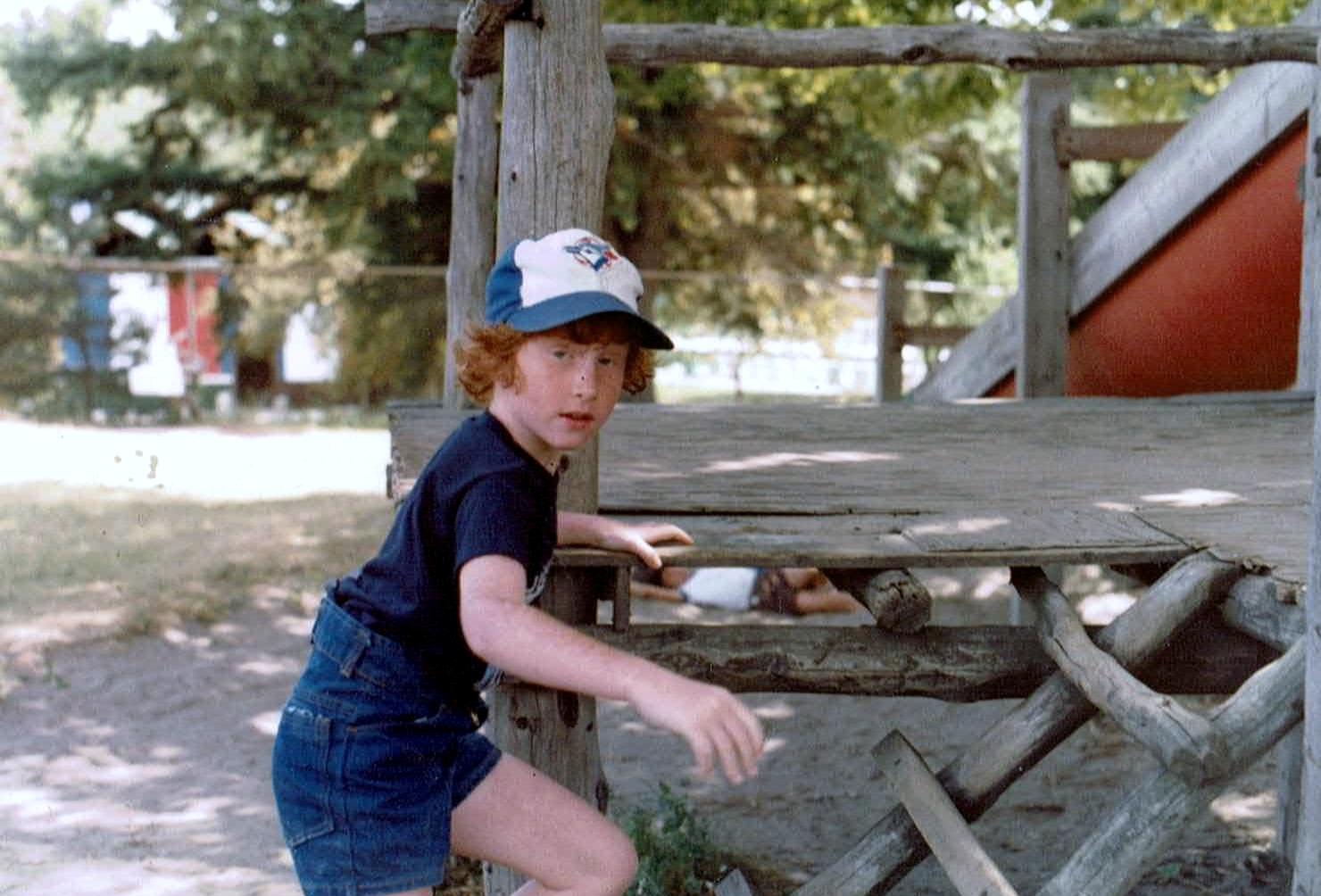

1981
This treehouse was destroyed in the mid-80’s when a tree limb fell on it during a thunderstorm – the day after camp! A new treehouse was built in its place.
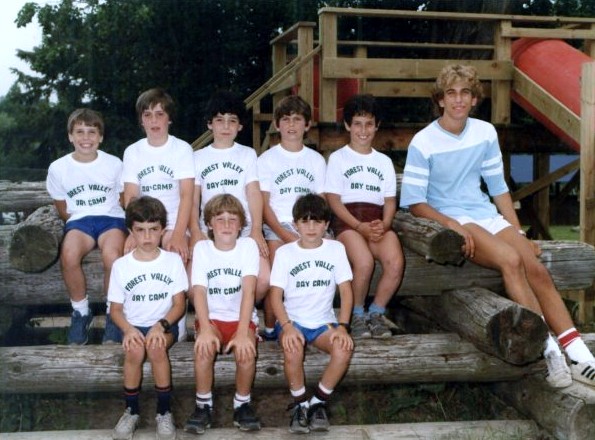
The log pyramid beside the treehouse was used for many cabin photos. The new treehouse is visible below.
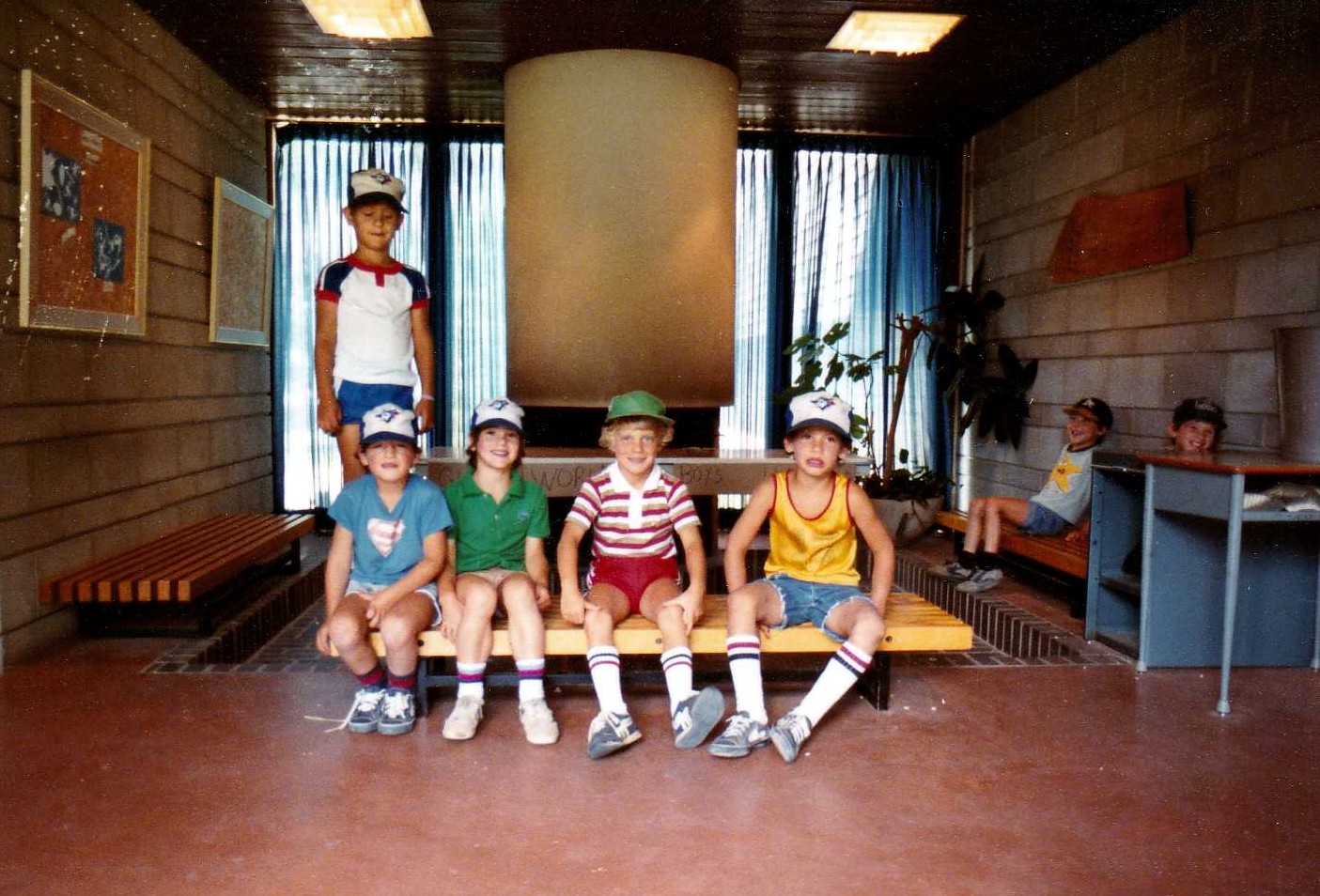
The Fireplace area between the Auditorium and the Office. 1982
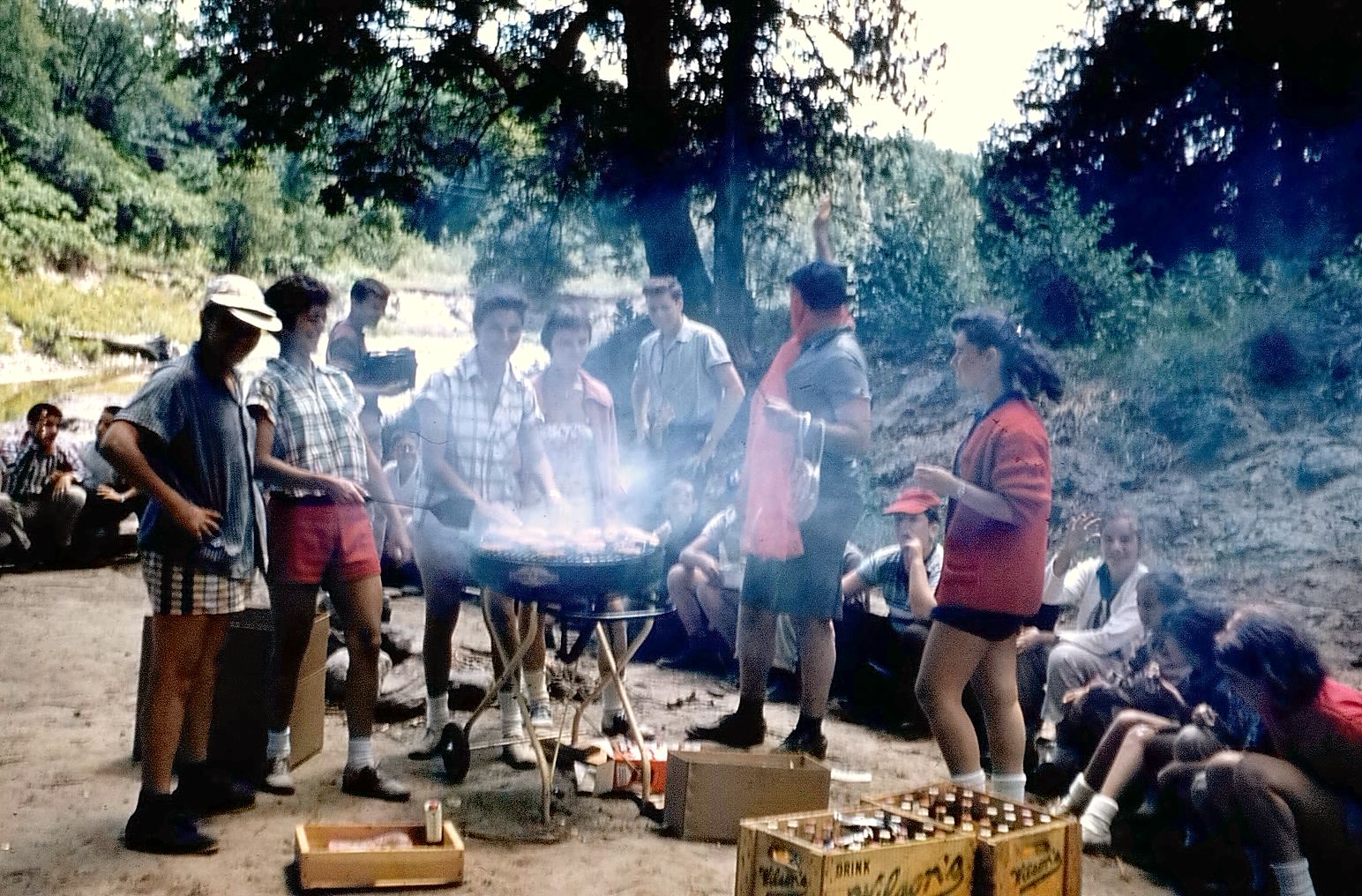
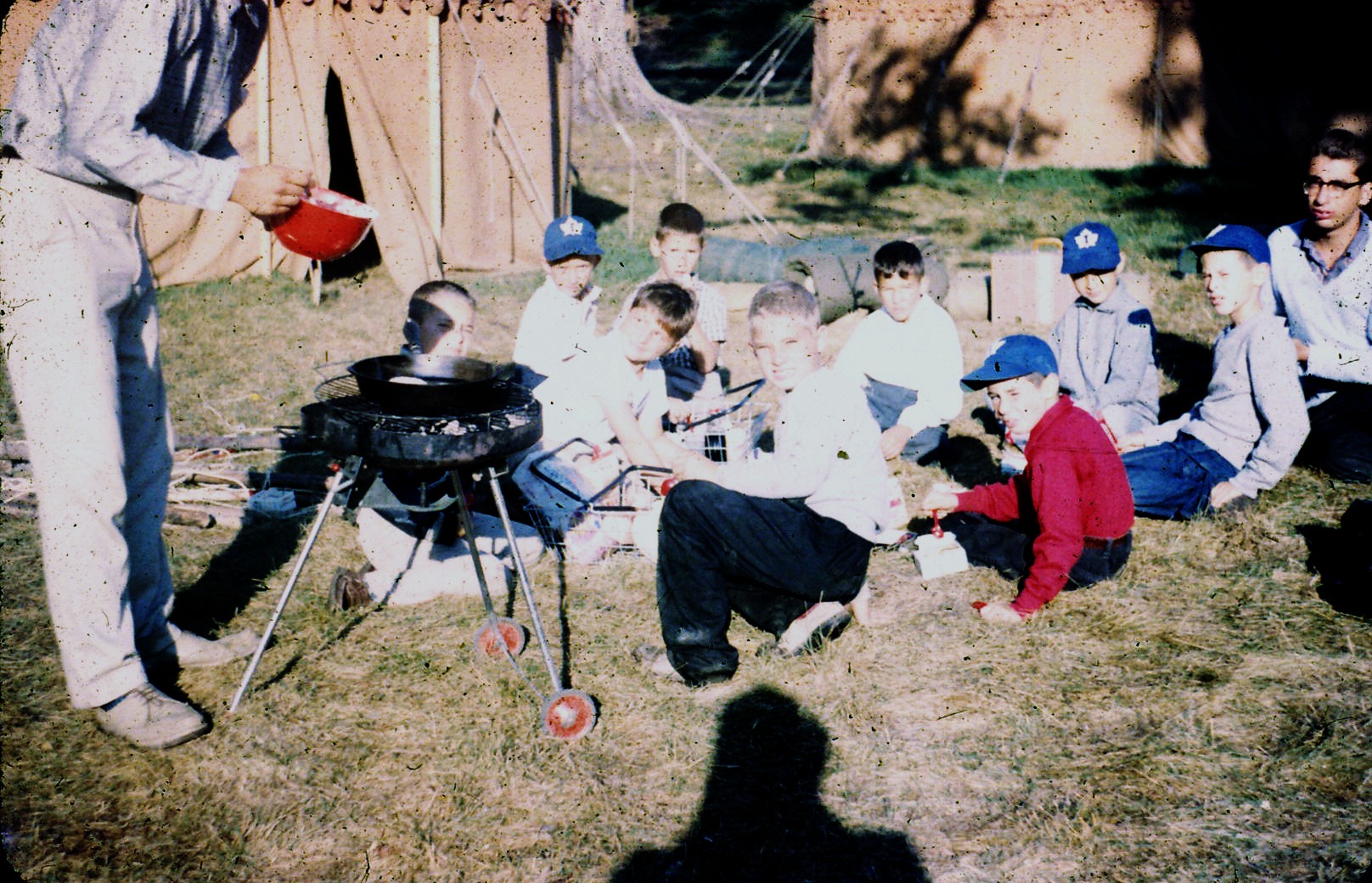
Throughout the years, cookouts in the Sugar Bush were part of the schedule. Cabins would have this opportunity once or twice per session. Campers would collect firewood and counsellors would build fires and cook. Hamburgers and hot dogs were typically prepared.
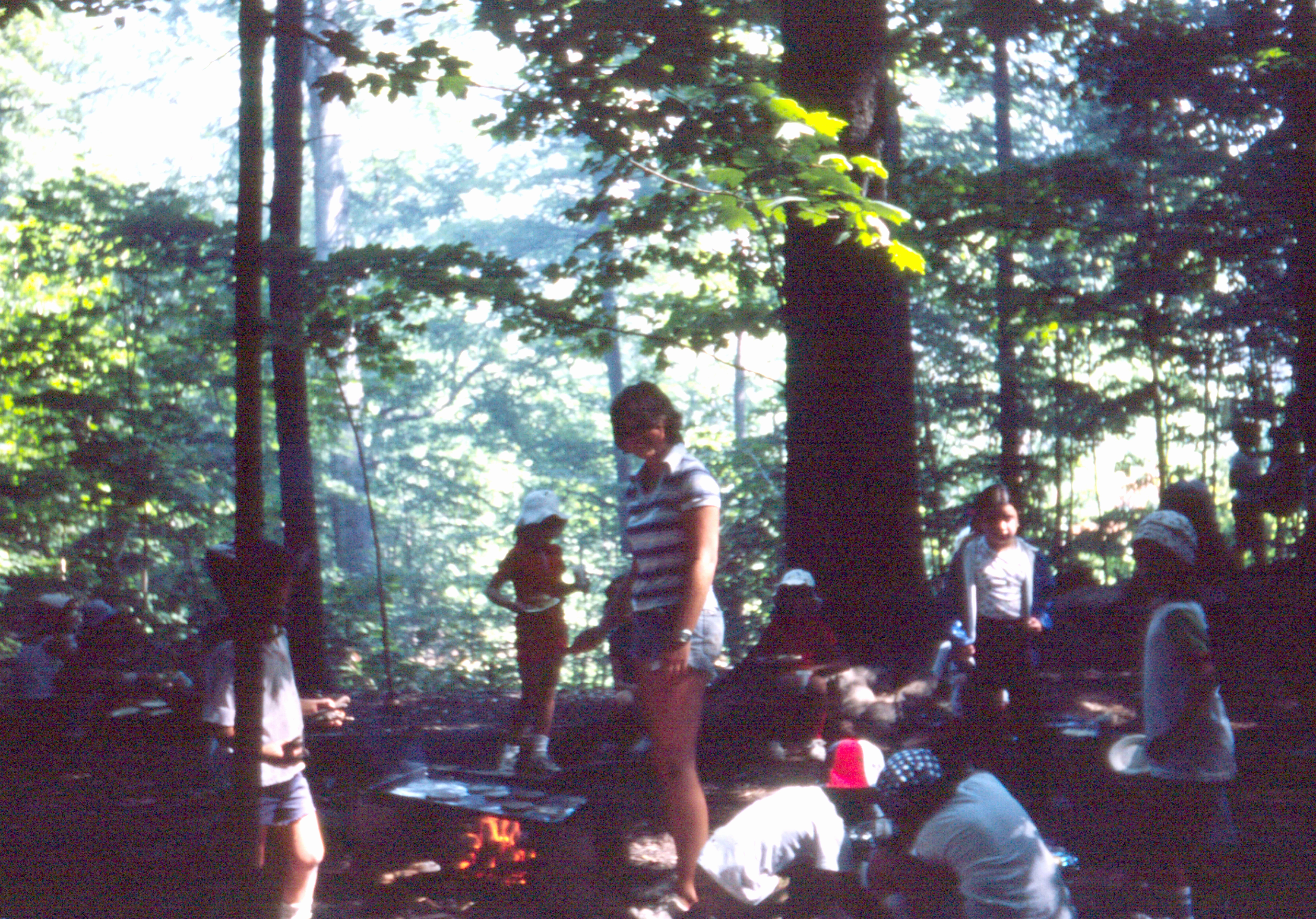
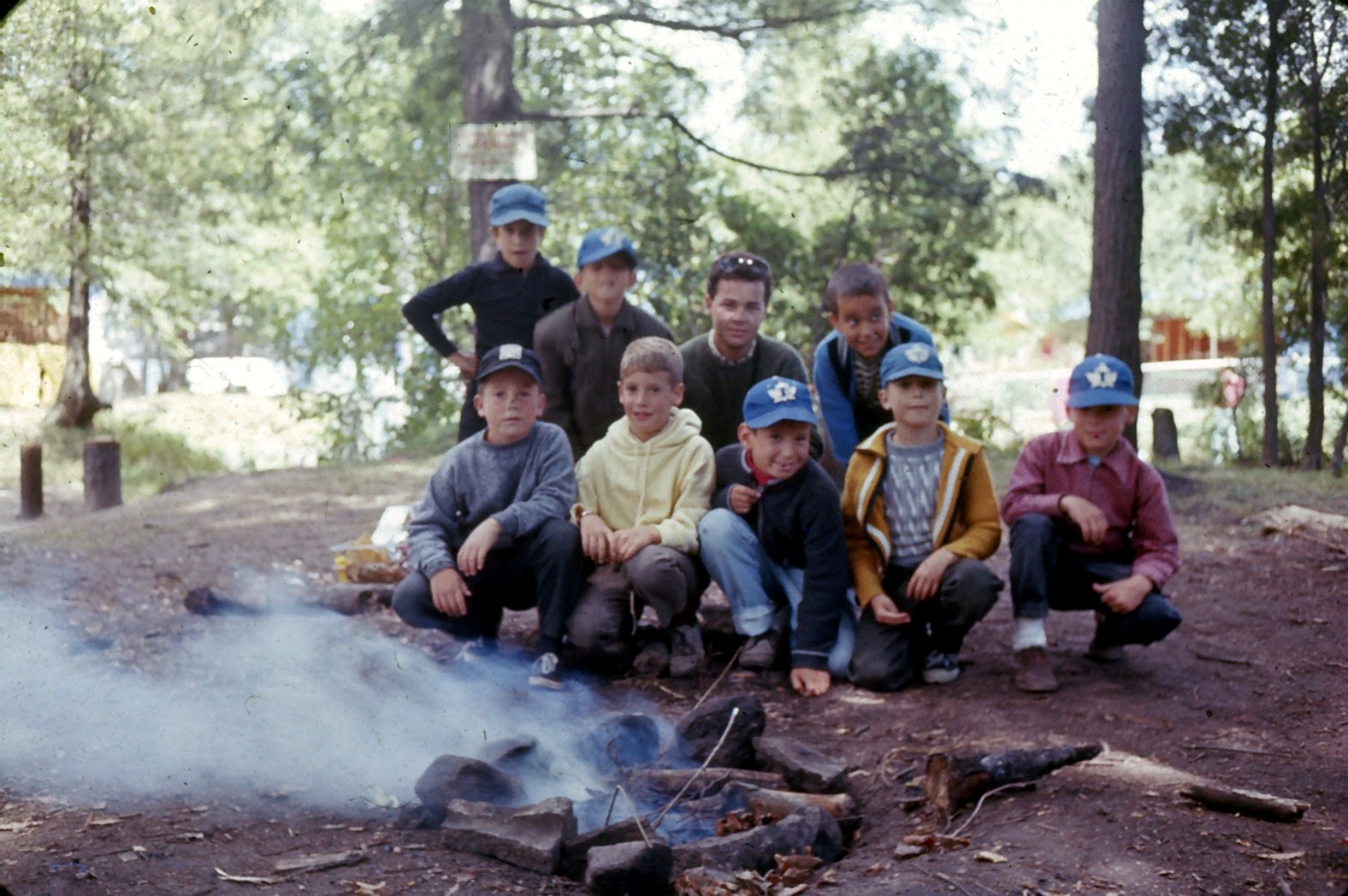
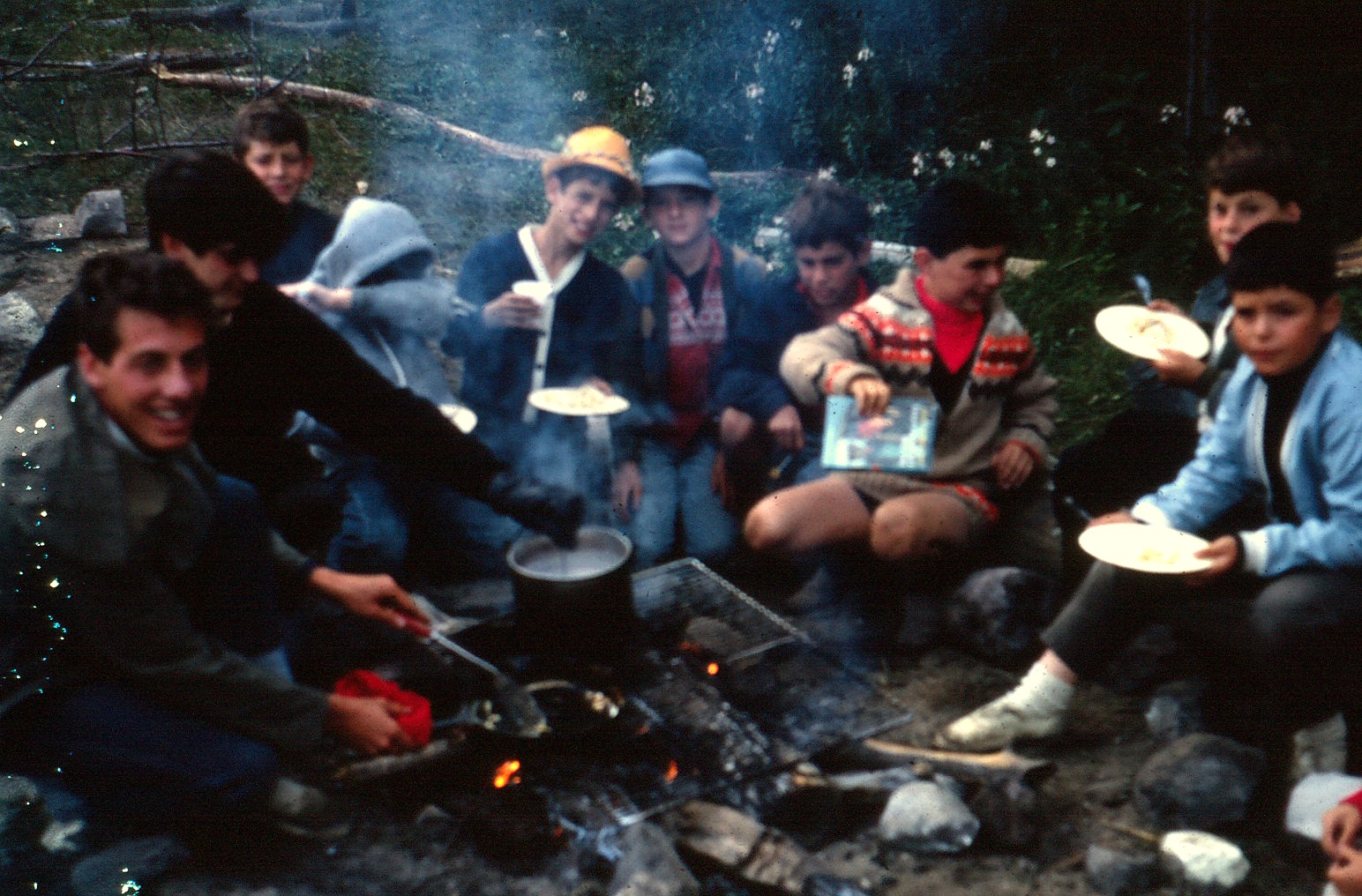
Cookouts were sometimes done with barbecues:
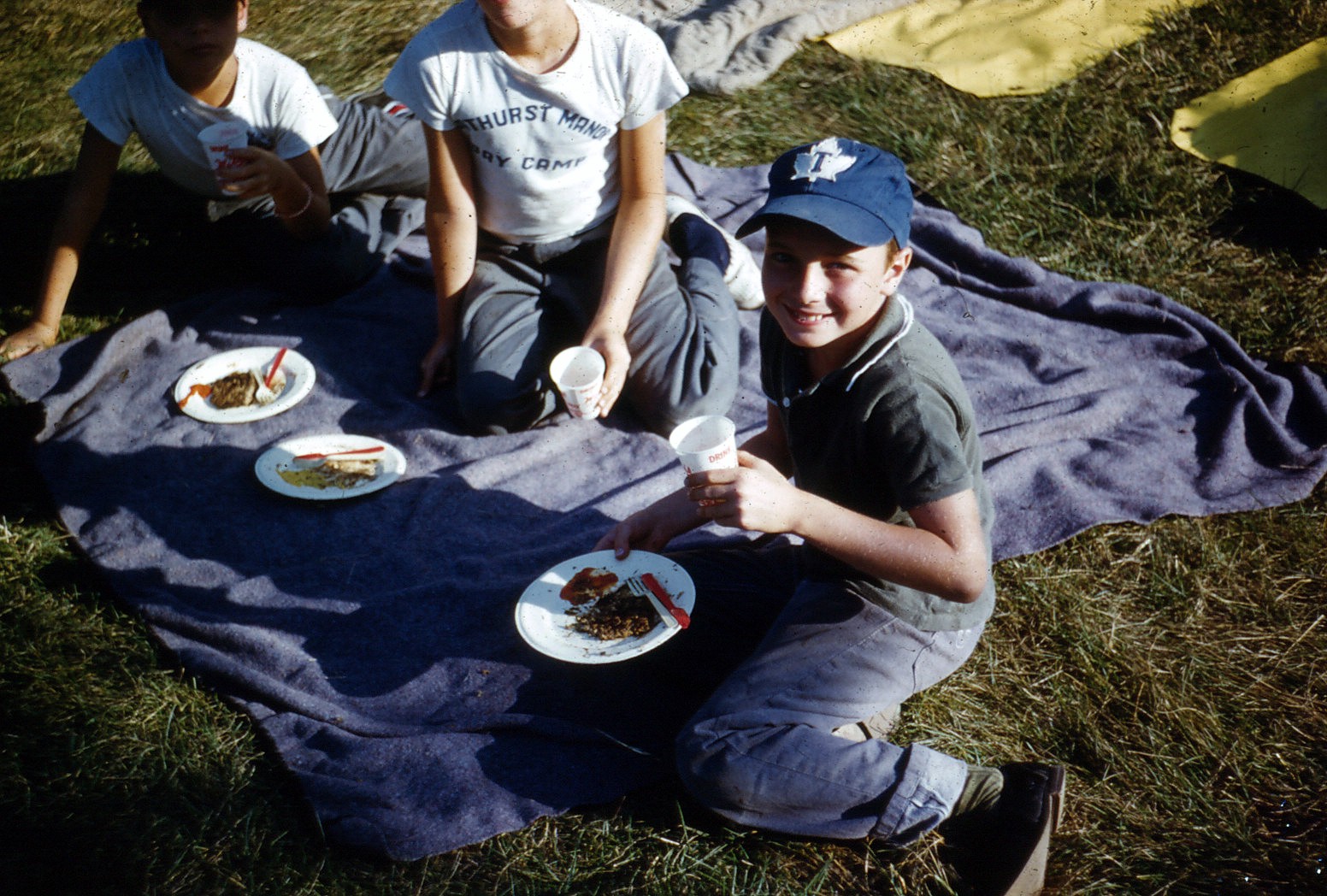
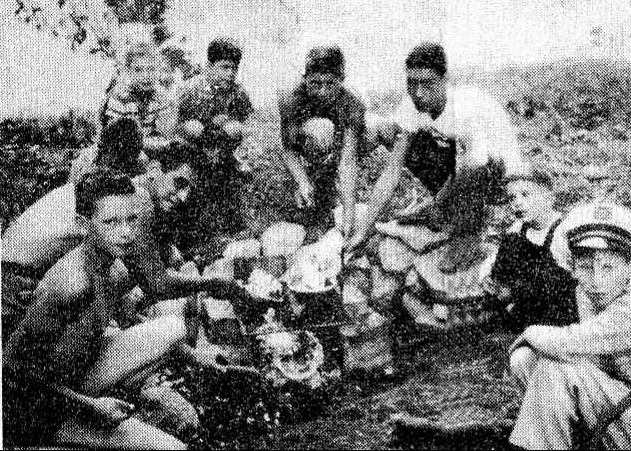
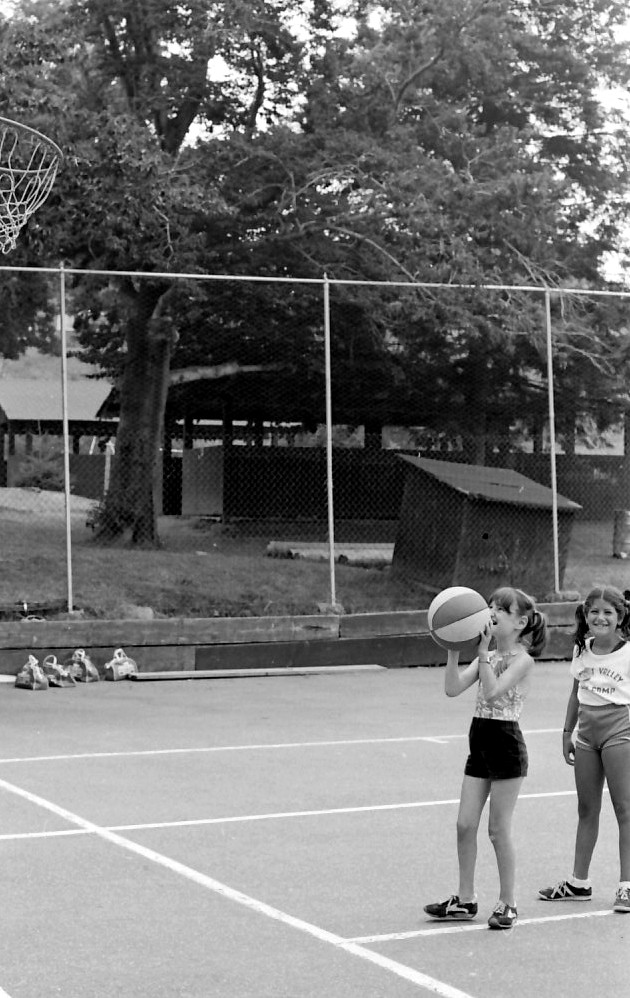
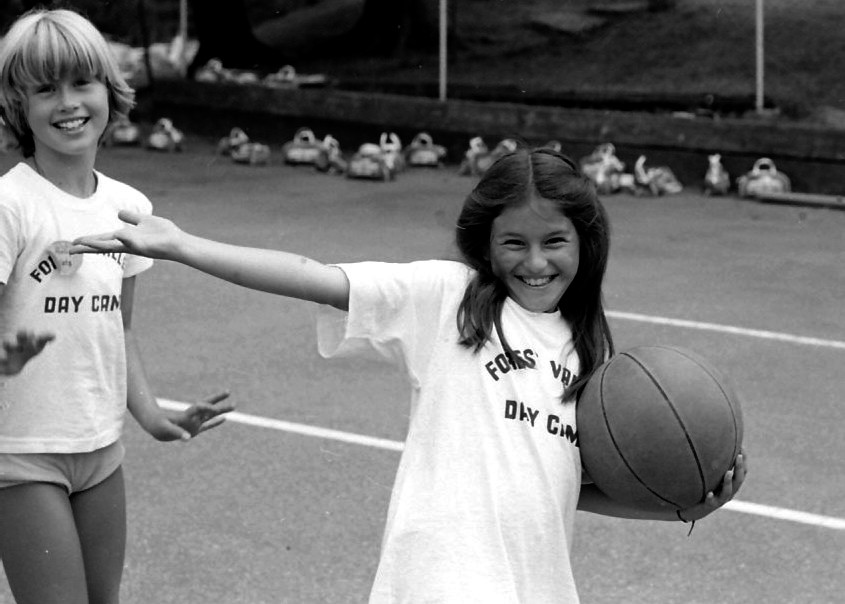
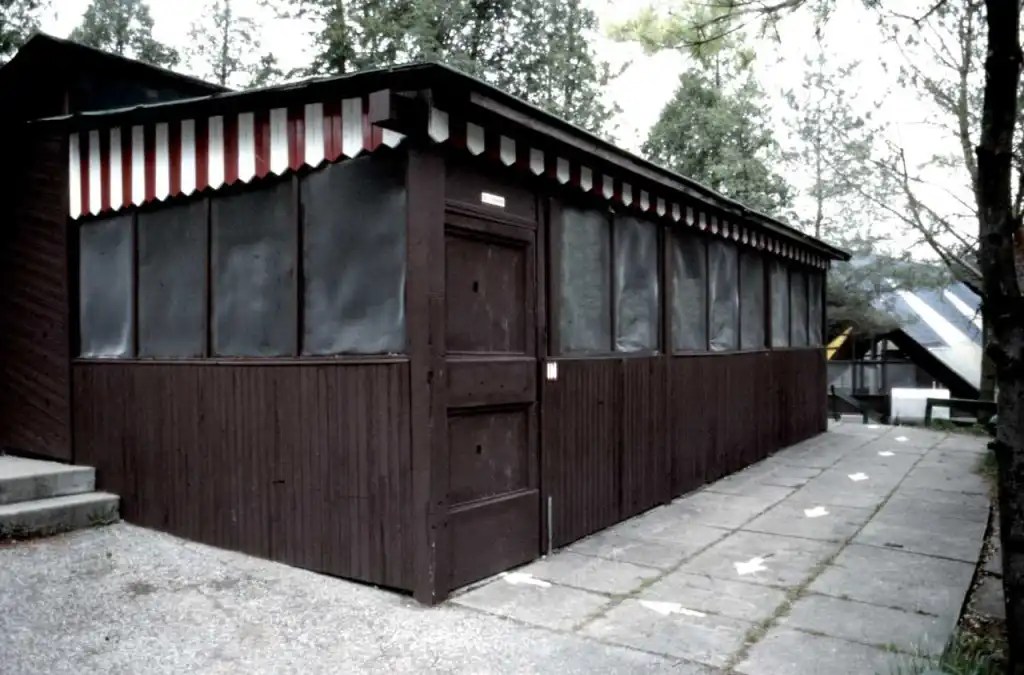
Kitchen
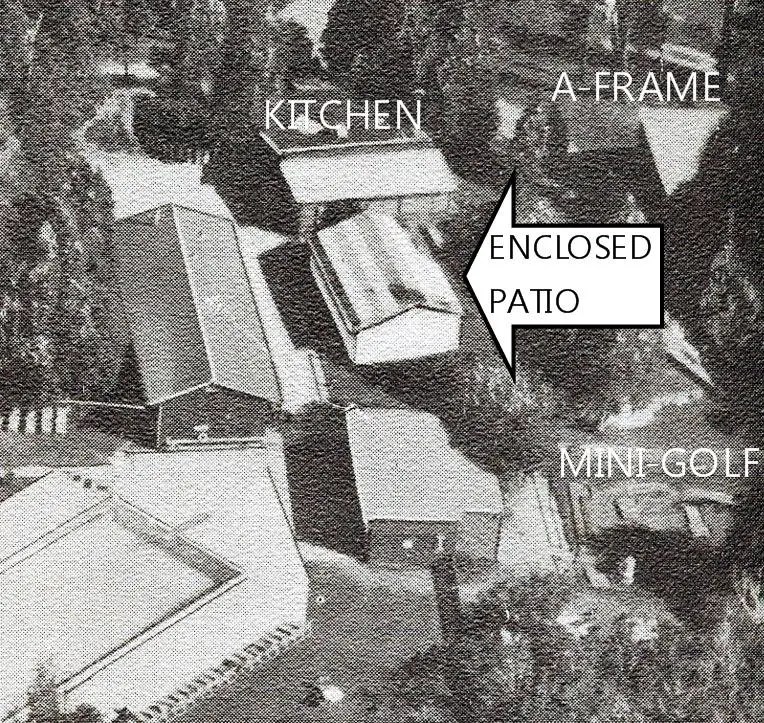


Photo taken in spring 1989. Kitchen with arrows painted on the ground to show path into kitchen from A-Frames.
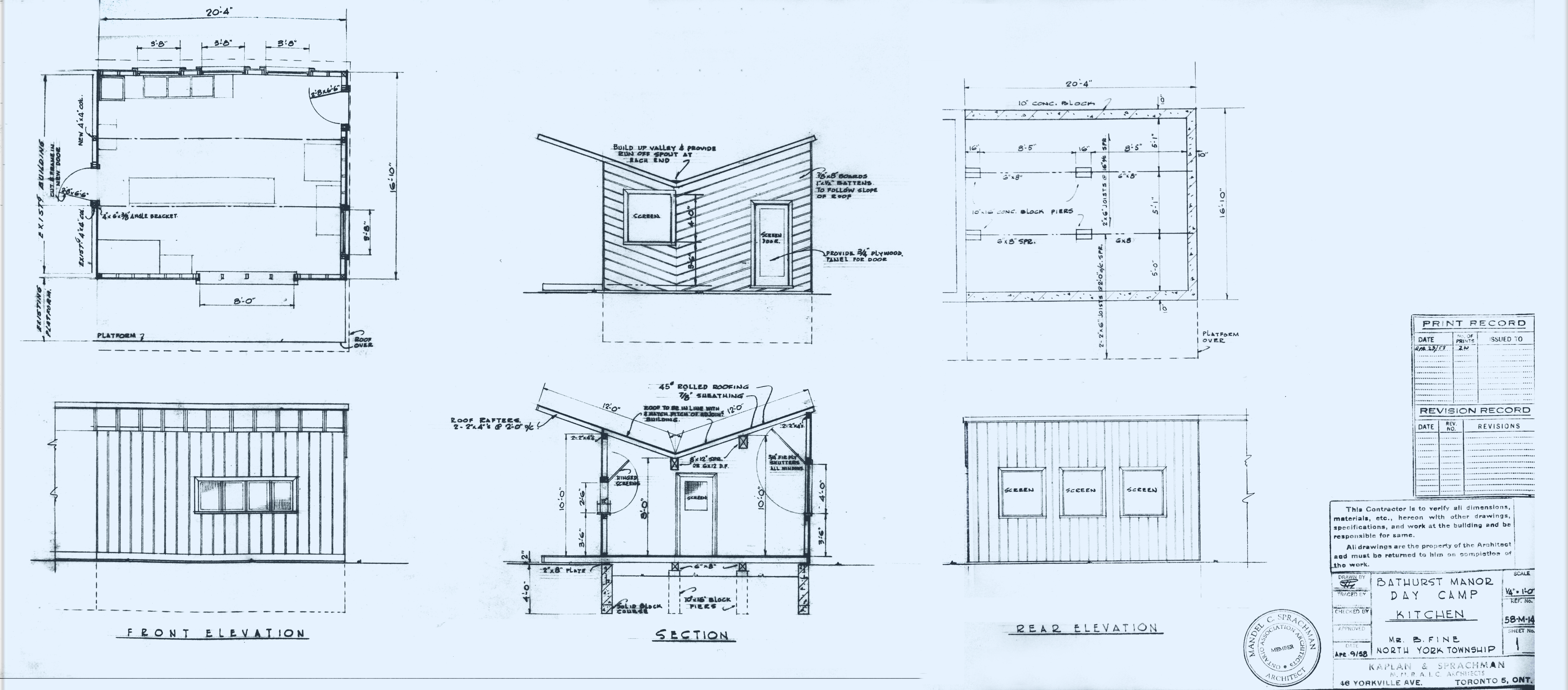
Kitchen Design:
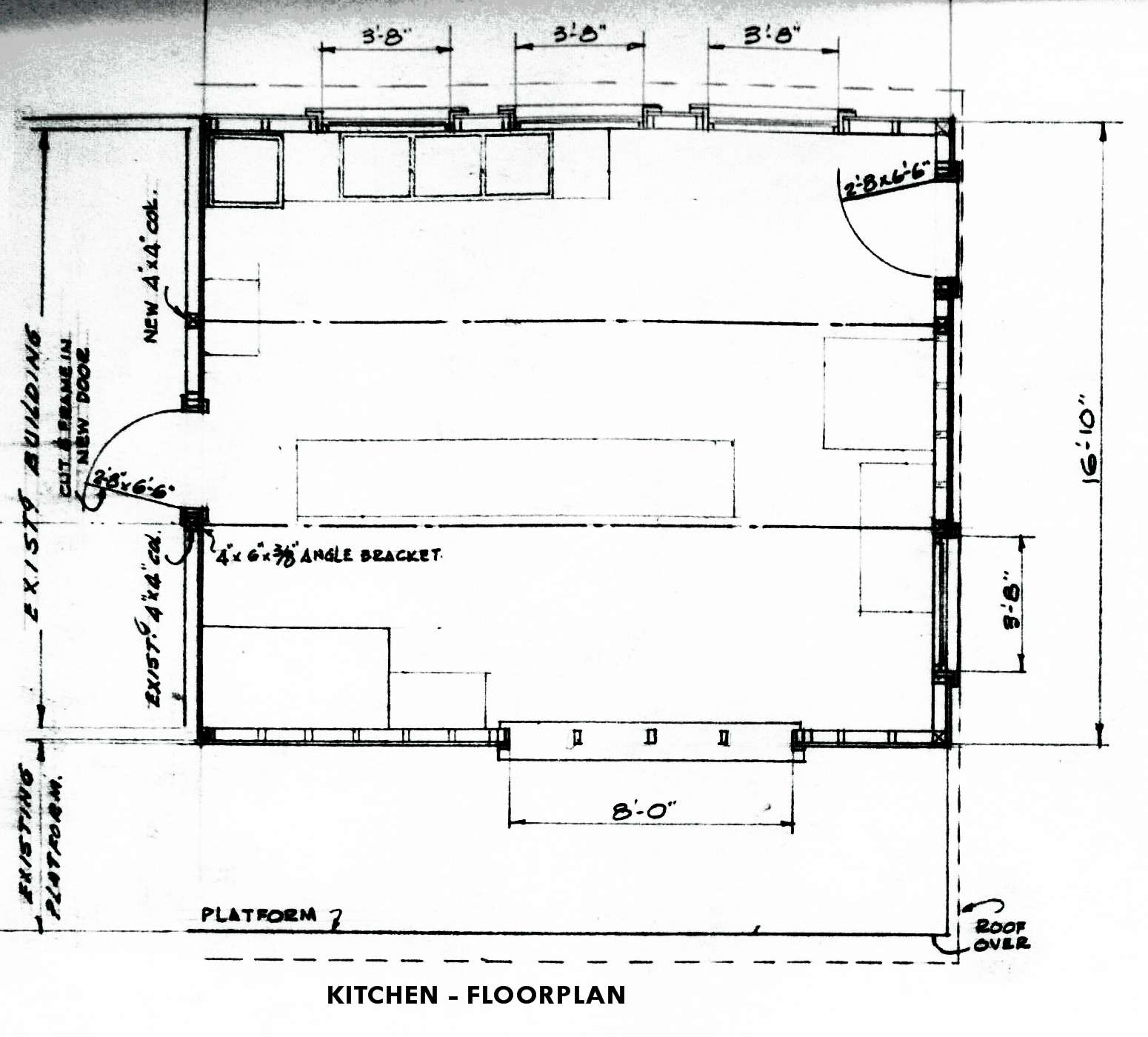
Kitchen Floorplan:

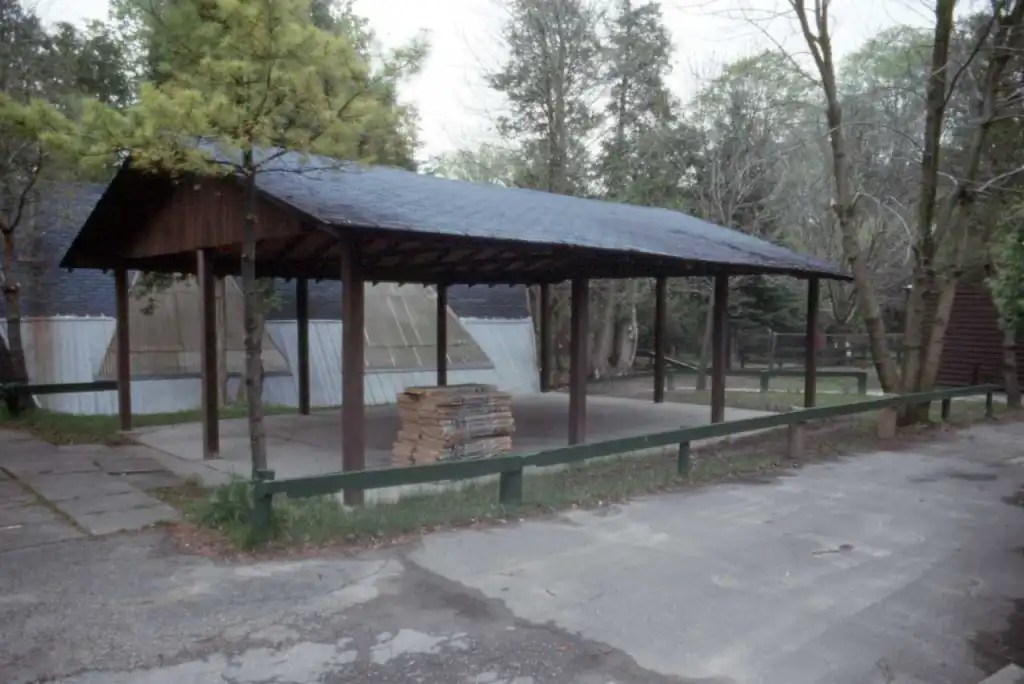
Patio
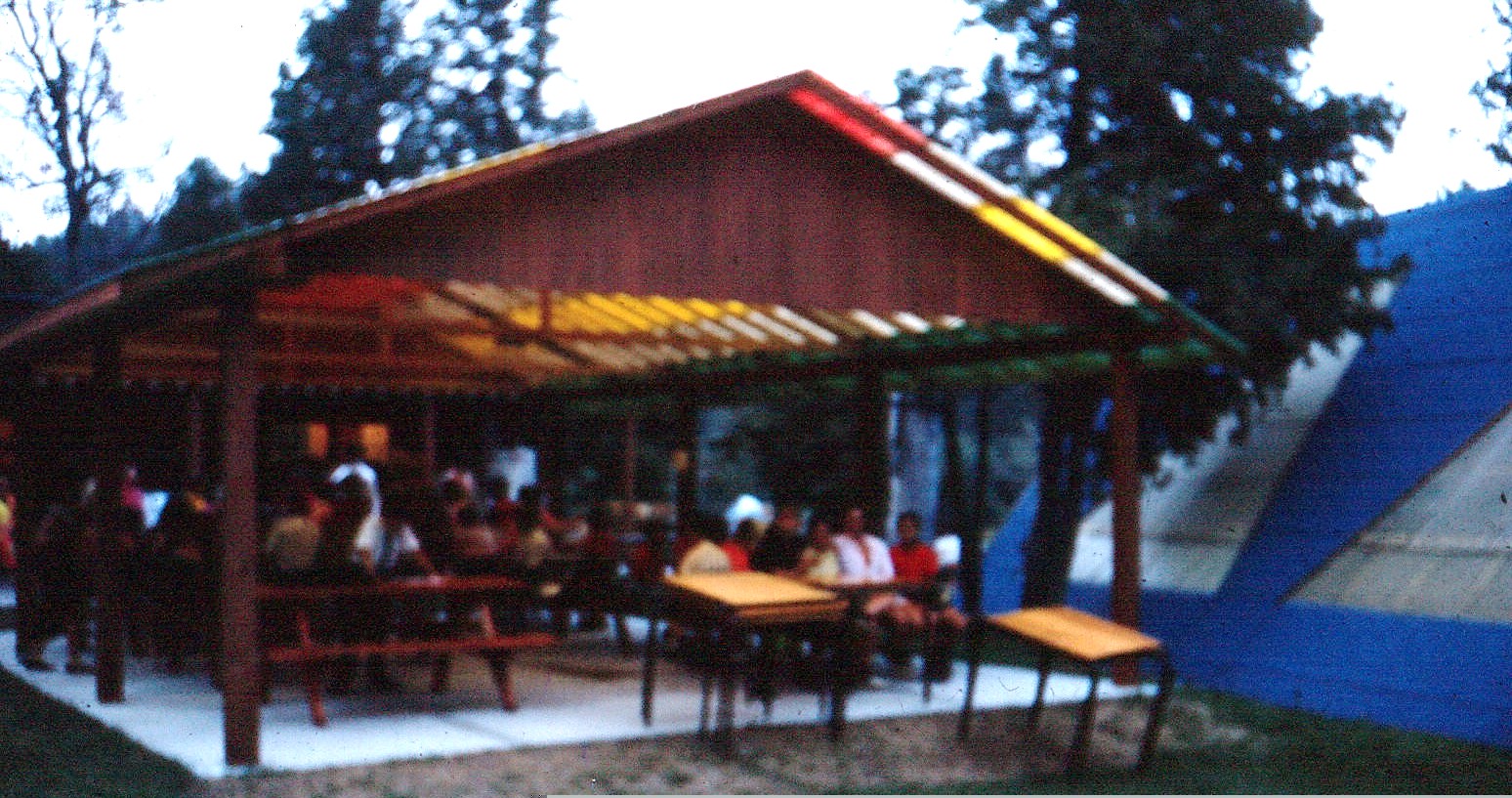
Outdoor patio with shingles ready to be replaced. Trivia: At one time the “Outdoor” Patio was enclosed as shown in this photo from around 1965. It is unclear when the side walls were removed.
Sinks
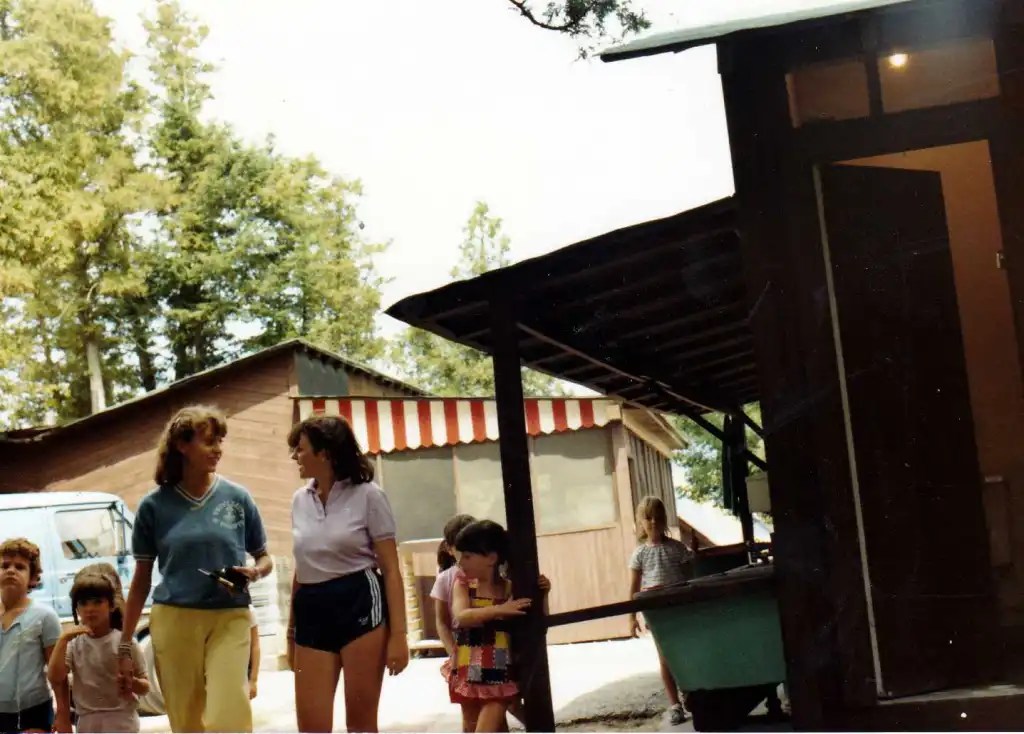
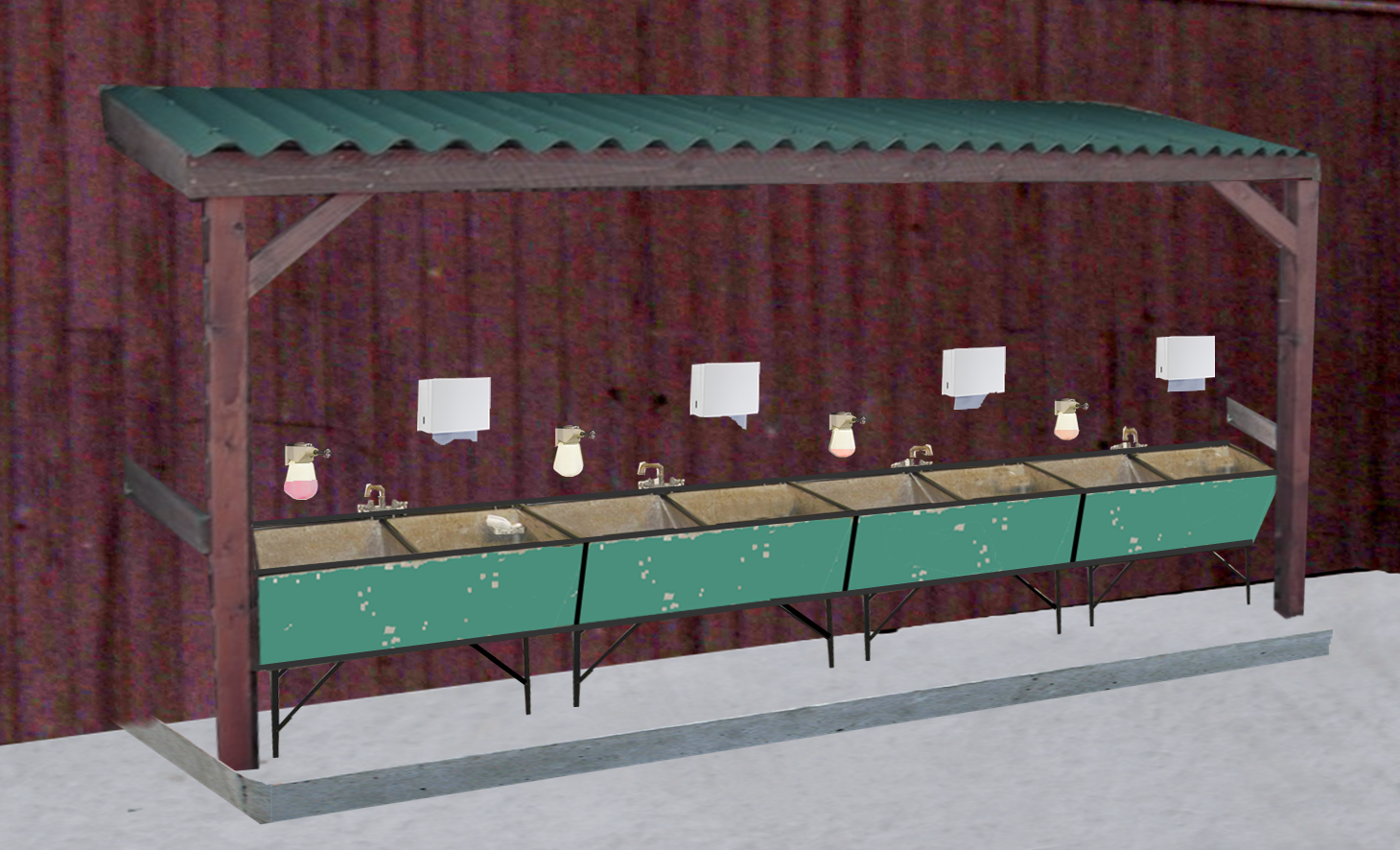
The sinks for washing up before lunch:

In the mid-60’s, Bert collected on a debt by accepting a pony carousel and a stagecoach. For a time, horses pulled the stagecoach on rides for campers.
In the PeeWee unit, early 1970s:
In a parade, 1971:
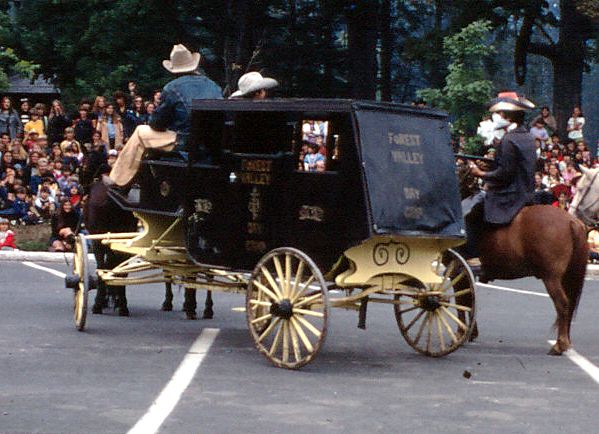
After several years, it was determined to be unfit for use and it sat beside the road in front of Sr. A&C.
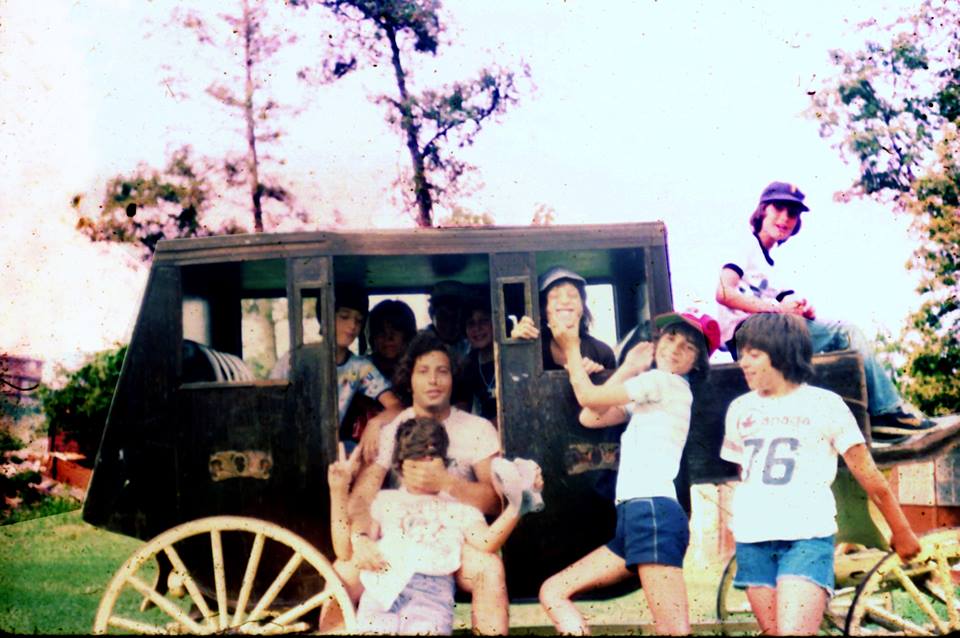
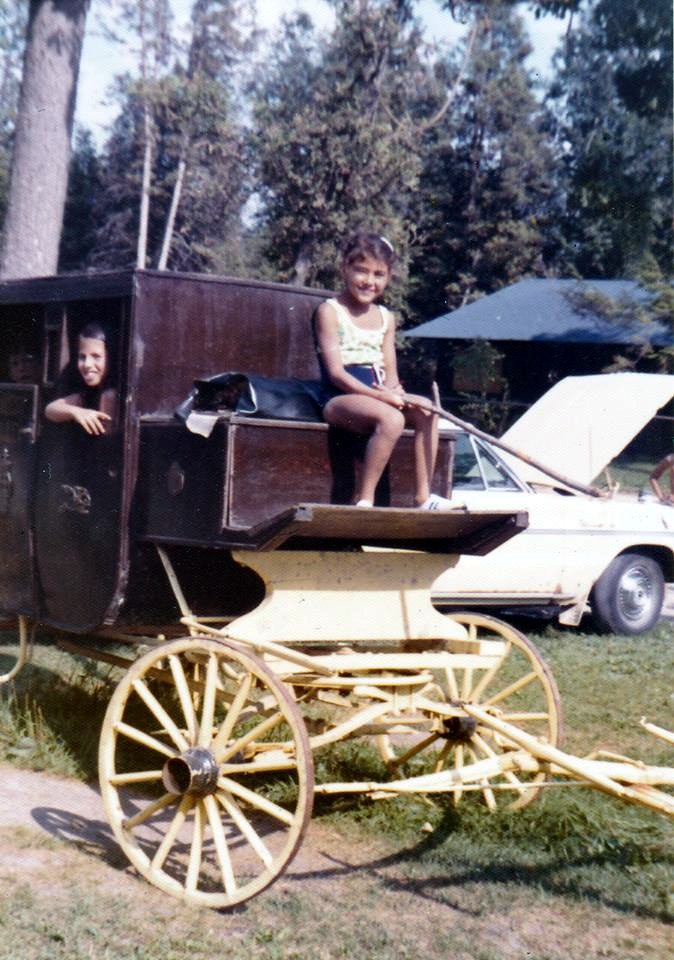
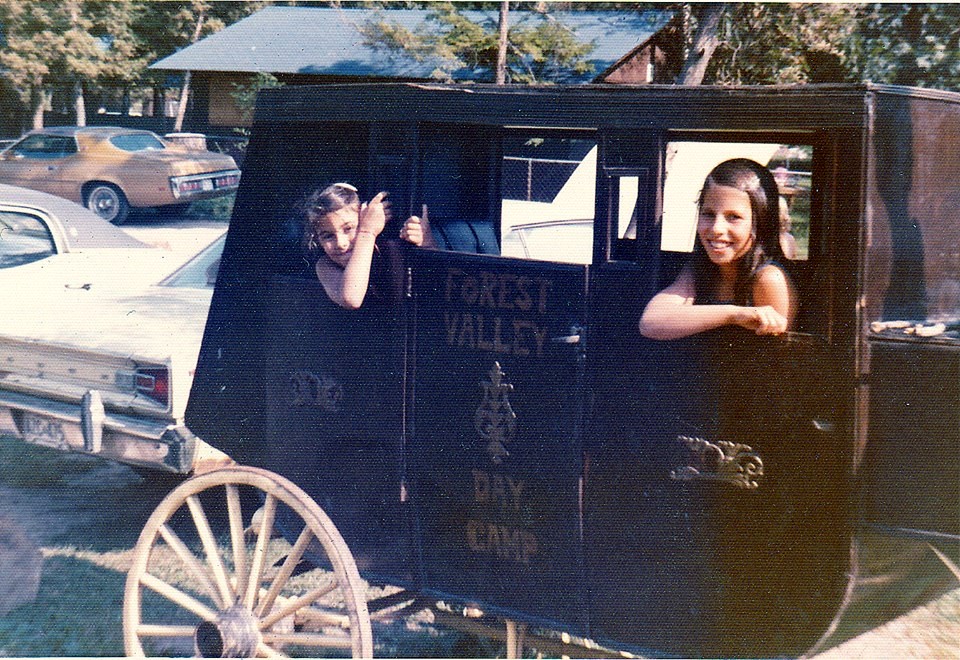
Campers played in it for several seasons until it fell into disrepair and was removed around 1978.
The Terrace
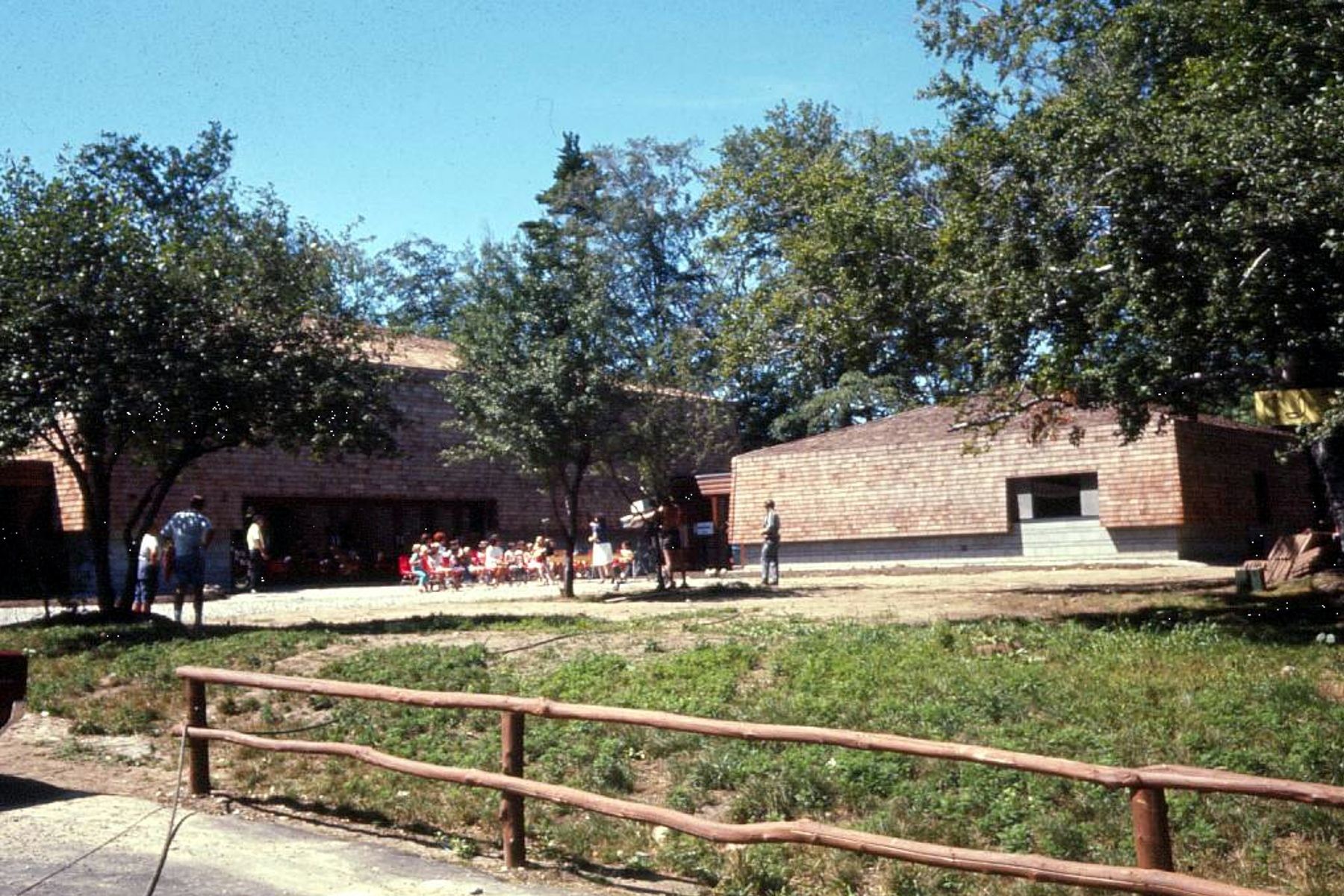
Newly constructed auditorium and office in 1964. The office window would be replaced by a door and a full kitchen installed to prepare food for the Swim/Weekend Club. The building was out-of-bounds during camp and was largely unused from the 80’s onward.
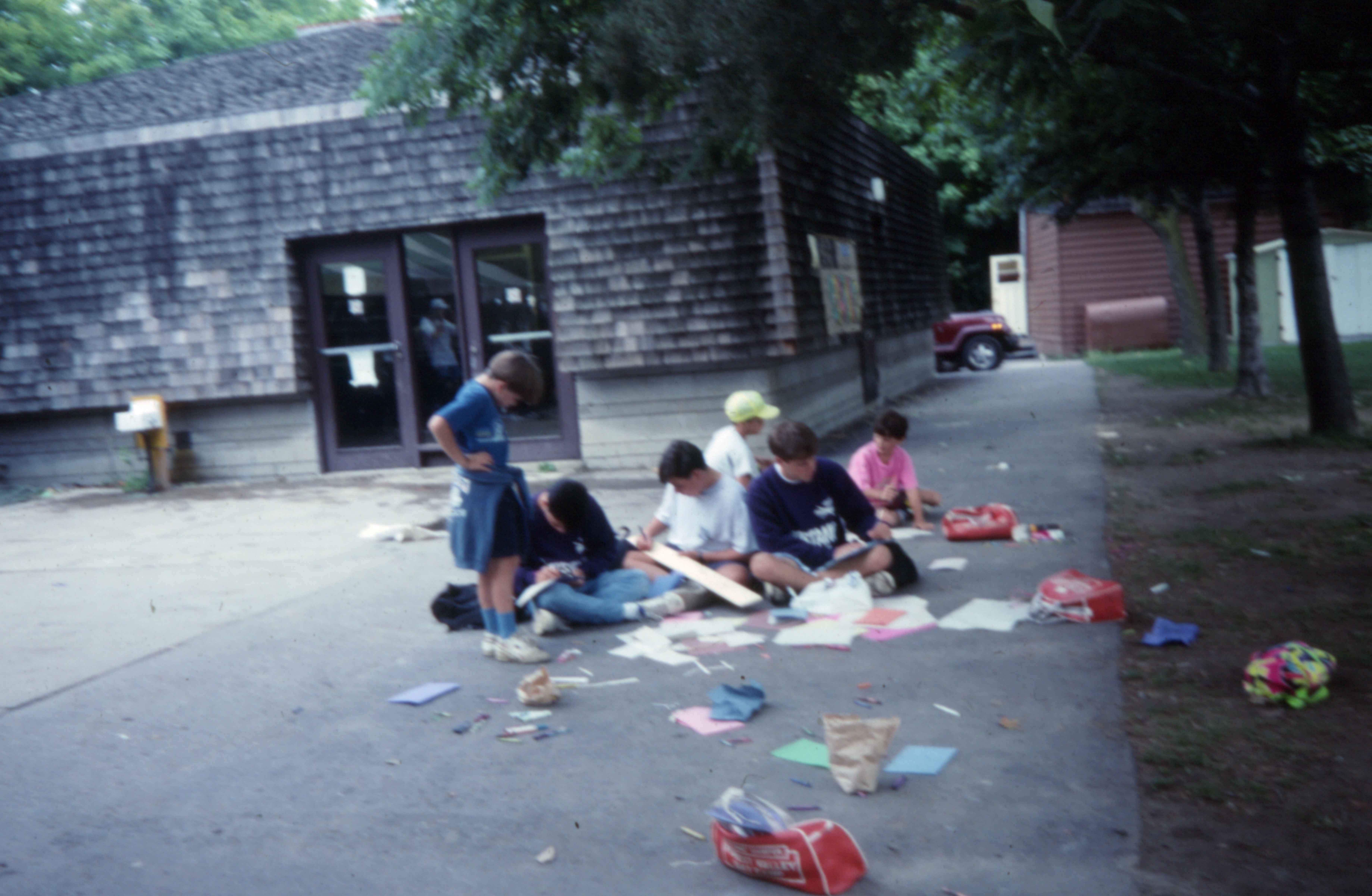
Arts & crafts in front of the “The Terrace”. Notice door instead of window.
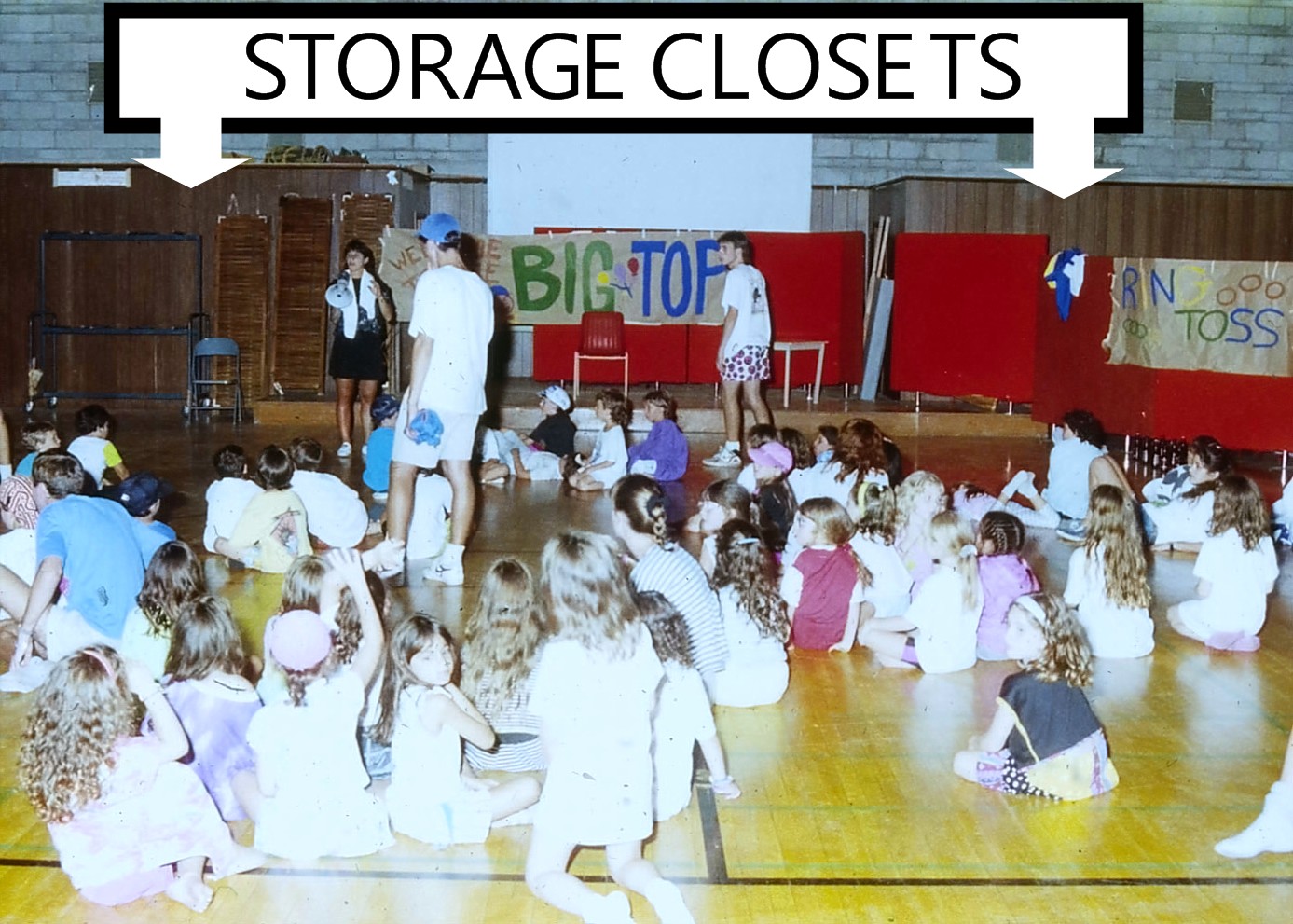
All of the kitchen supplies were moved into two storage closets built on either side of the stage in the auditorium and remained there until camp closed.



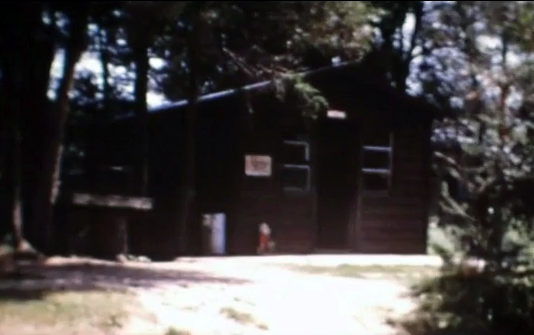
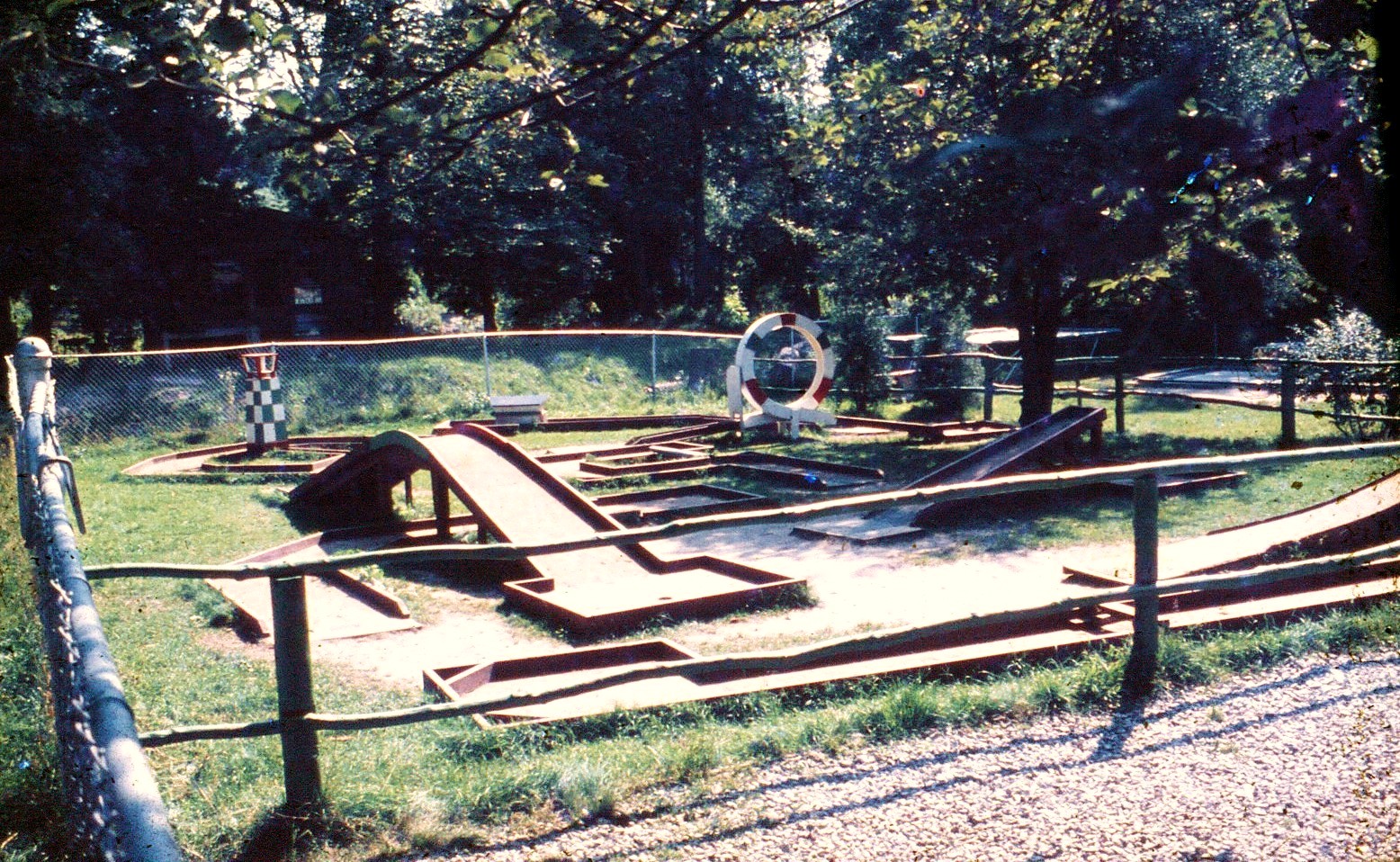
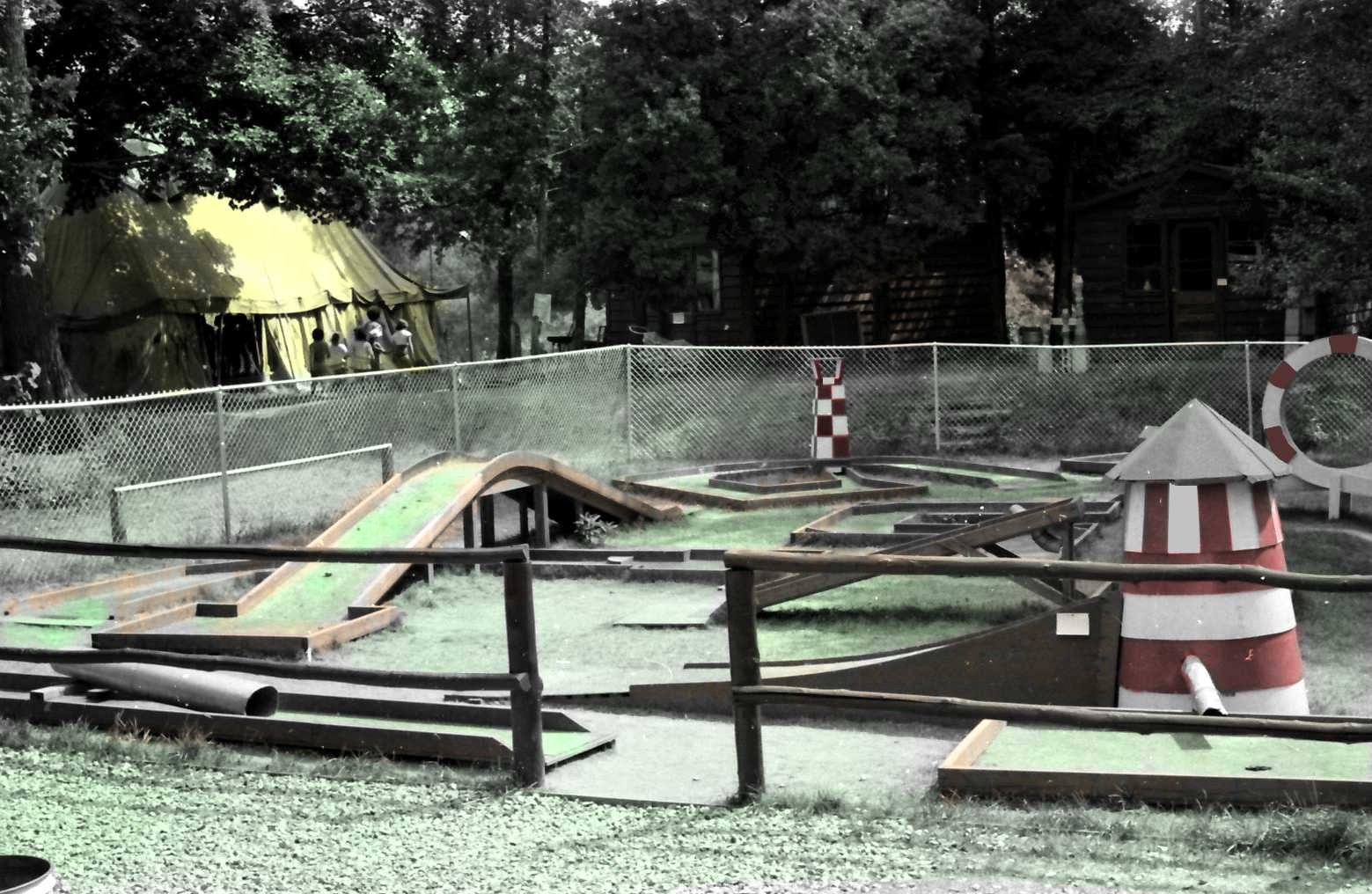
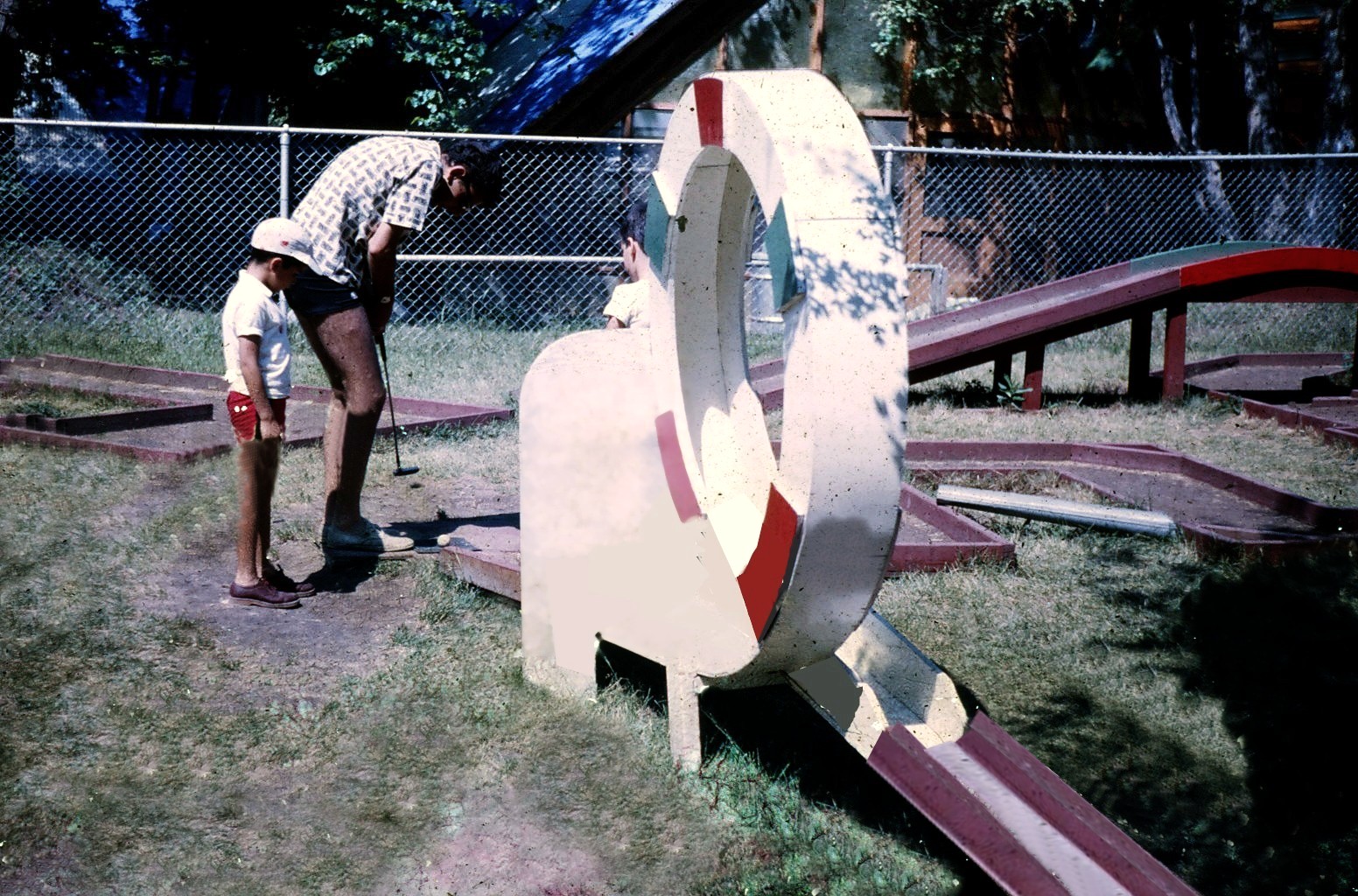
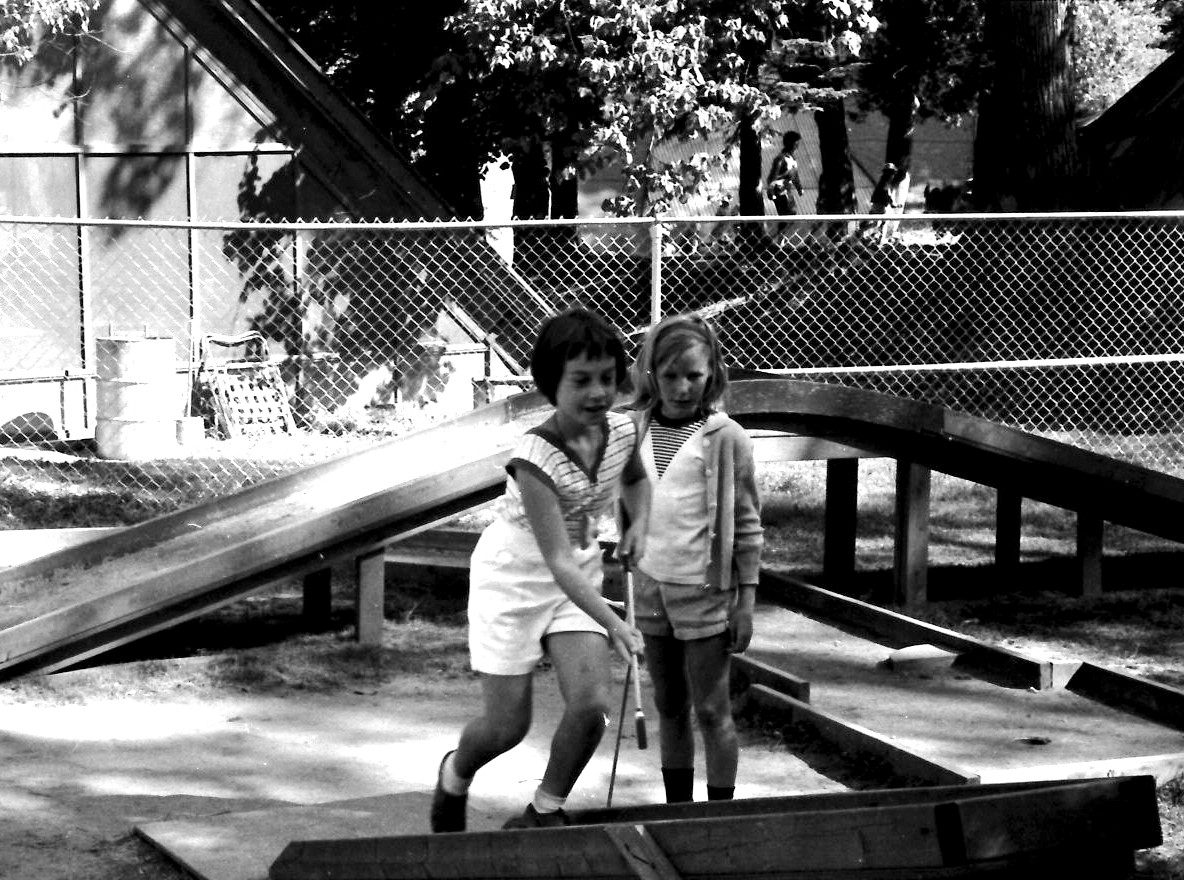
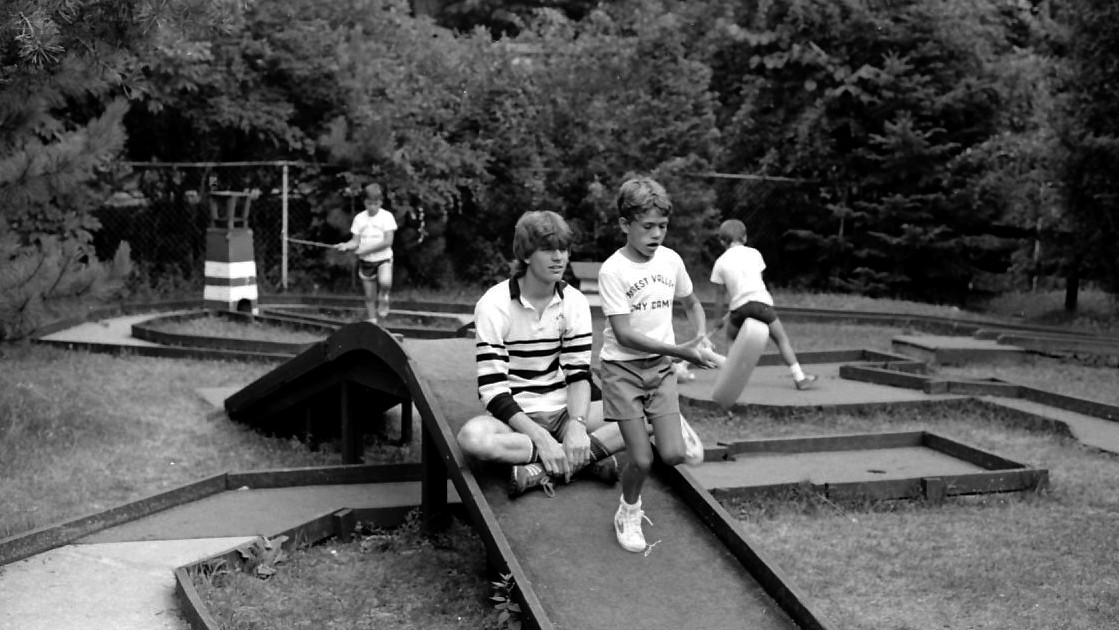
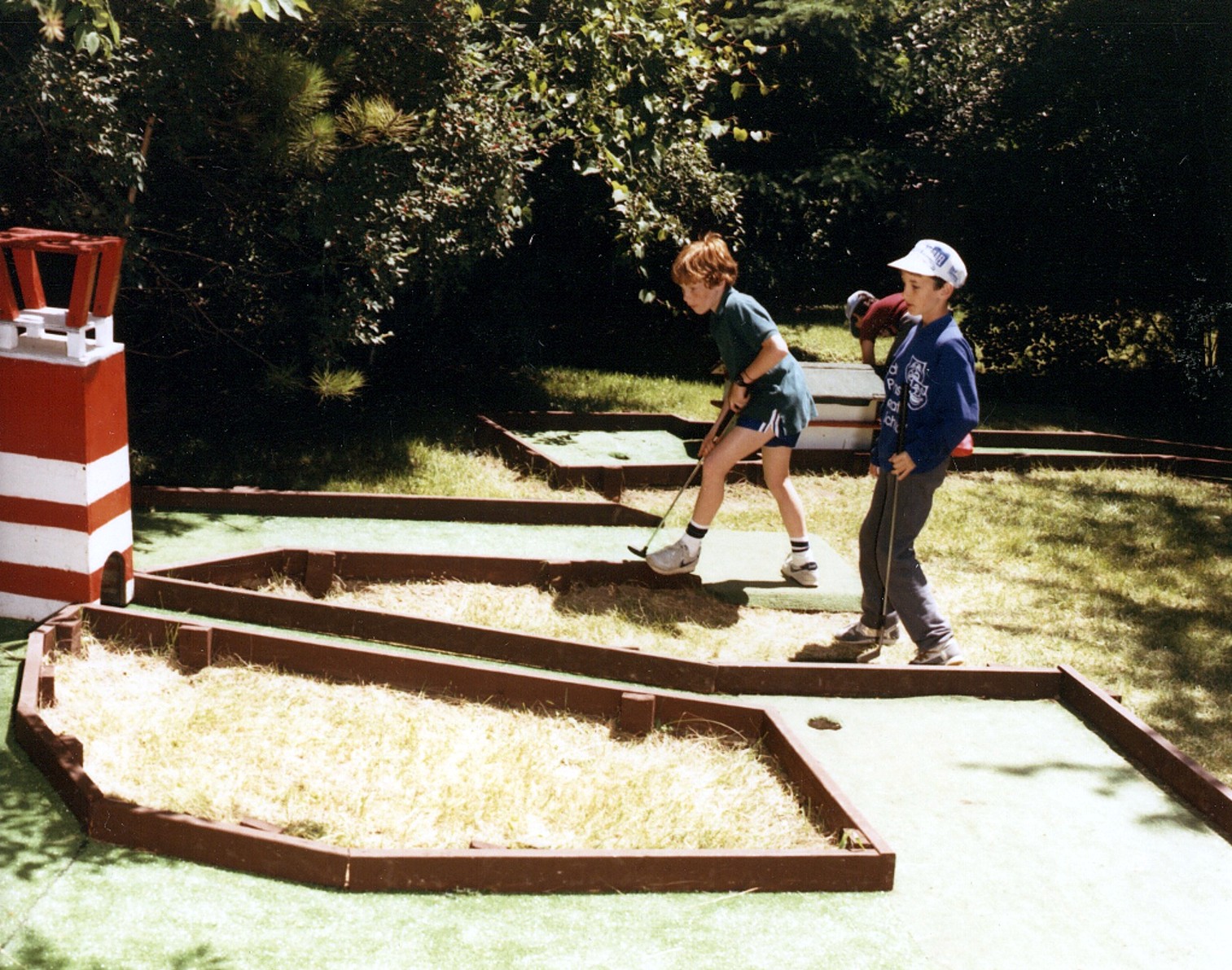
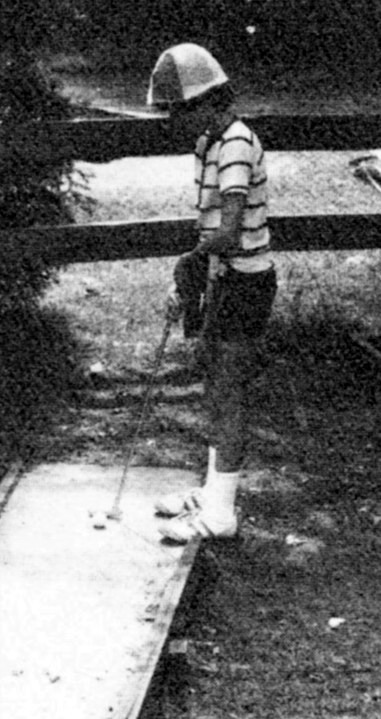
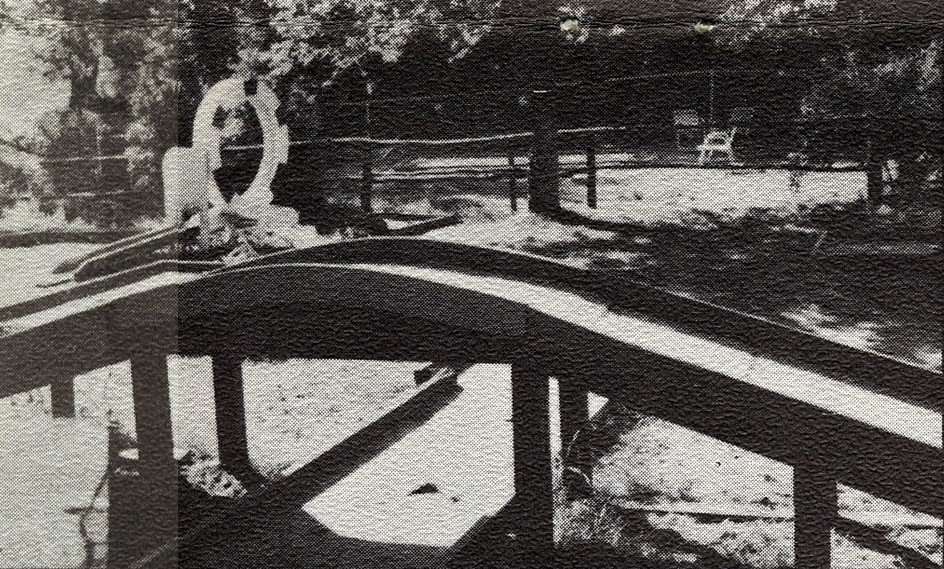
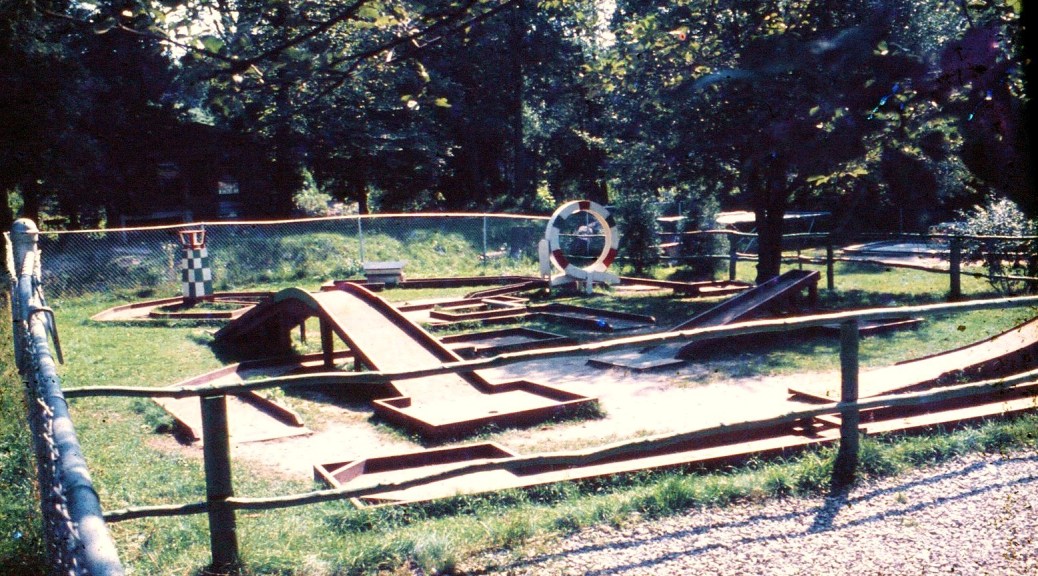
The mini-golf course was located south of A-Frame 1.
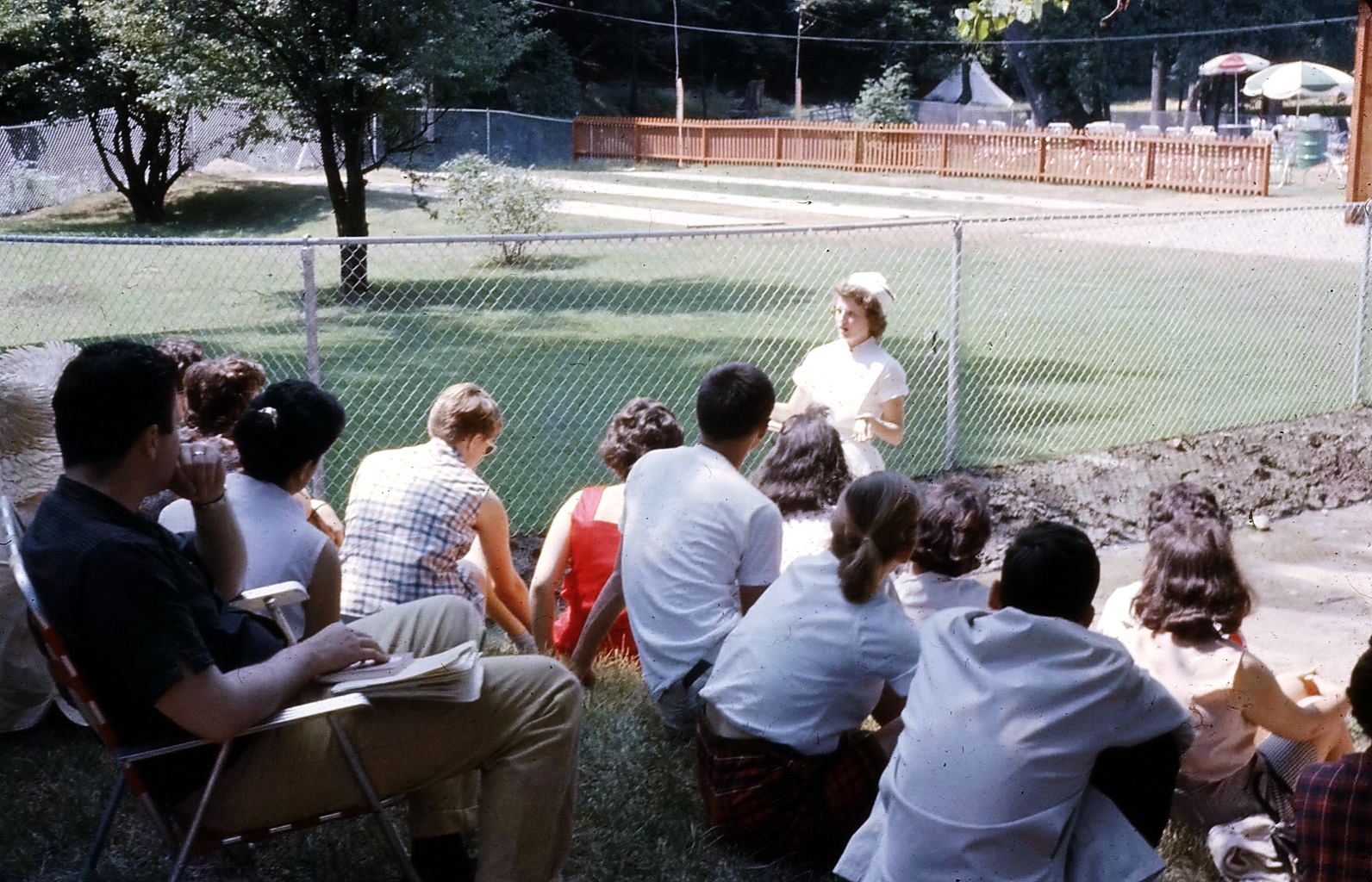
The site of the mini golf course prior to construction in 1960 (similar angle):
The photo below is taken from the opposite direction to the one above – after the course was built:
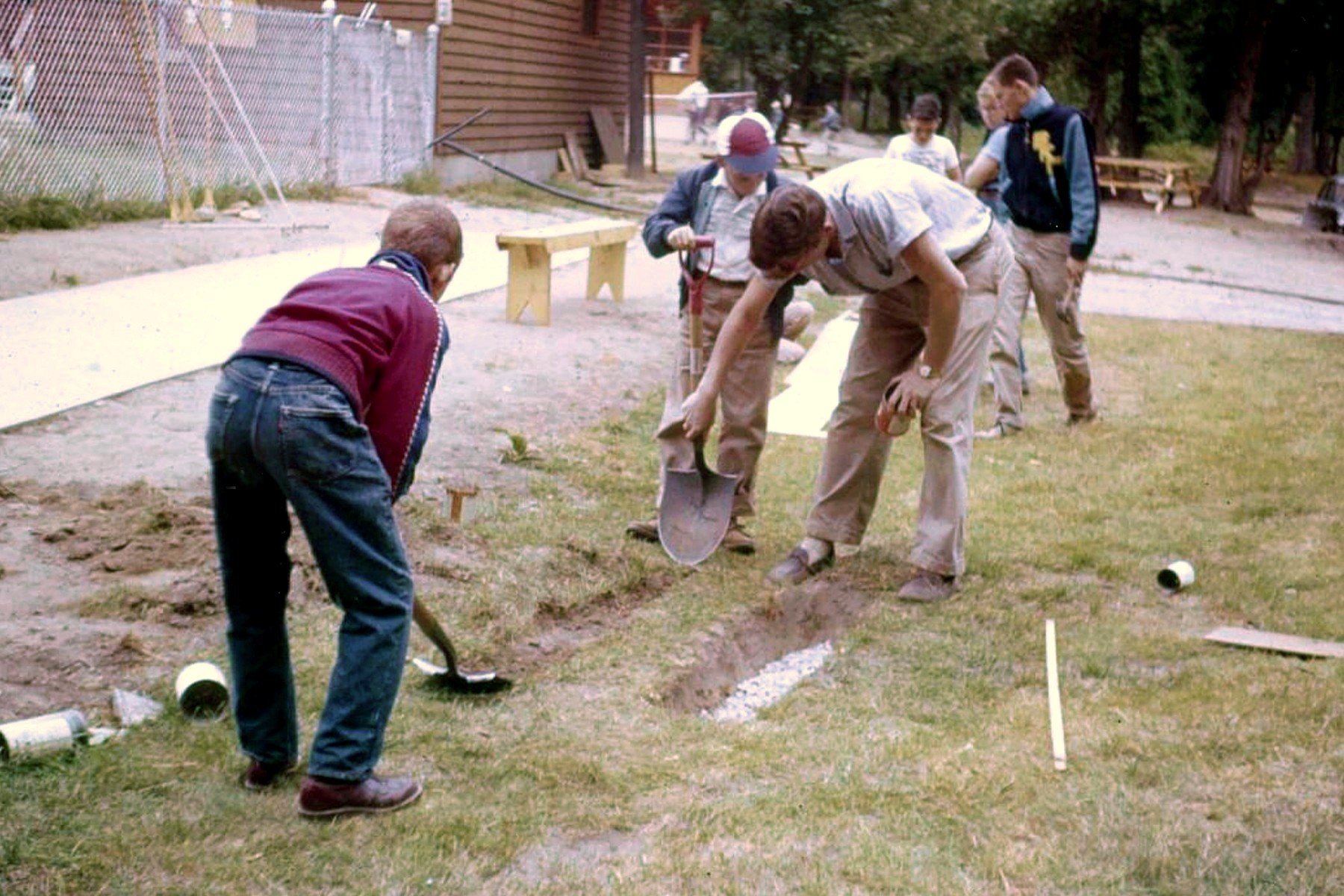
Below, campers and staff prepare for work on the mini-golf course by digging sample trenches. It will be built on the other side of the fence to the left. ca. 1961



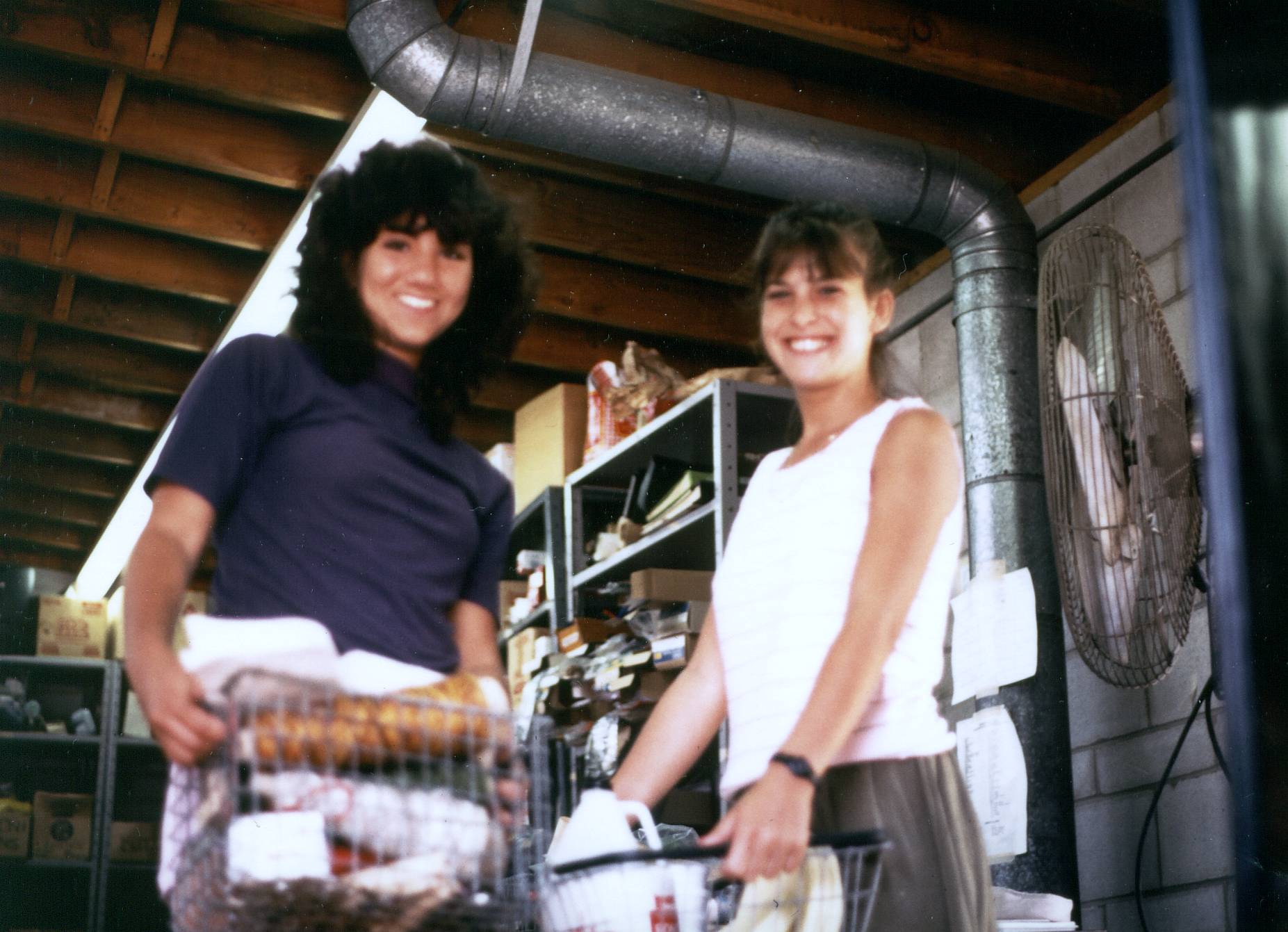
Garages at the bottom of the parking lot. Always open and full of sharp tools & dangerous chemicals. ca. 1987
 Forest Valley Day Camp 1956 - 1993