Early views – 1959:
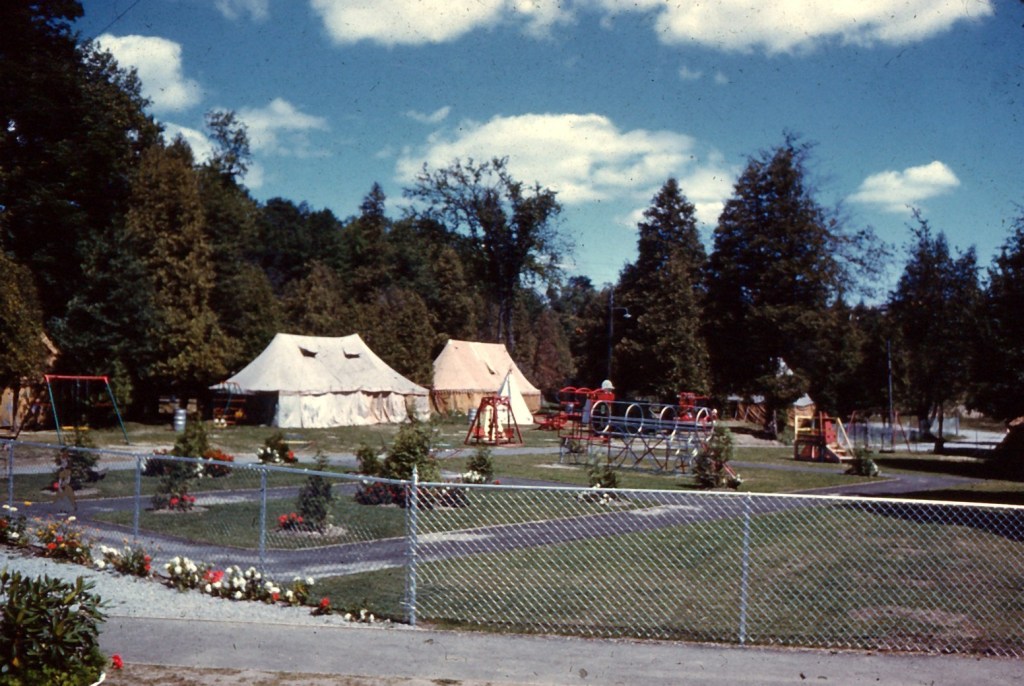
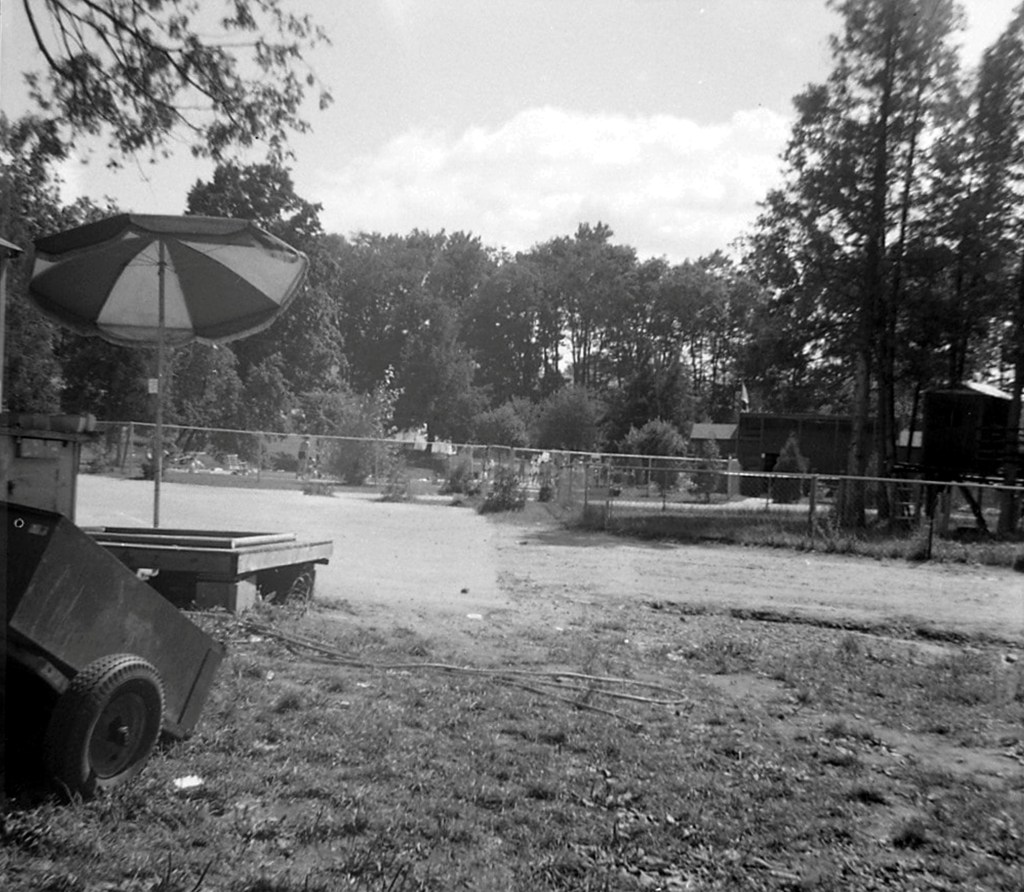
The shelter shown below was later moved to the Patio (outside the kitchen) View is looking north west with garages visible in the background:

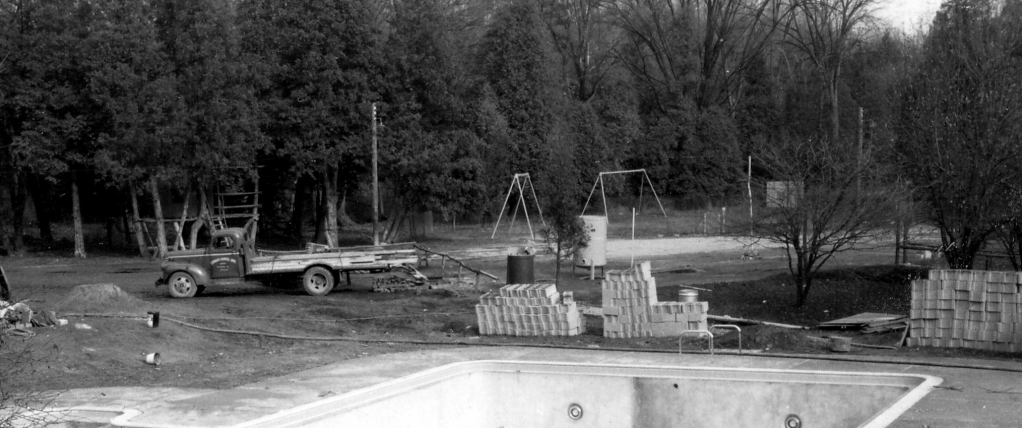
During construction of the T-Pool in 1964:

Posts about specific locations at camp – primarily buildings and facilities.
Posts are listed in chronological order based on date of posting – newest posts first.
Early views – 1959:
The shelter shown below was later moved to the Patio (outside the kitchen) View is looking north west with garages visible in the background:
During construction of the T-Pool in 1964:


Barbeque Pit
Clockwise L-R:
Barbecuing behind the A-Frame. Lower Field in the background. ca 1965
A permanent barbecue was built in the same location. This photo taken in 1969. Tent in the background is on the upper field beside the Nature Hut.
Same barbecue ca. 1989.

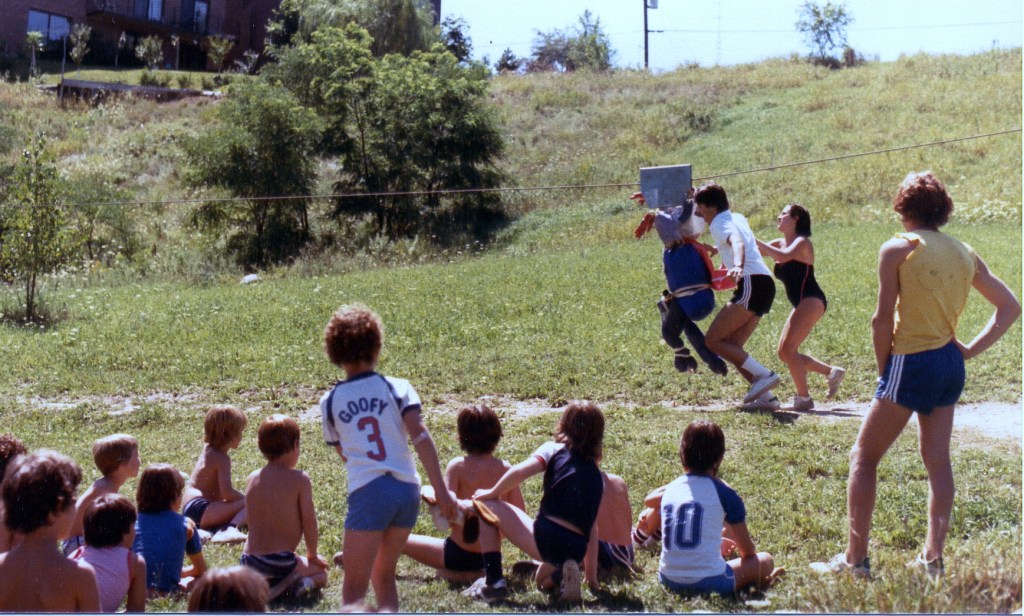
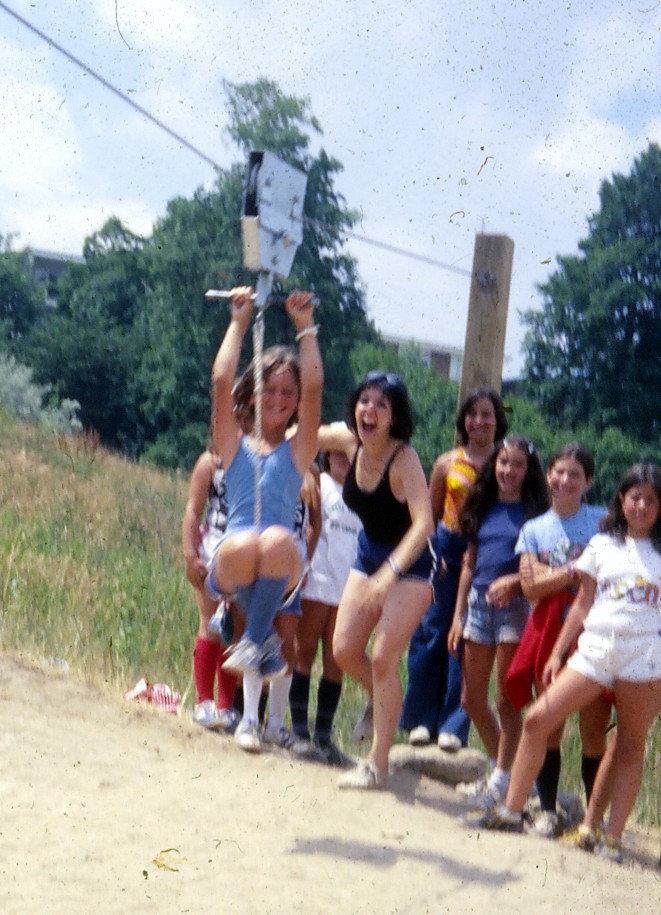
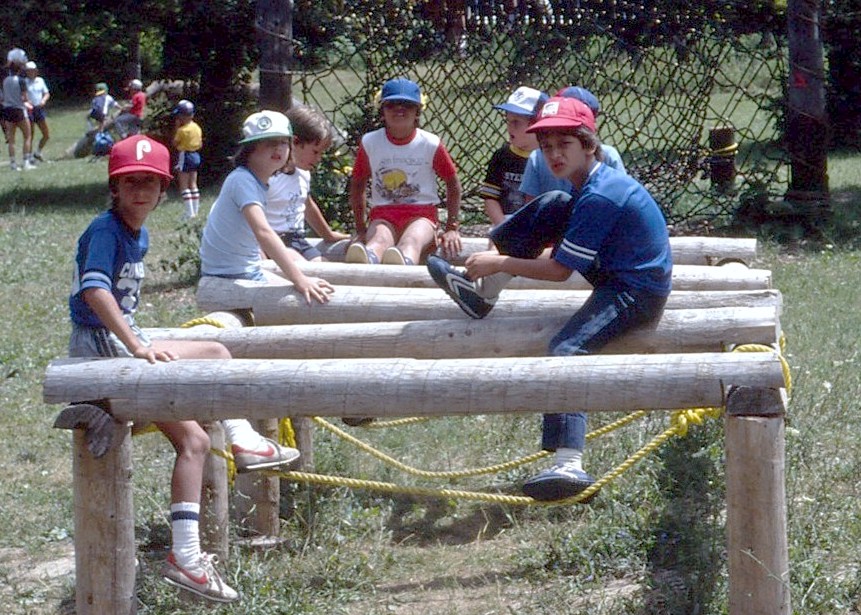
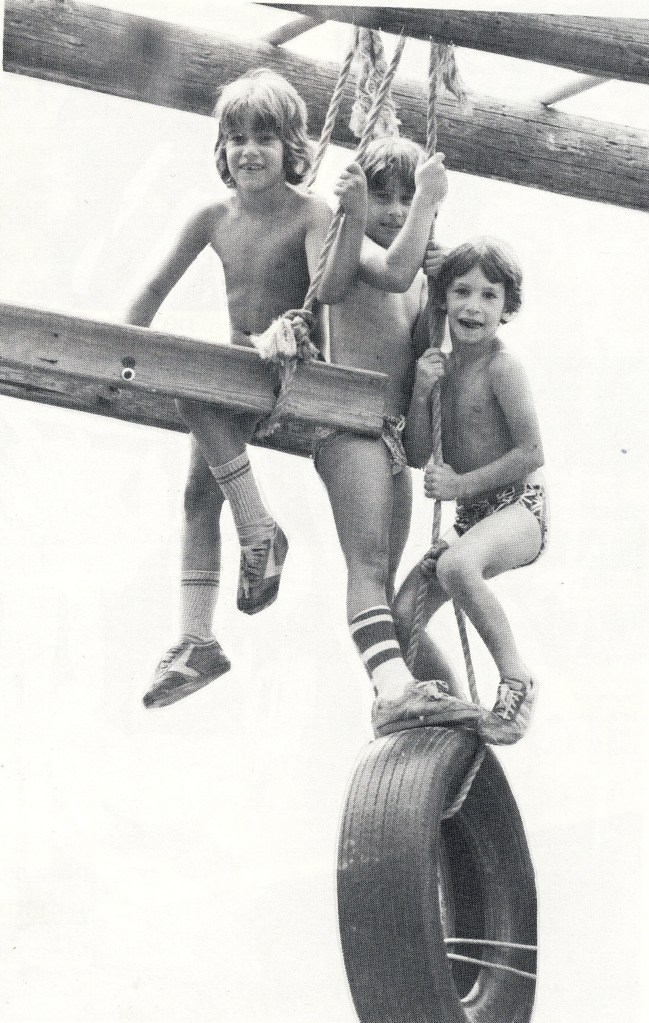
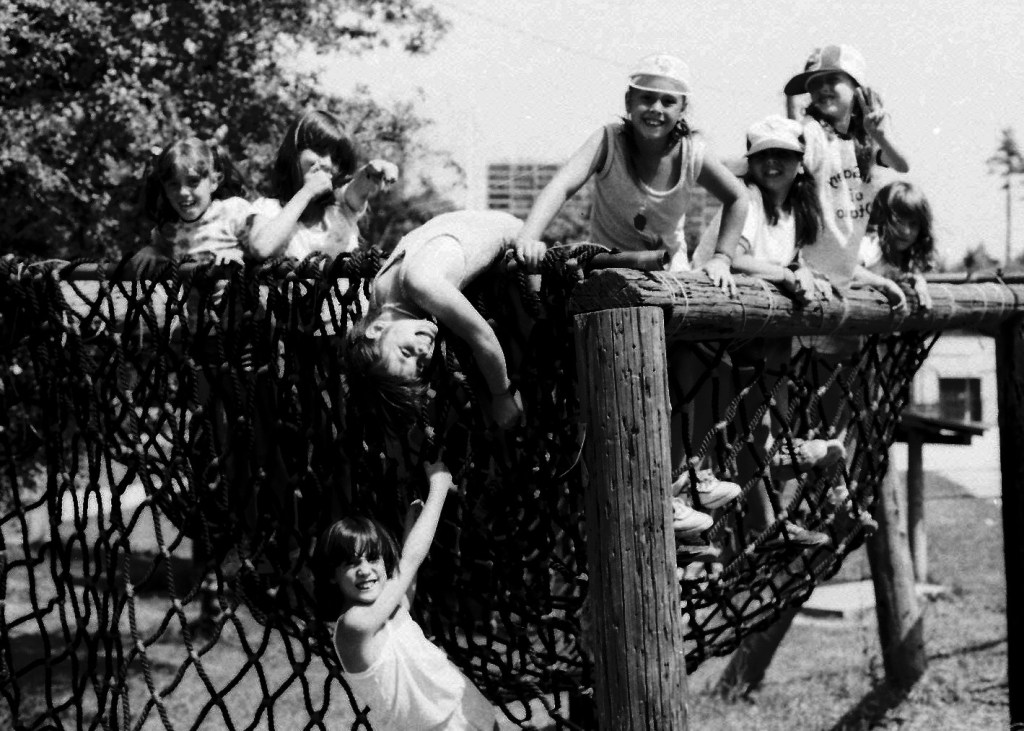
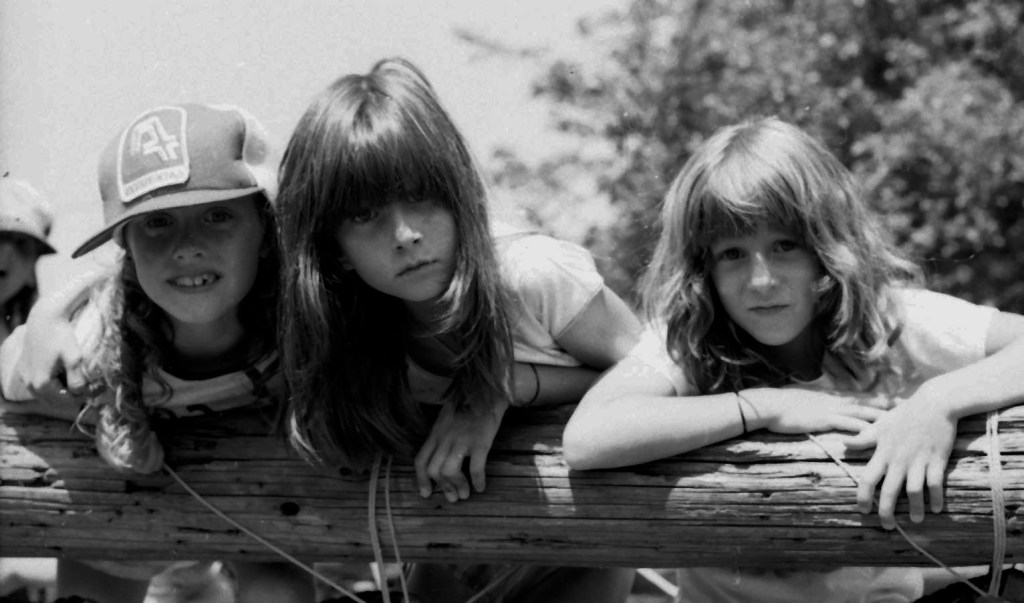
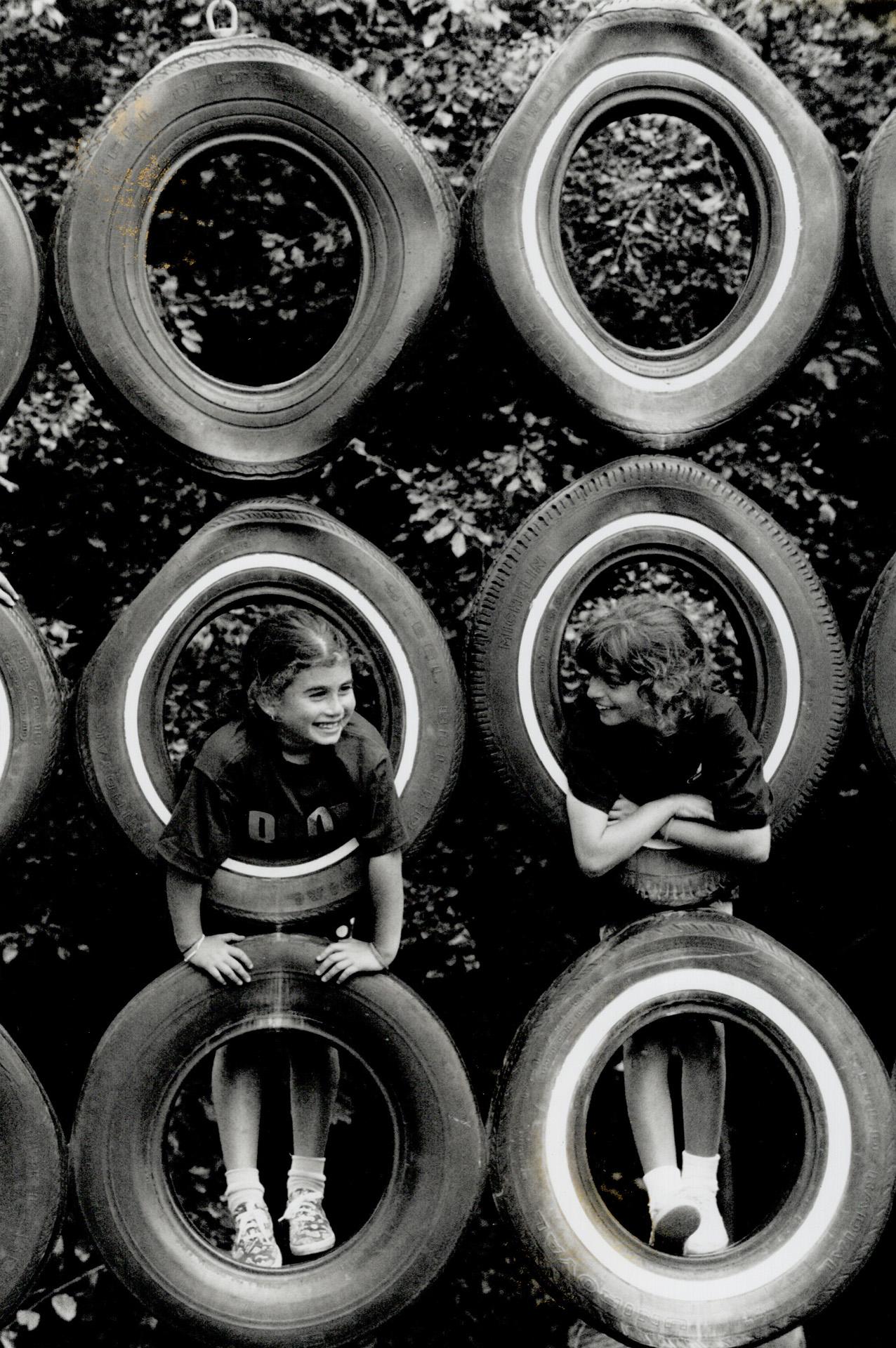
Still not Tire-D of Summer, Lana, left, and Jenna, take advantage of a spot of good eather in an otherwise chilly summer to scale a wall of tires at Forest Valley Day Camp in North York. Toronto Star. July 17, 1992
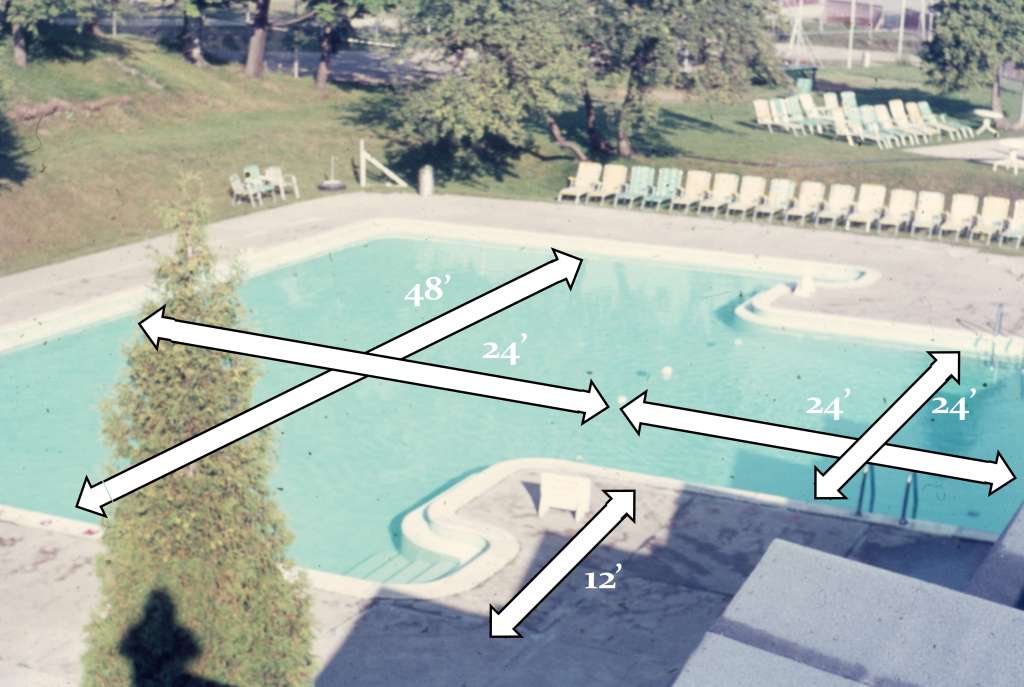
Dimensions: 70′ x 60′

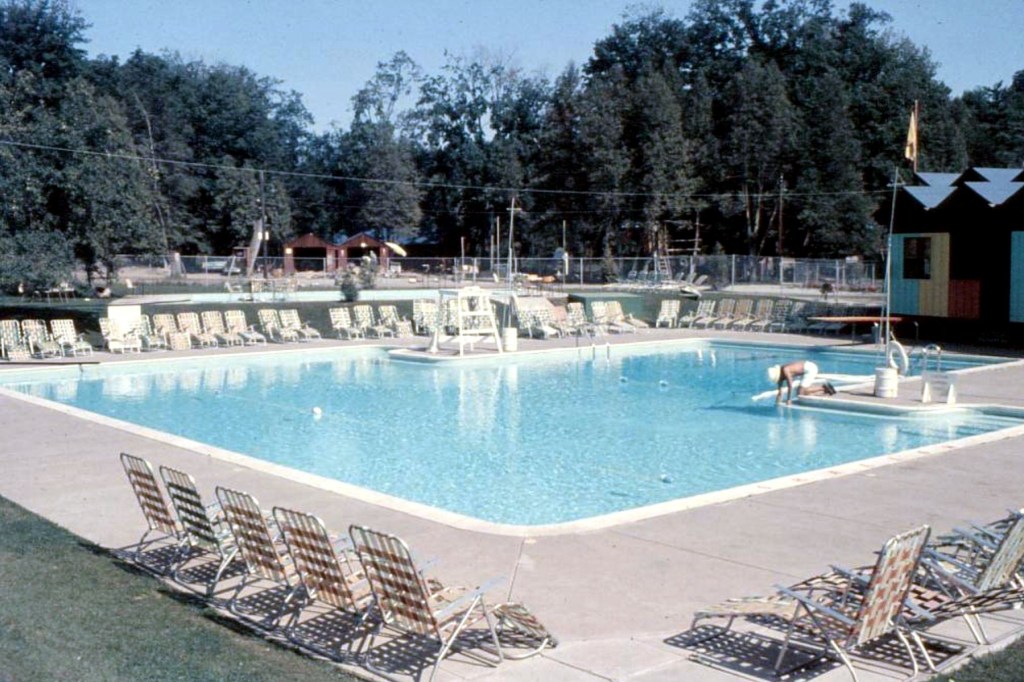
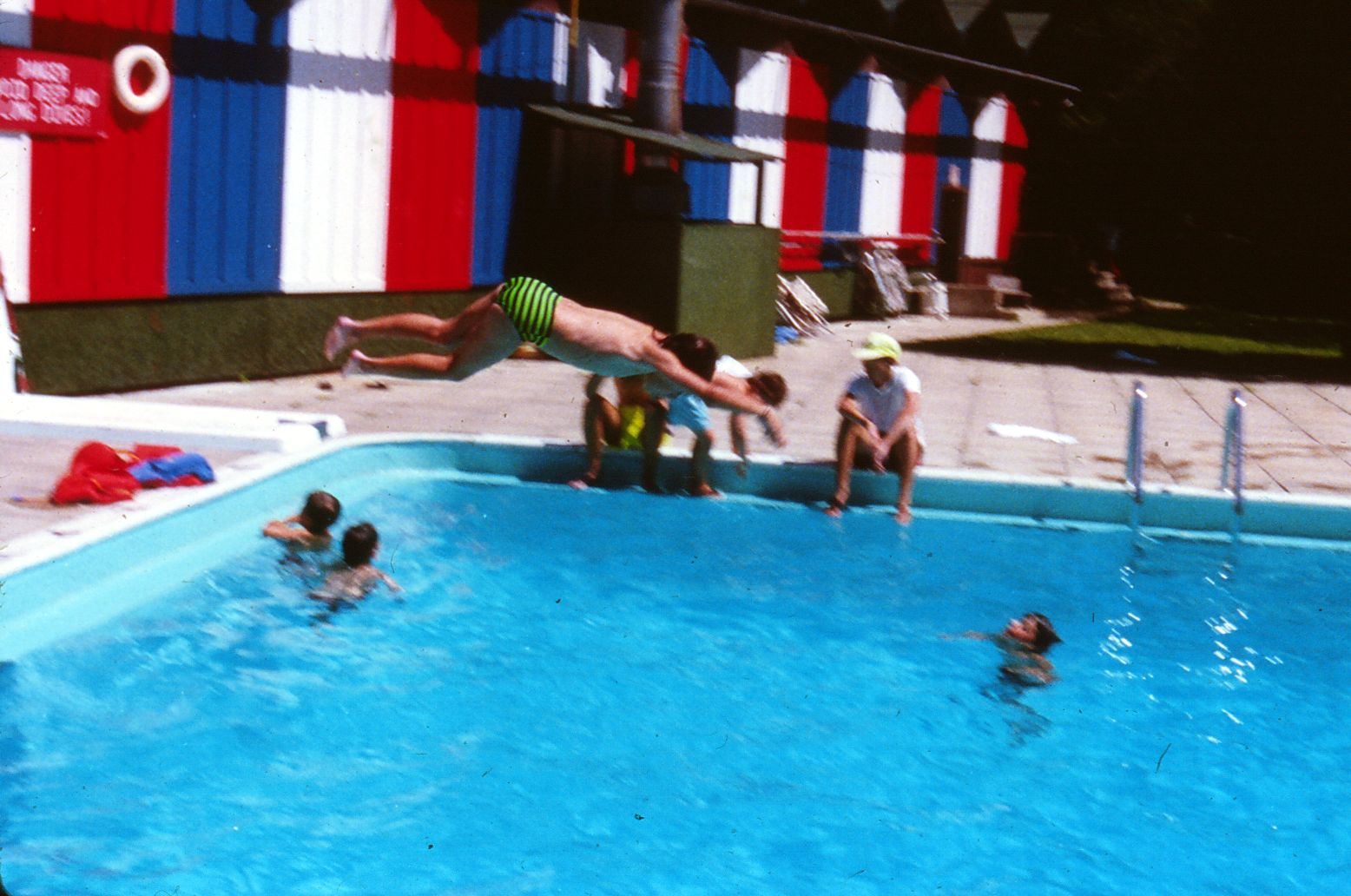
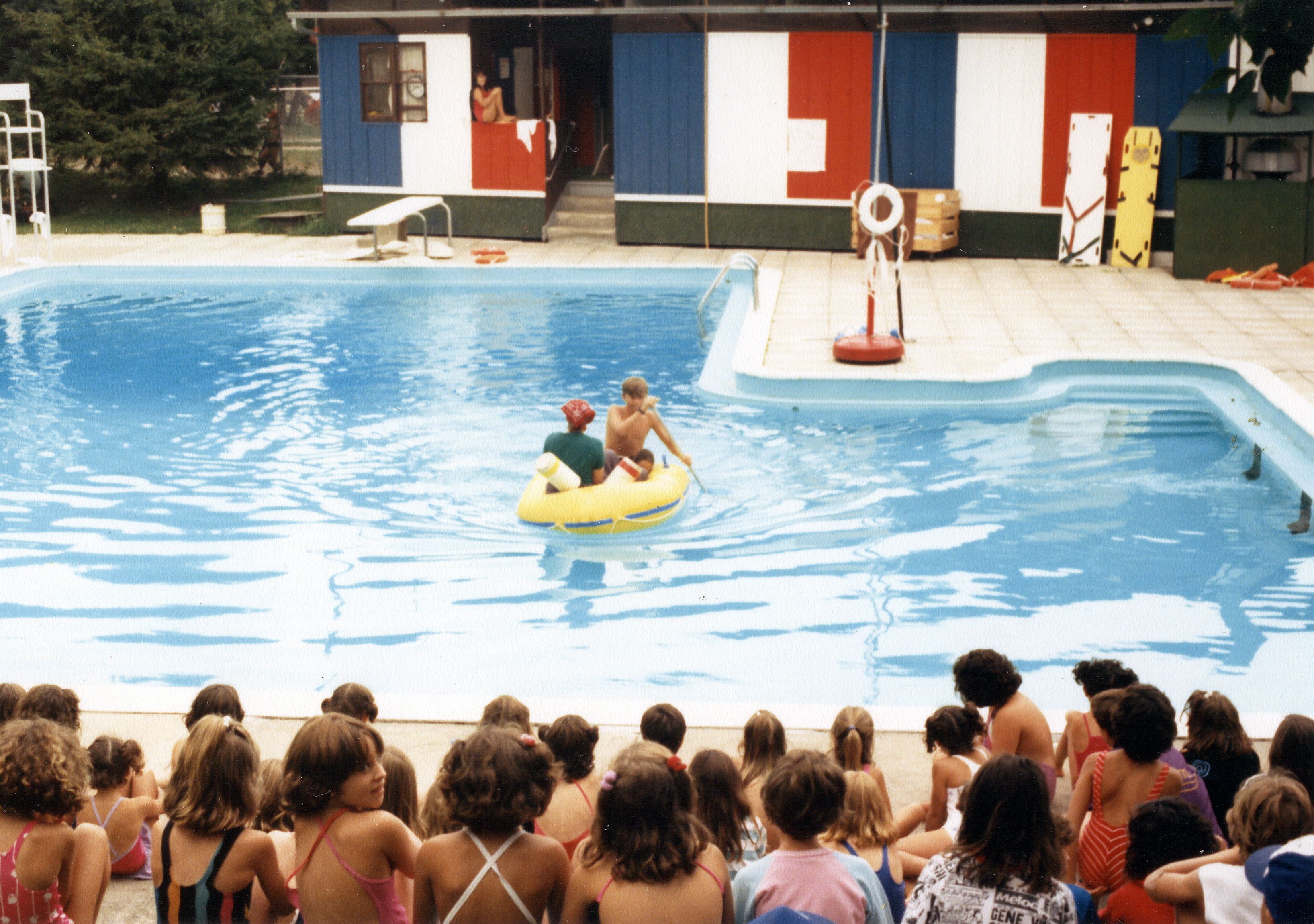

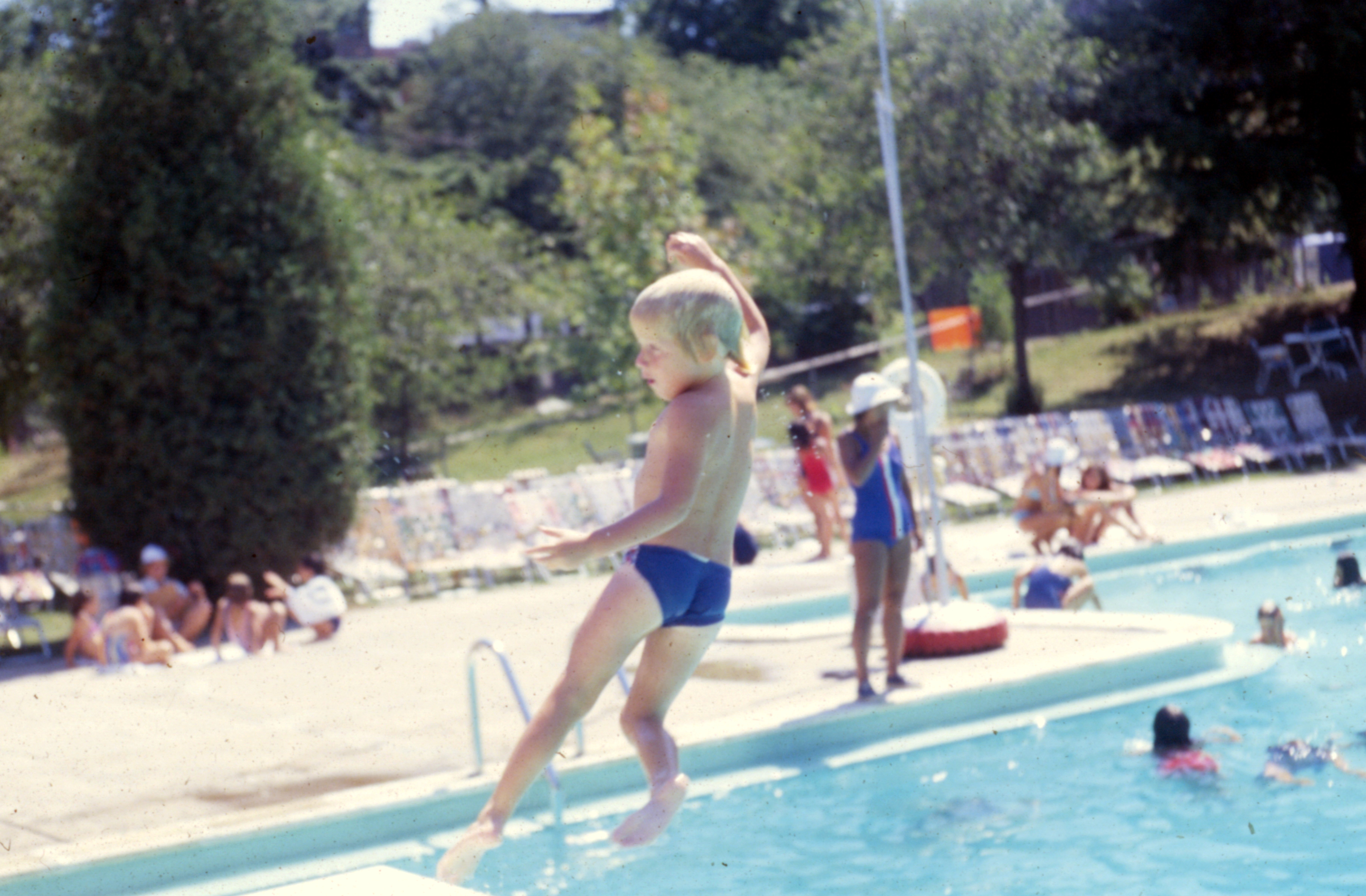

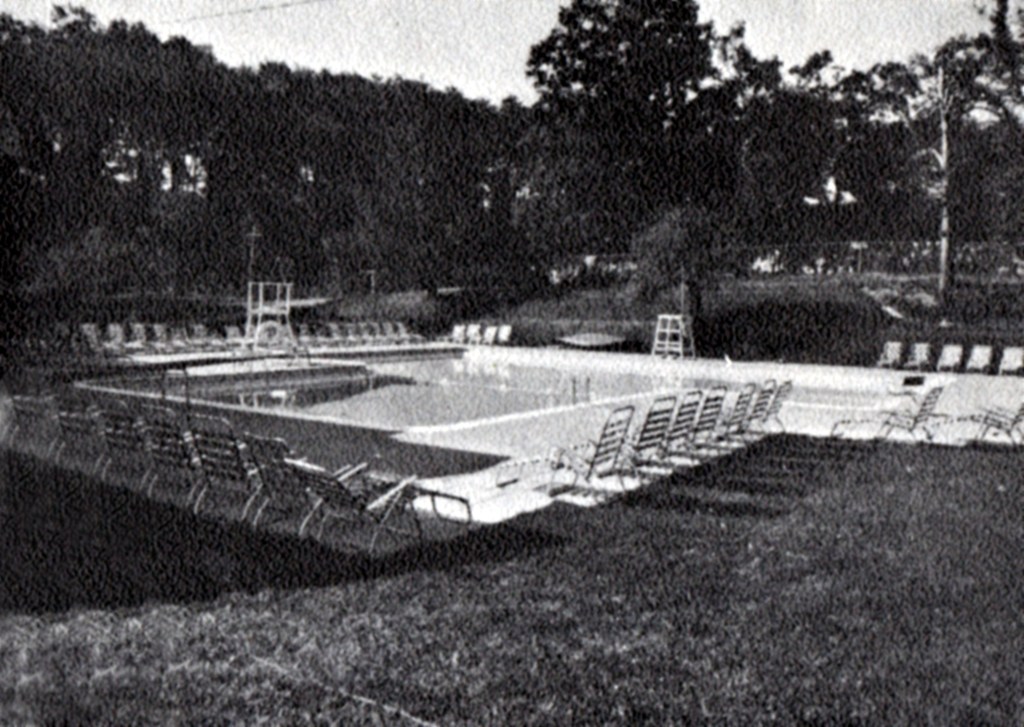
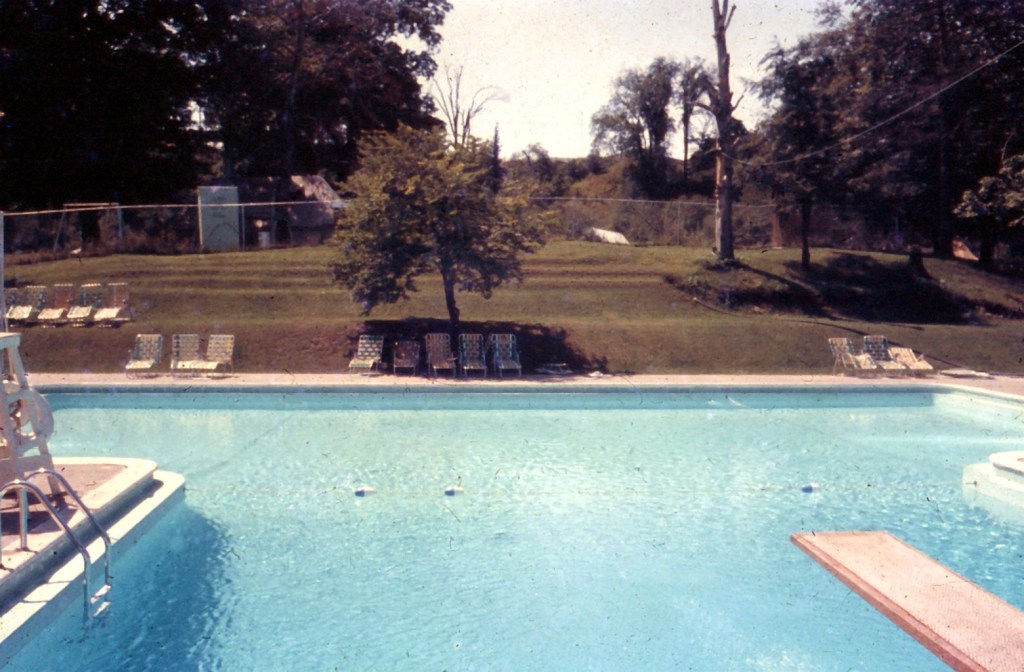
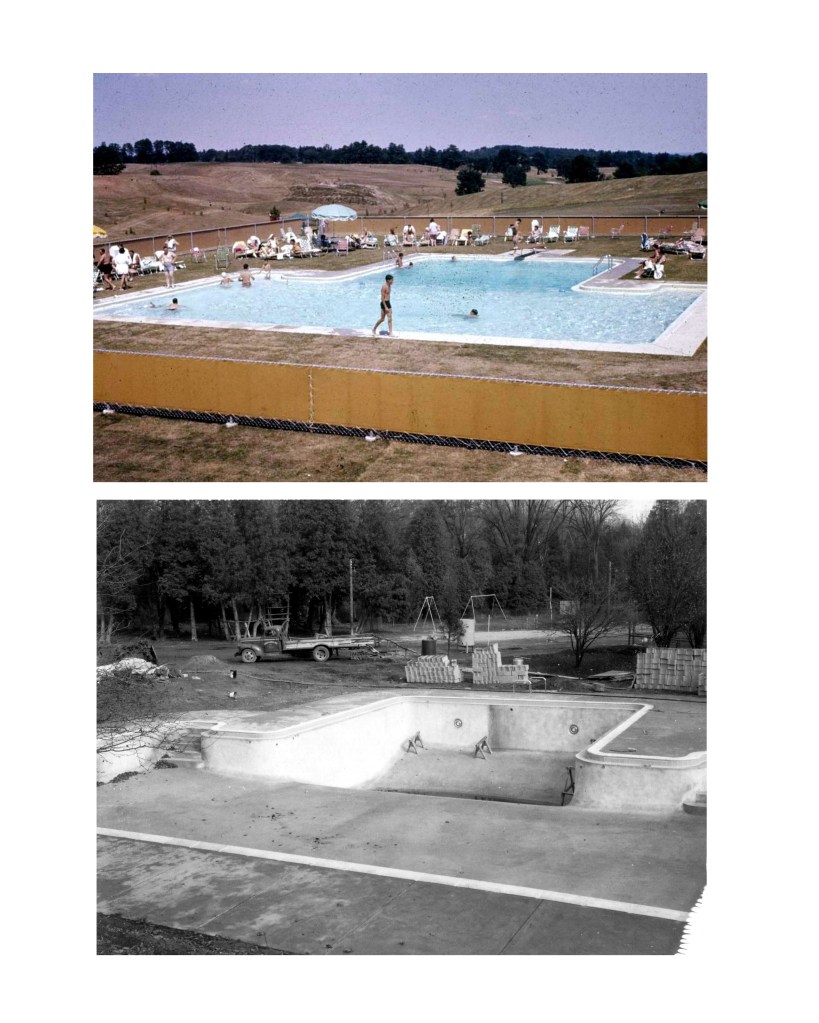
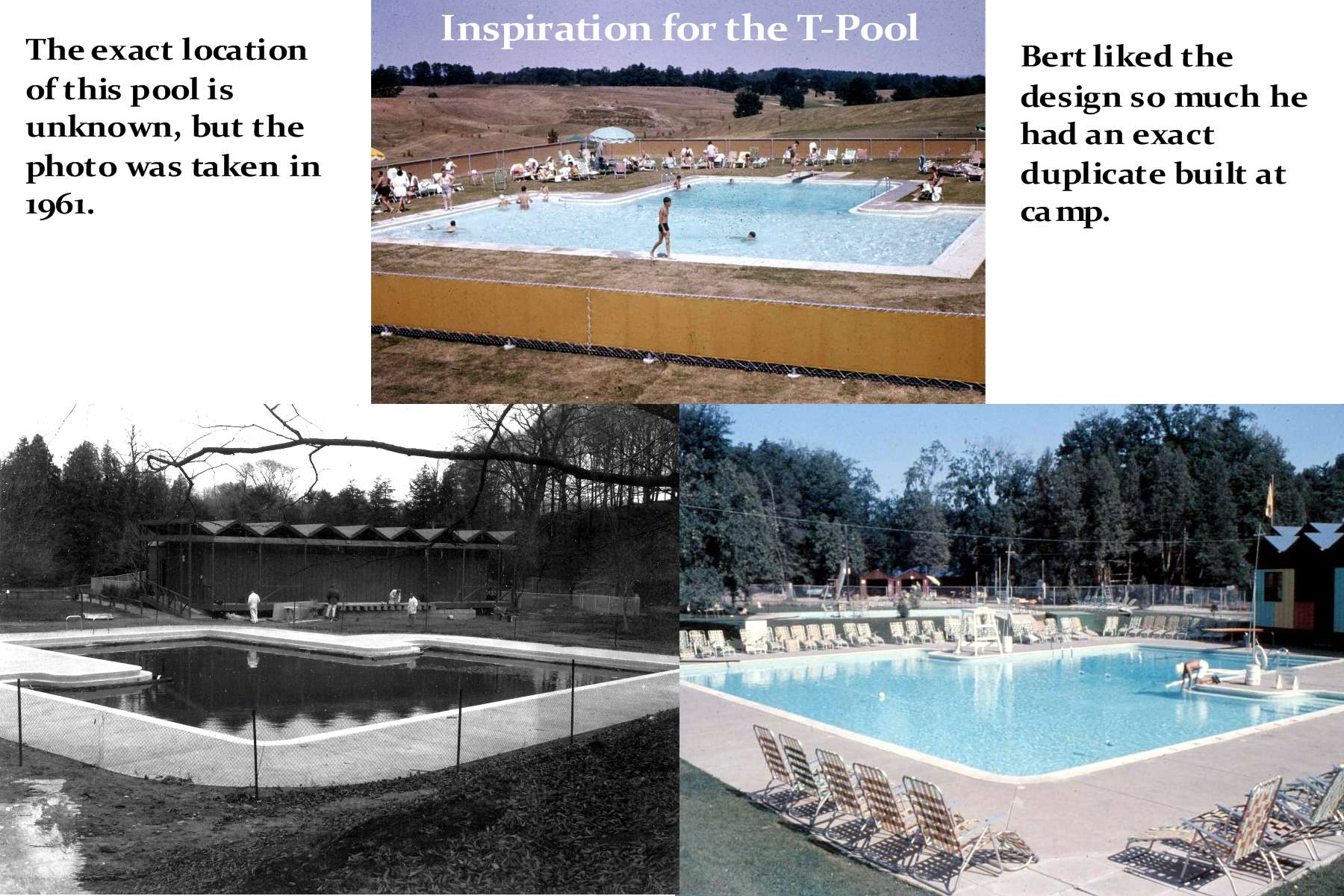
Built in 1964, the design was based on another pool:
The photo below was taken in 1961:
Dimensions:
Filtration:
(From David Morrison) The T-Pool water was kept clear by a diatomaceous earth filter housed underground, below the T-Pool Locker Room. The filter had to be backwashed, generally twice daily, and a new application of diatomaceous earth applied each time. During my tenure at the camp, it was mostly me or Dominic who performed this function.
Unfortunately, no one at the time fully understood the dangers of inhalation associated with crystalline diatomaceous earth (which, while not asbestos, is an asbestos-like substance), so we didn’t wear masks to prevent it. In today’s environment, doing that kind of work without a mask would be unheard of. I shudder to think of how much of that stuff we inhaled. Fortunately, the summer was only 60-some-odd days long, so I doubt that any permanent harm was done to either of us, although the damaging effects are cumulative, since the fibres never really leave one’s system. In any event, whaddaya gonna do?
TRIVIA: The first people to swim in the T-Pool were Ellen (Eli) Sobel, Jeff Levy, Jackie Sugarman, Janice Langer and Myrna Mosoff.
See also:
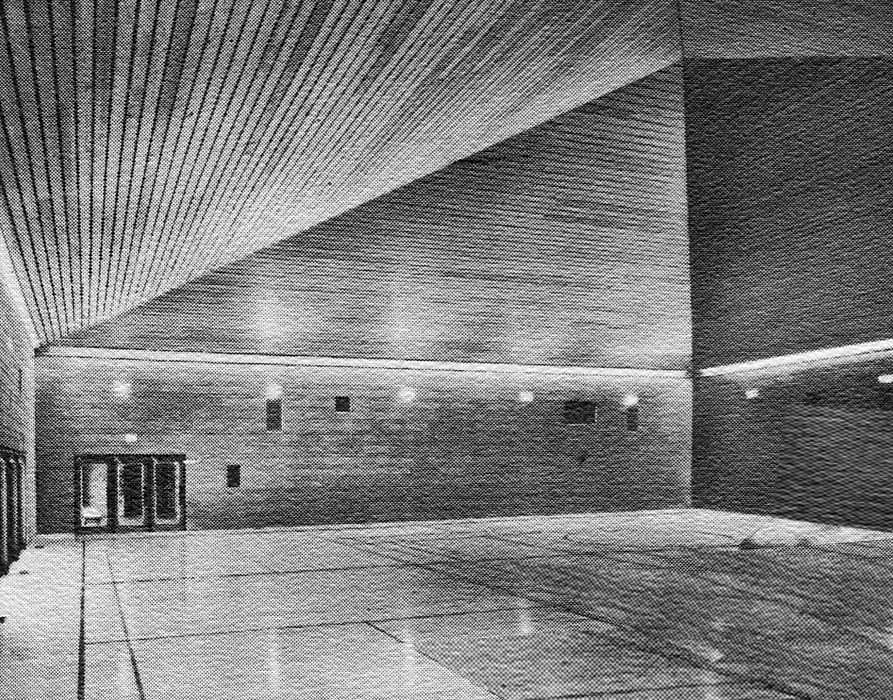
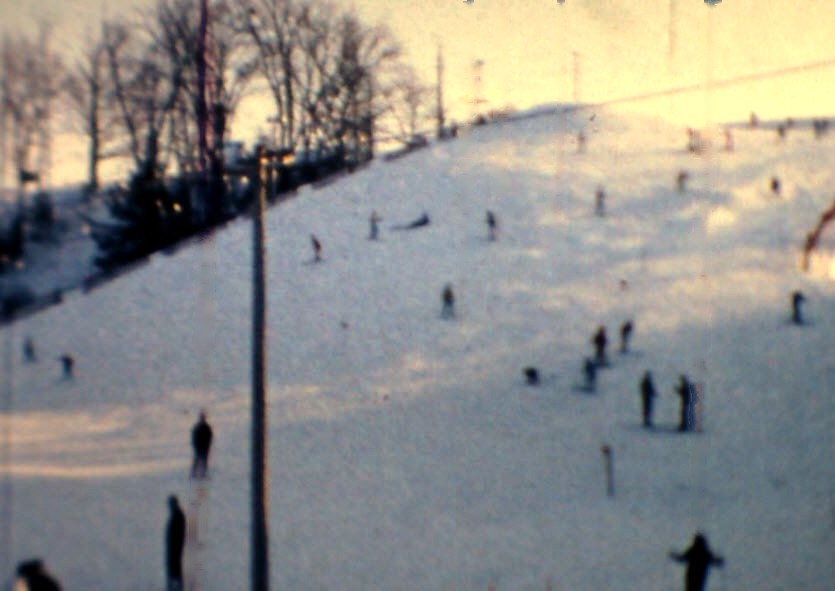
The Photography Hut was built in 1965 for the purpose of housing the motor and mechanicals for the ski lift as seen in these screen captures from the ski video:
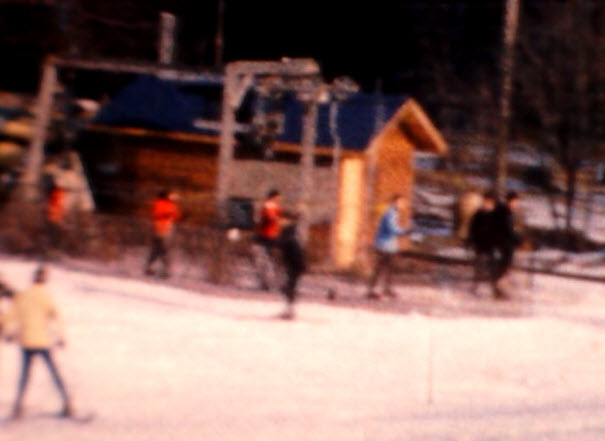
When the ski program ended in the late 60’s, the equipment was removed and the building was re-purposed. Many of the large electrical switches remained; the reason for them was a mystery until the history was learned. A porch was added in the 70’s.
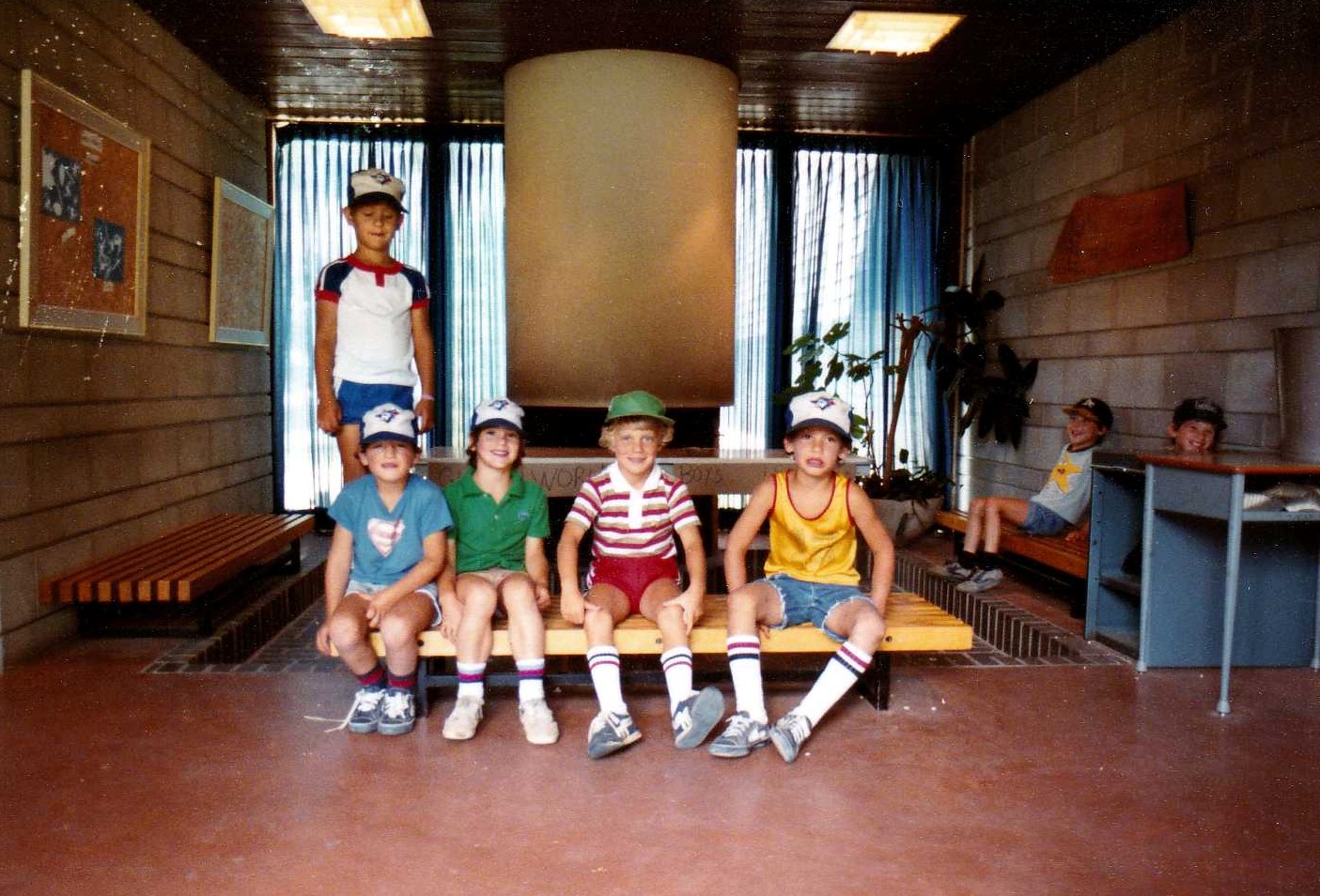
Here are some photos of the building during its use as the Photography Hut:
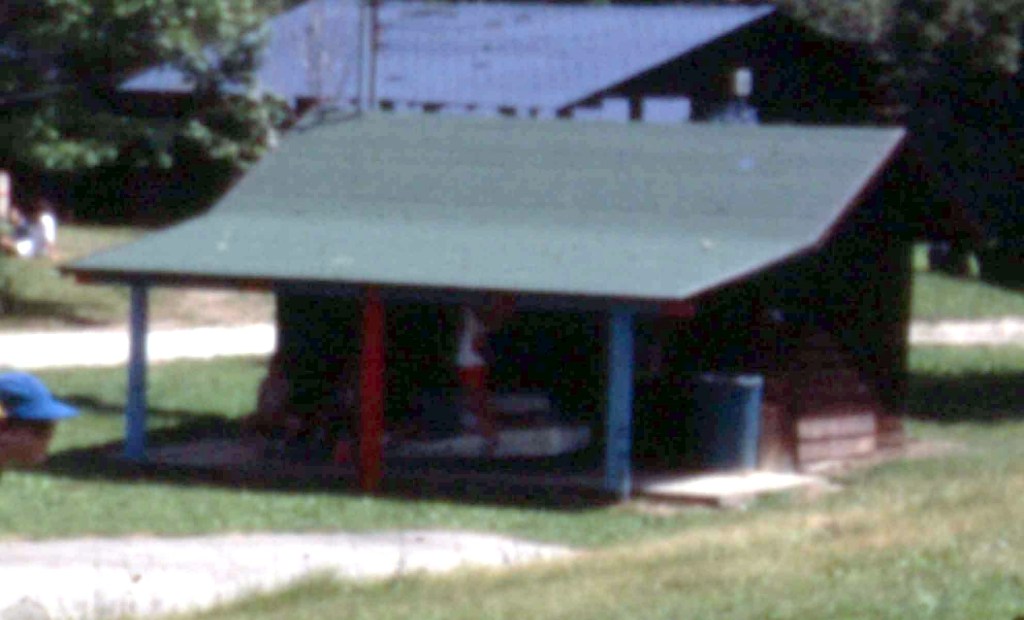
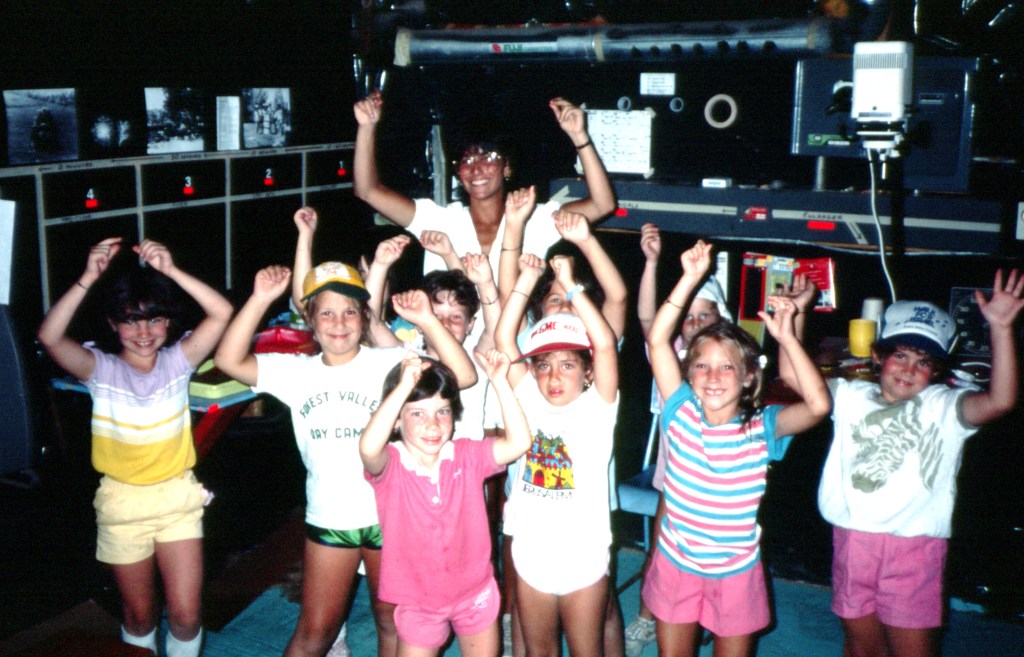
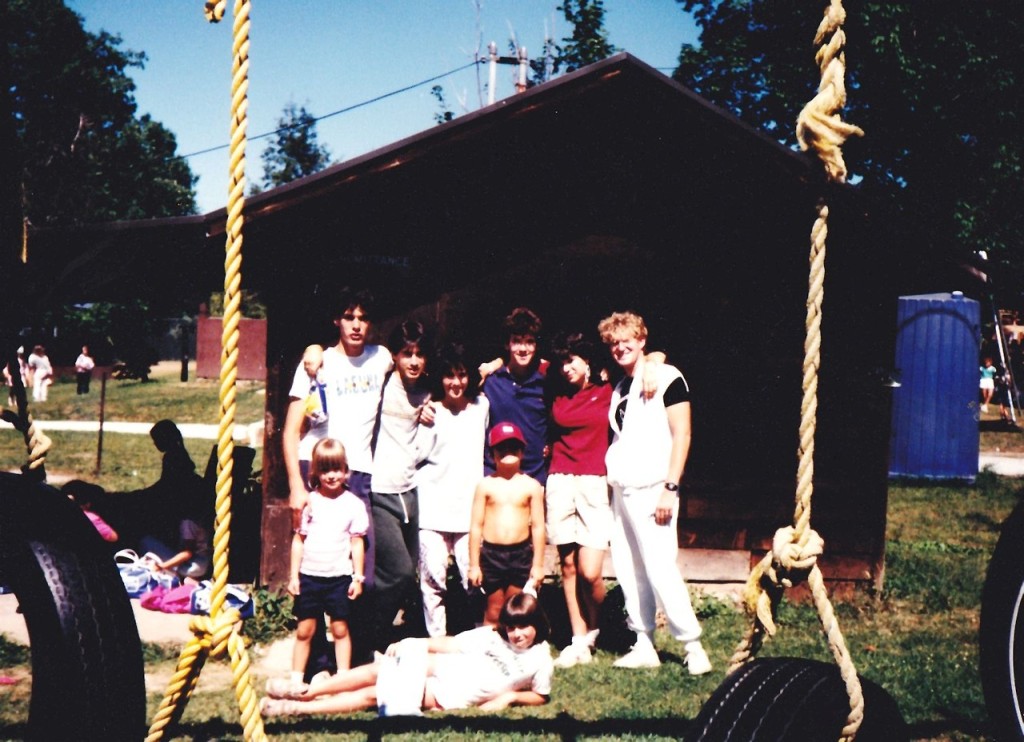

After completion:
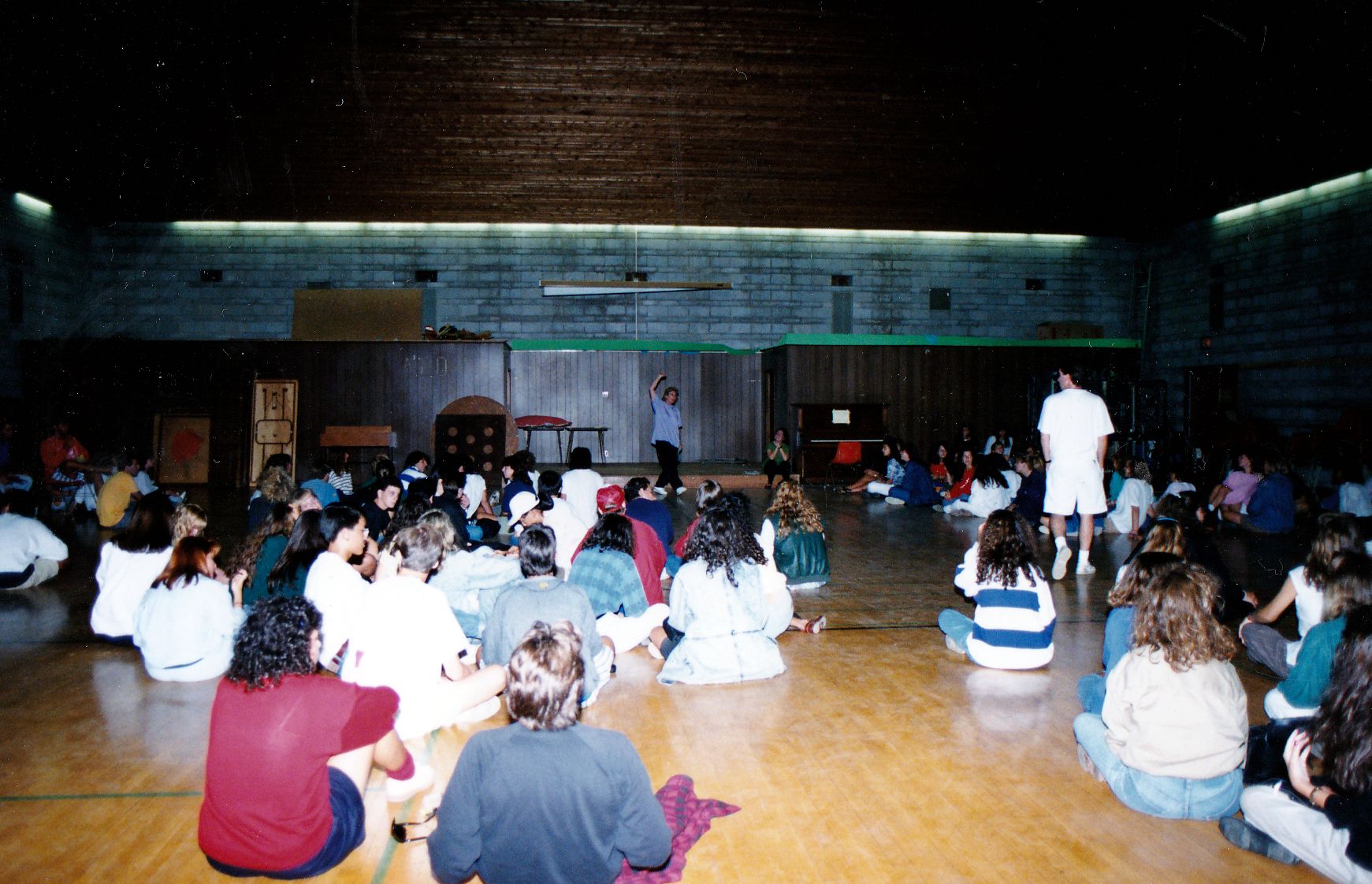
Interior Views:
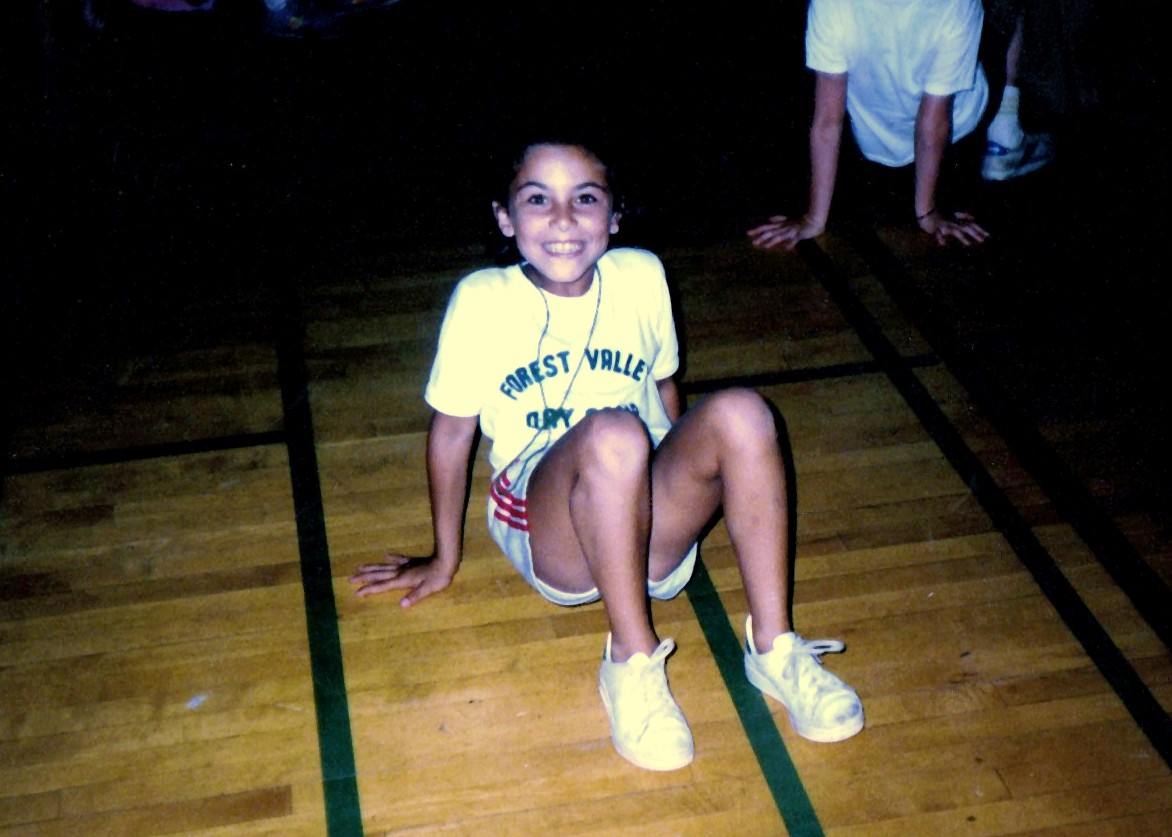
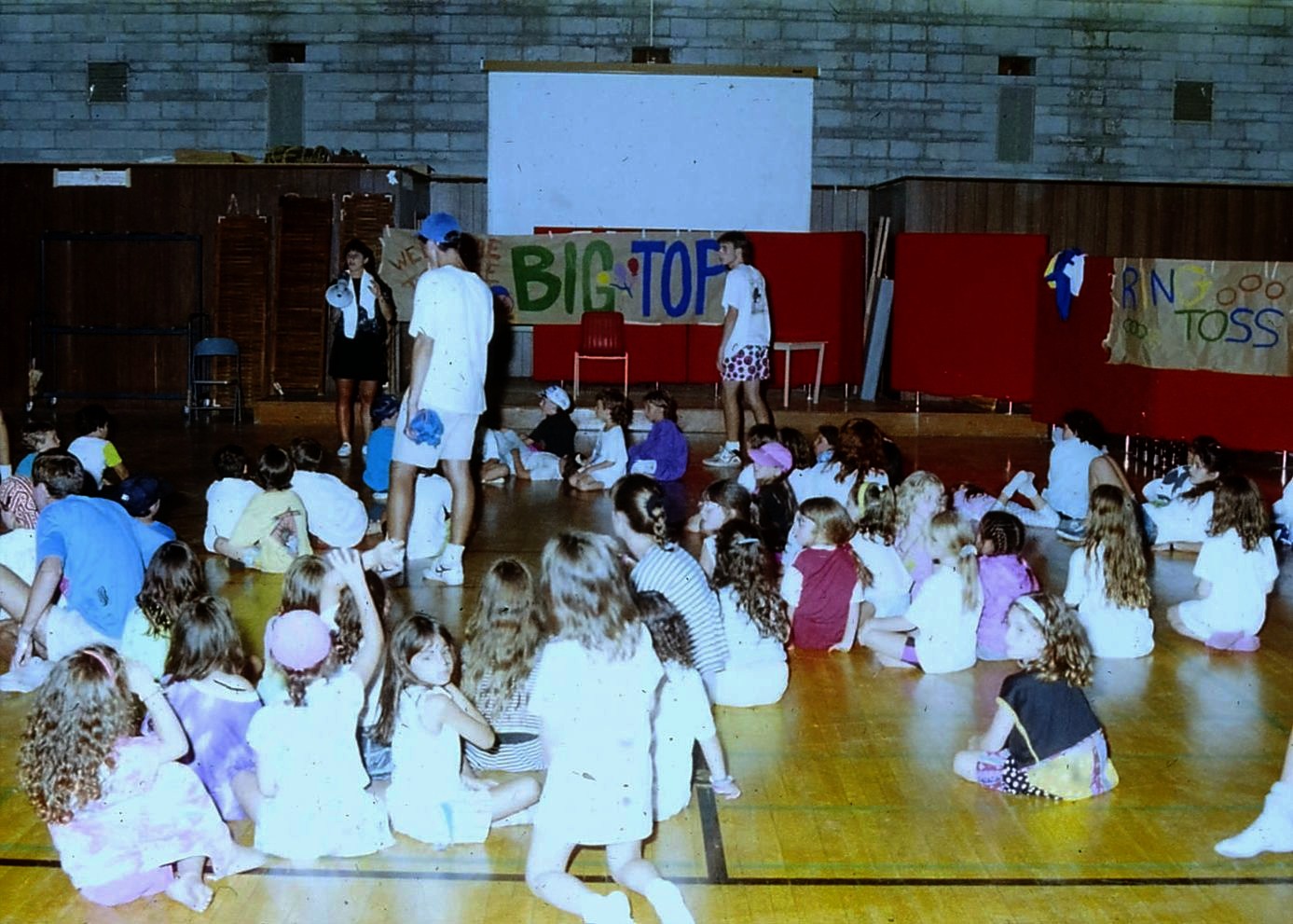
The “Fireplace”:
See also:
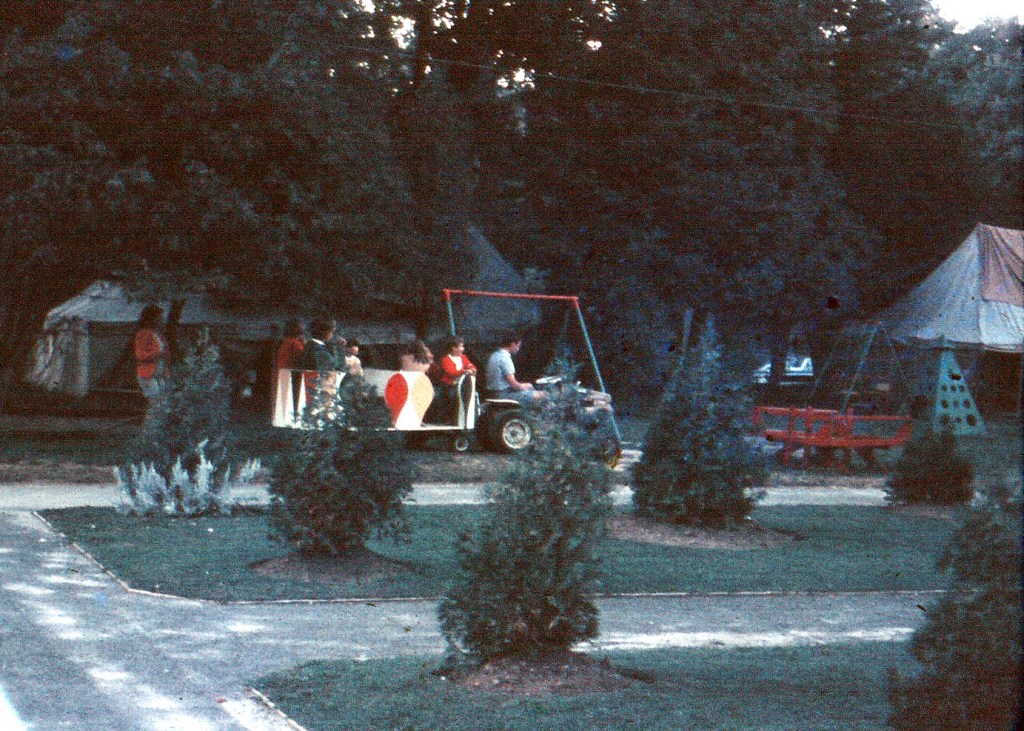
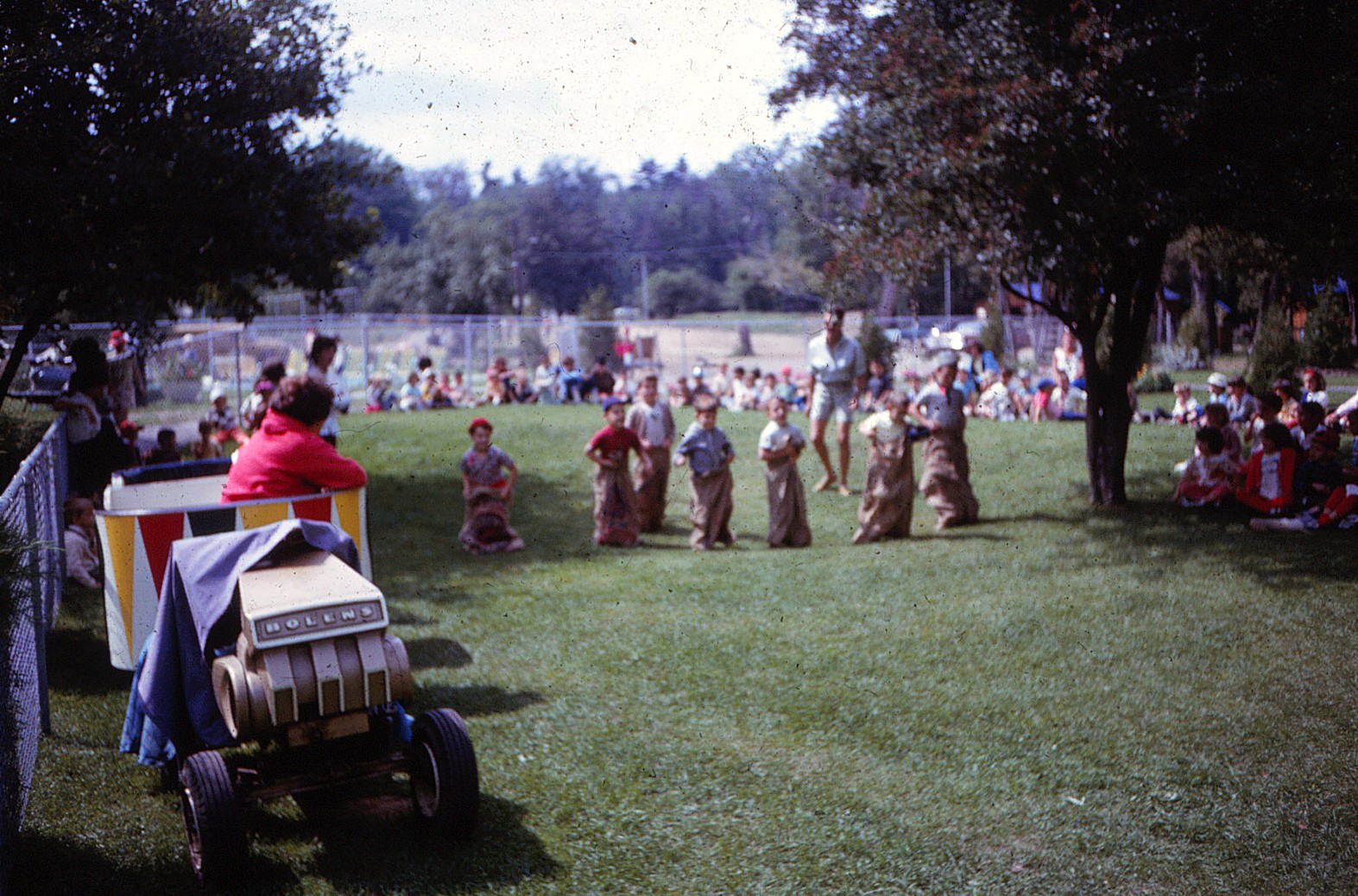
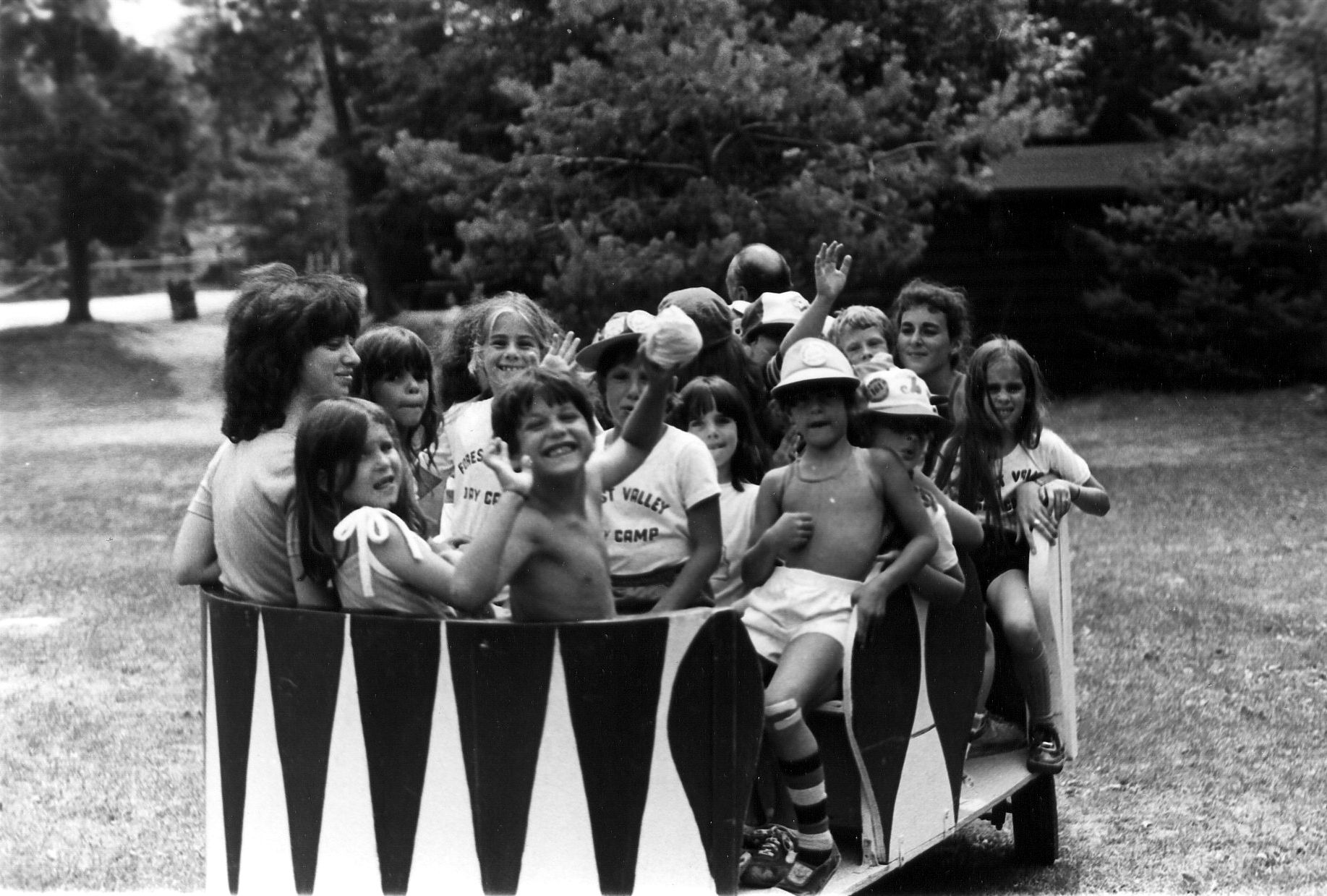
It is uncertain exactly when tractor rides began. It is logical to assume that it was after the stagecoach was taken out of service in 1977. However, the photo below is from 1964 which means that tractor rides began much earlier, and concurrently with stagecoach rides.
This is the original tractor car in the Peewee unit area:
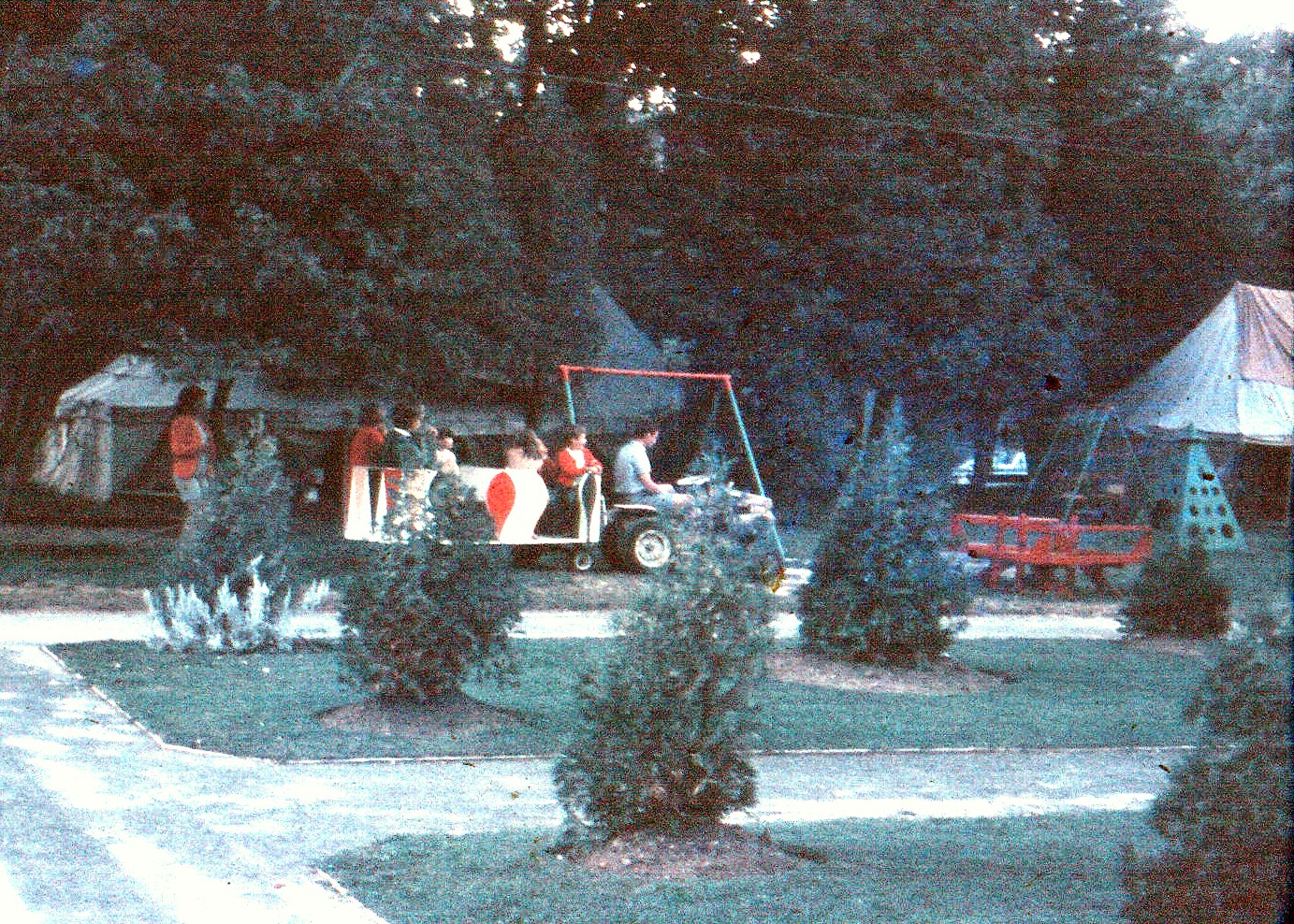
In 1963, beside the T-Learner,
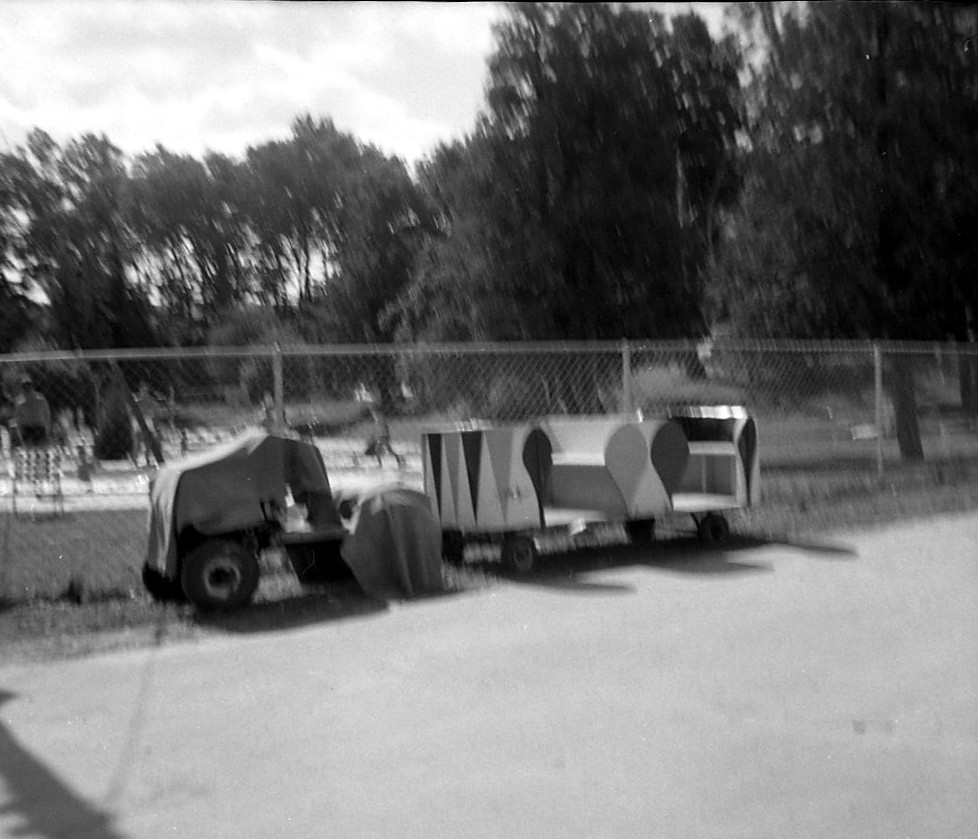
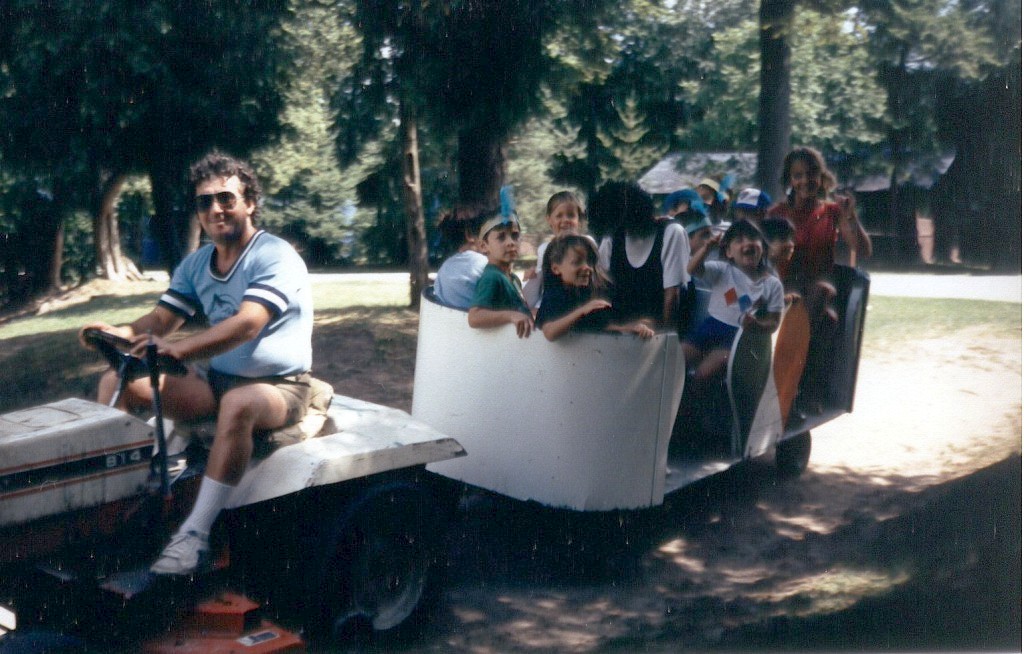
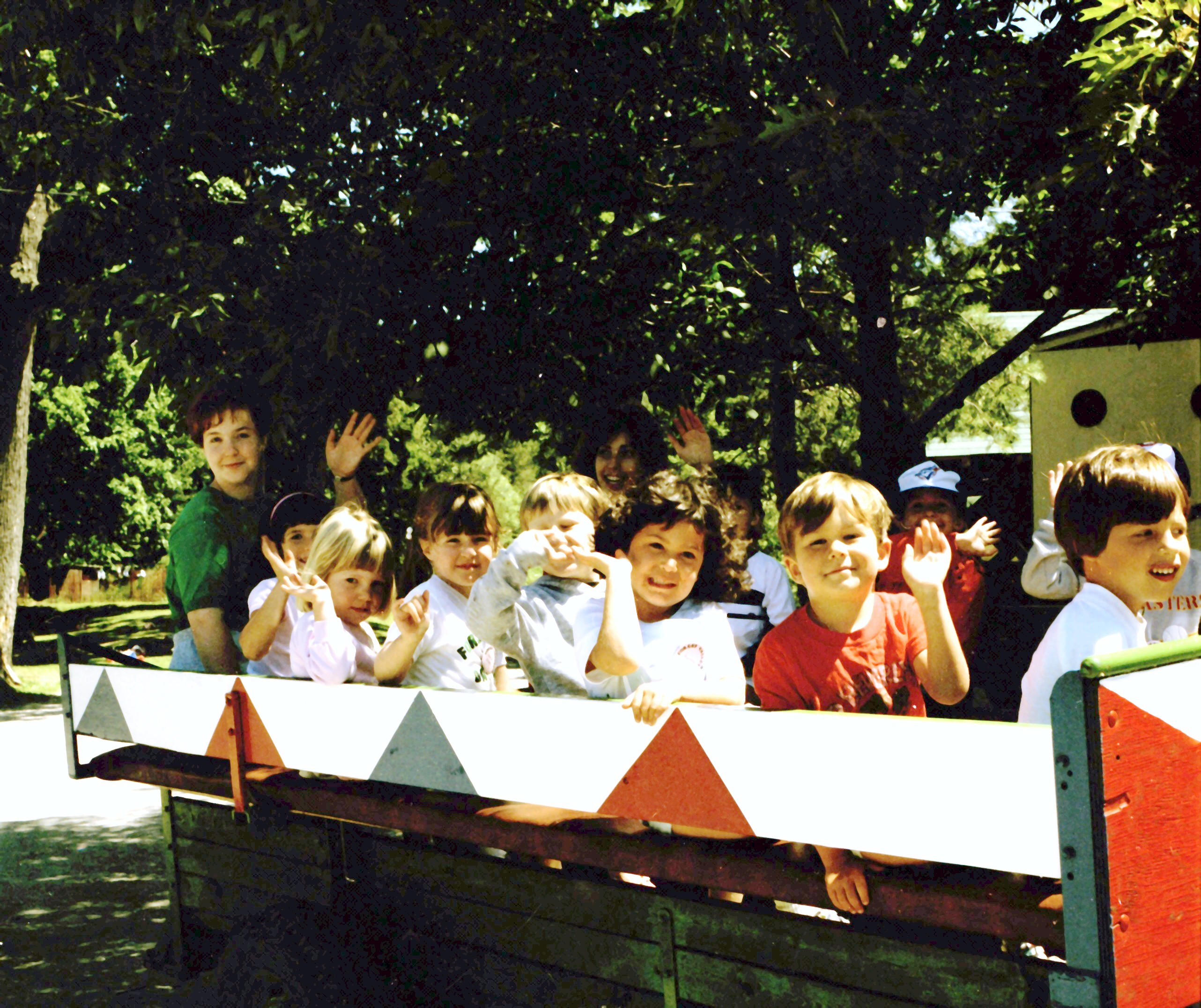
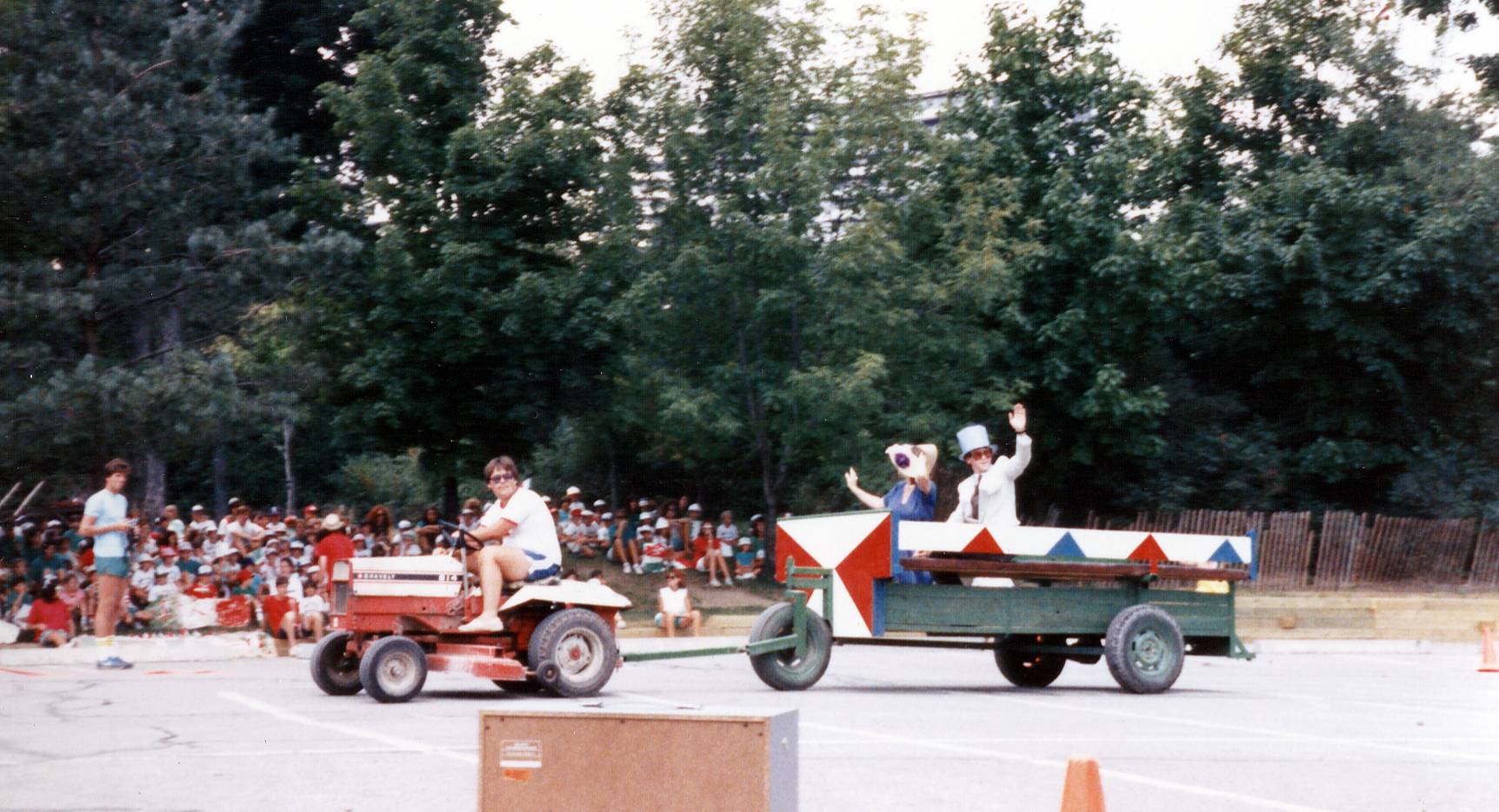
A larger car was built around 1982:

Jerry (Laidlaw) driving:
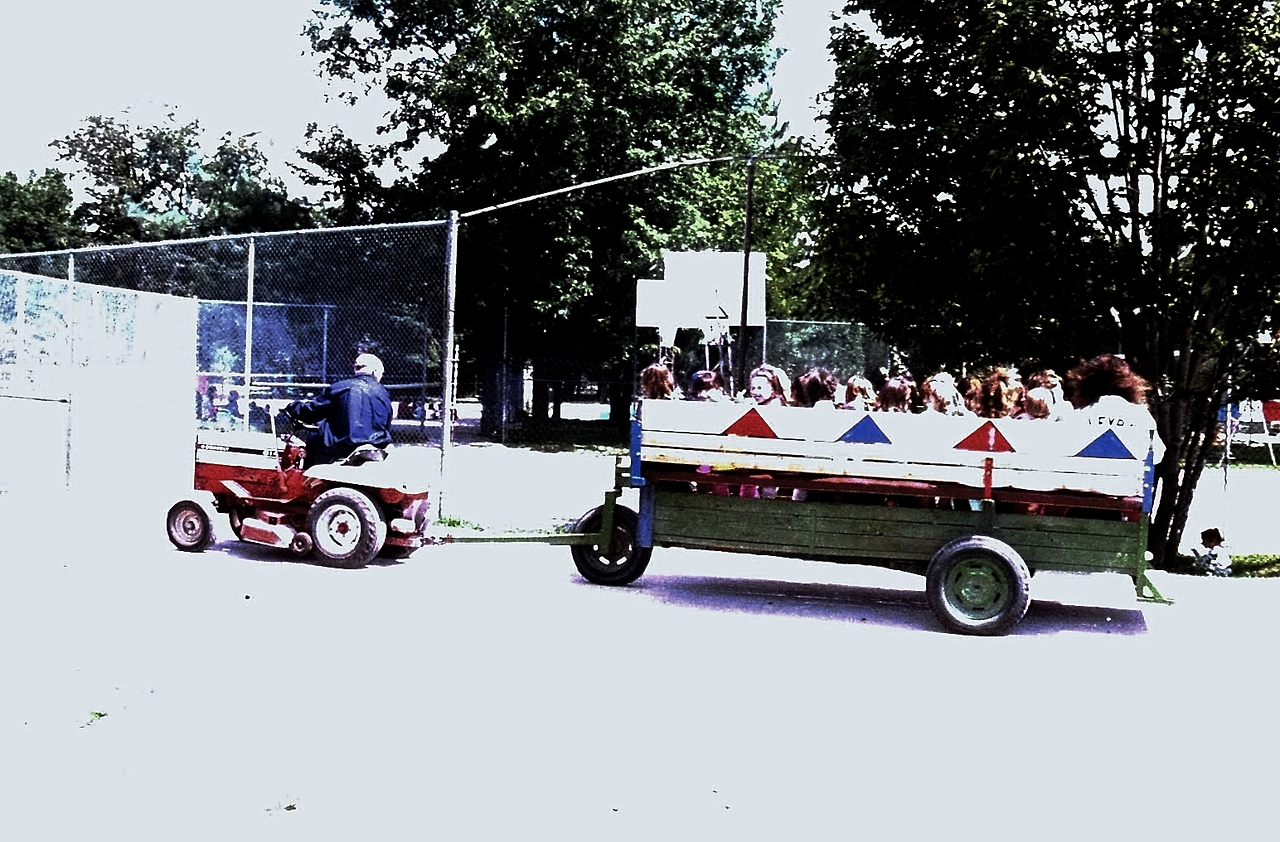
Lou Glait driving while visiting in 1983:

Dominic driving:

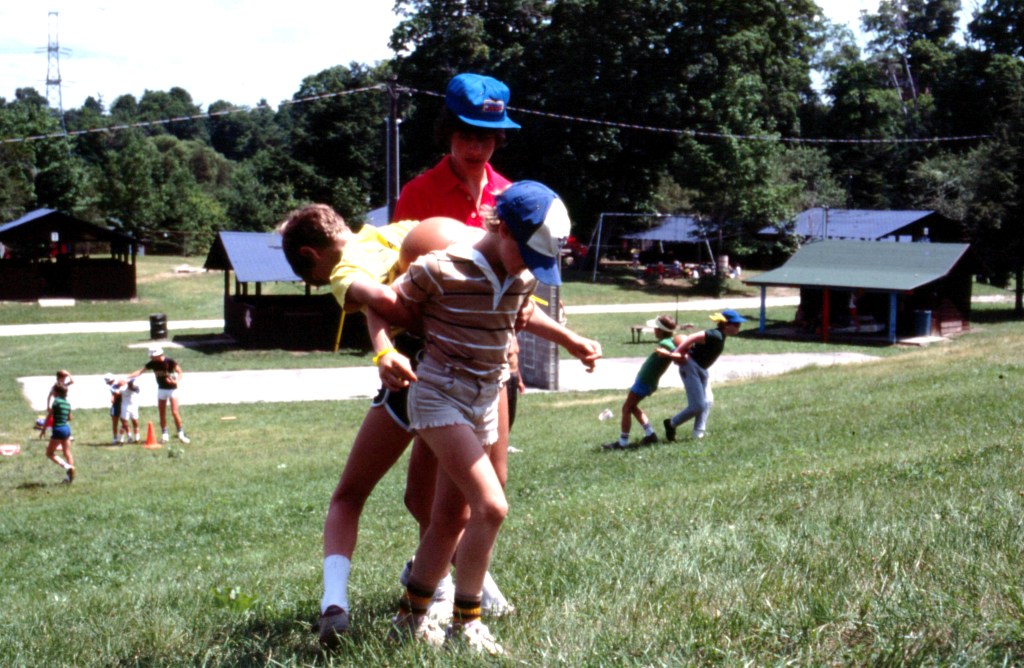
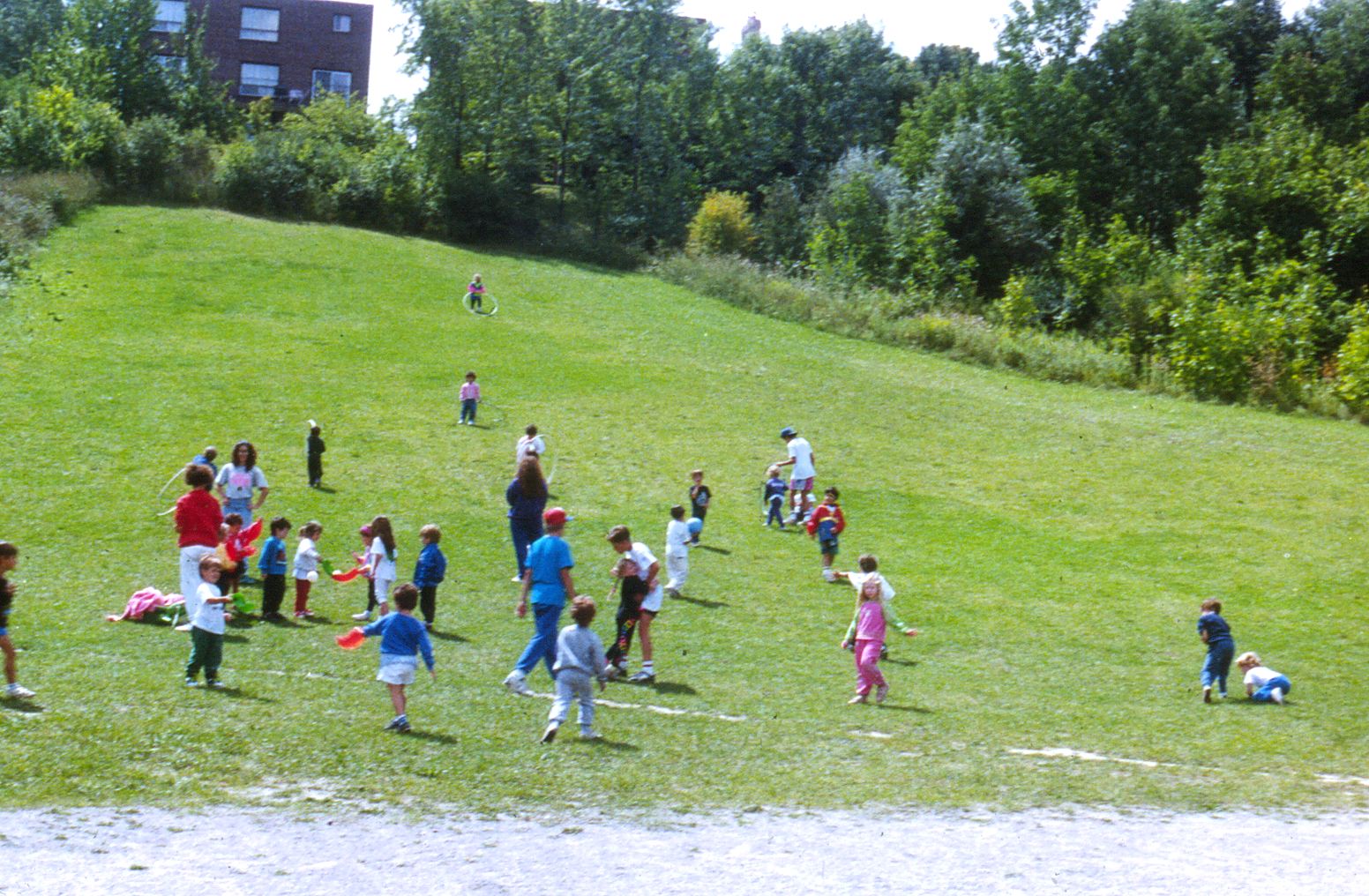
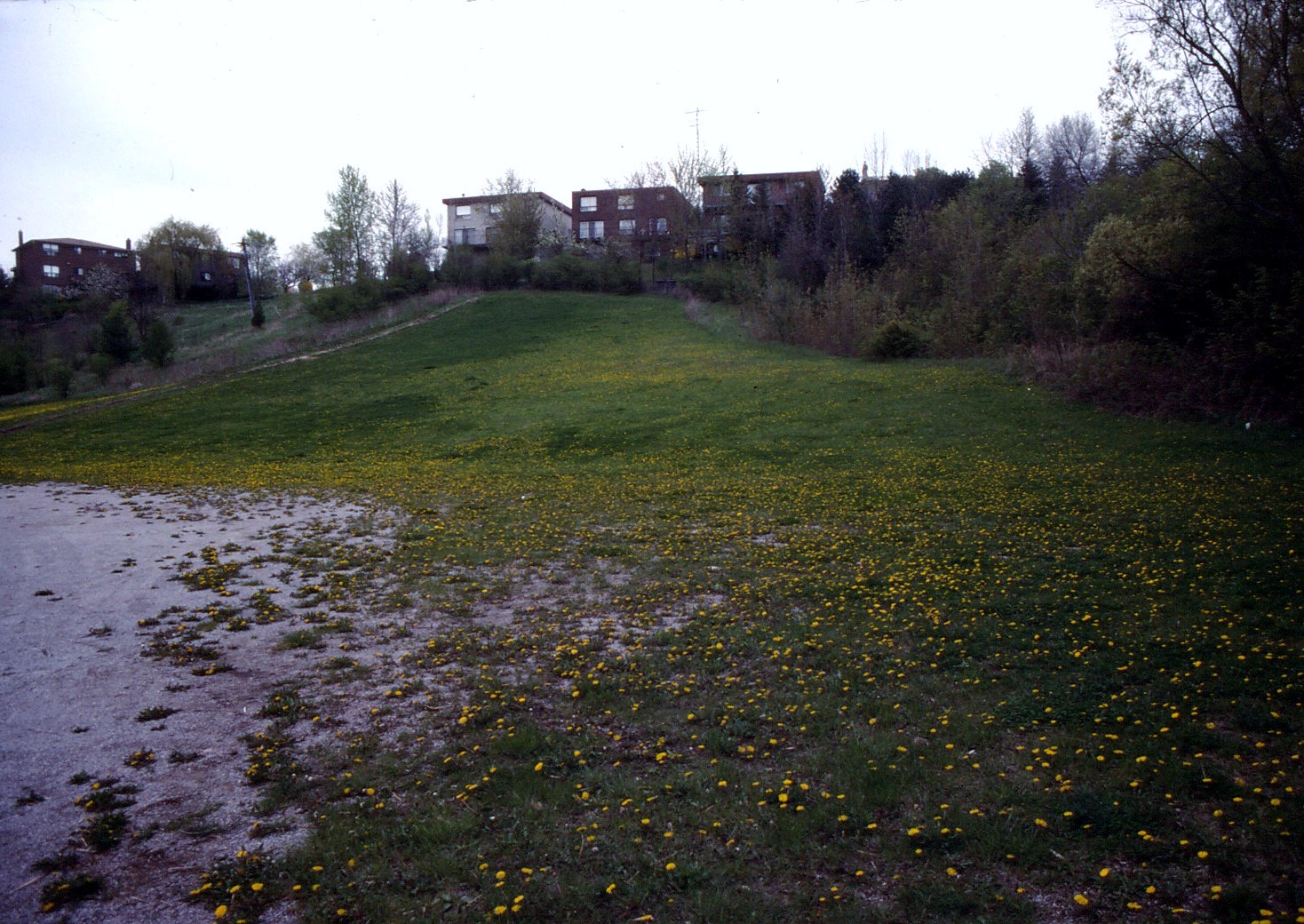
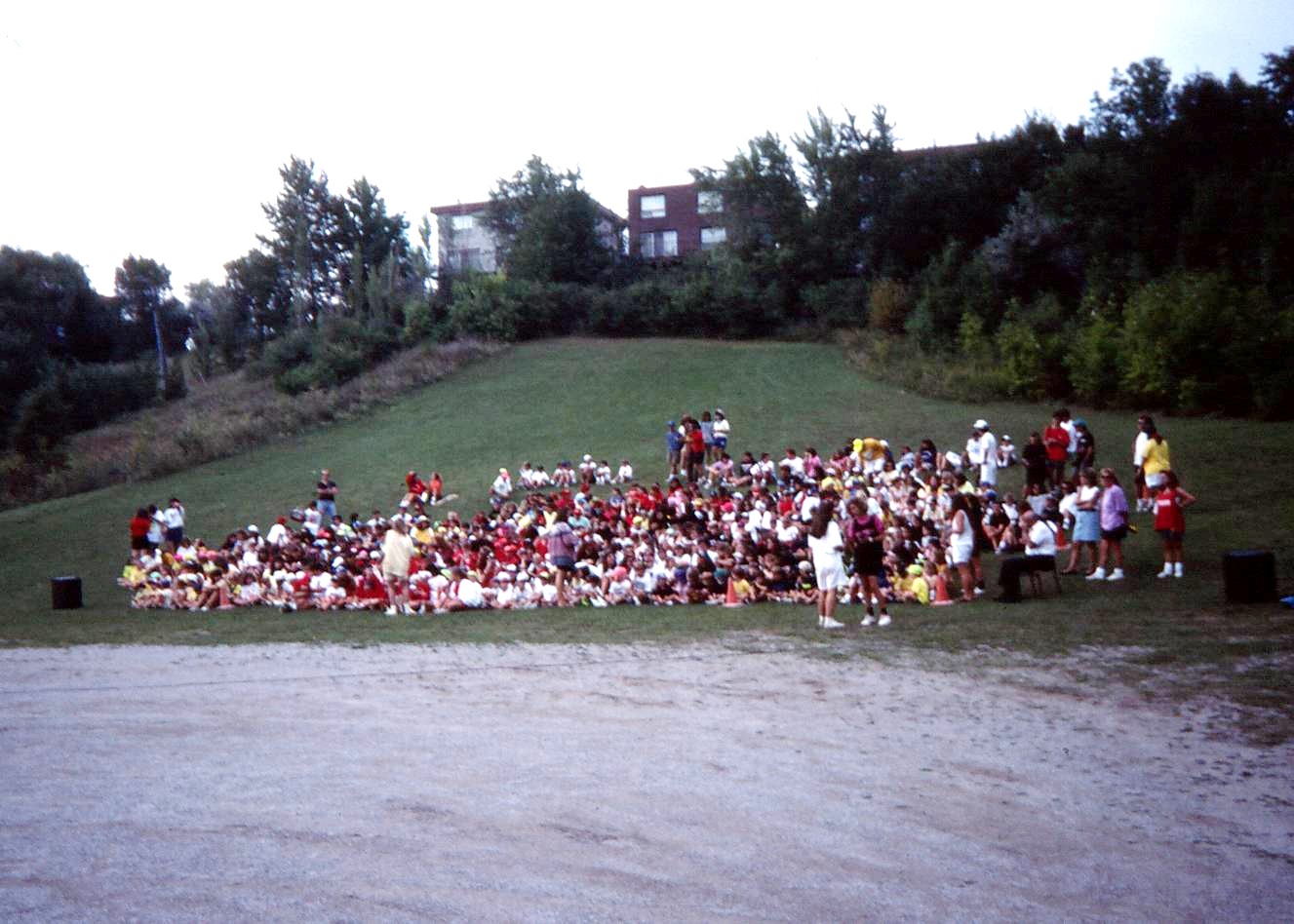
In 1965, using fill excavated for the Spadina Expressway, Bert constructed a ski hill on the western edge of the valley. The fill was essentially free and created yet another source of revenue – this time during the winter months.
Bert in front of the auditorium during construction.
1964
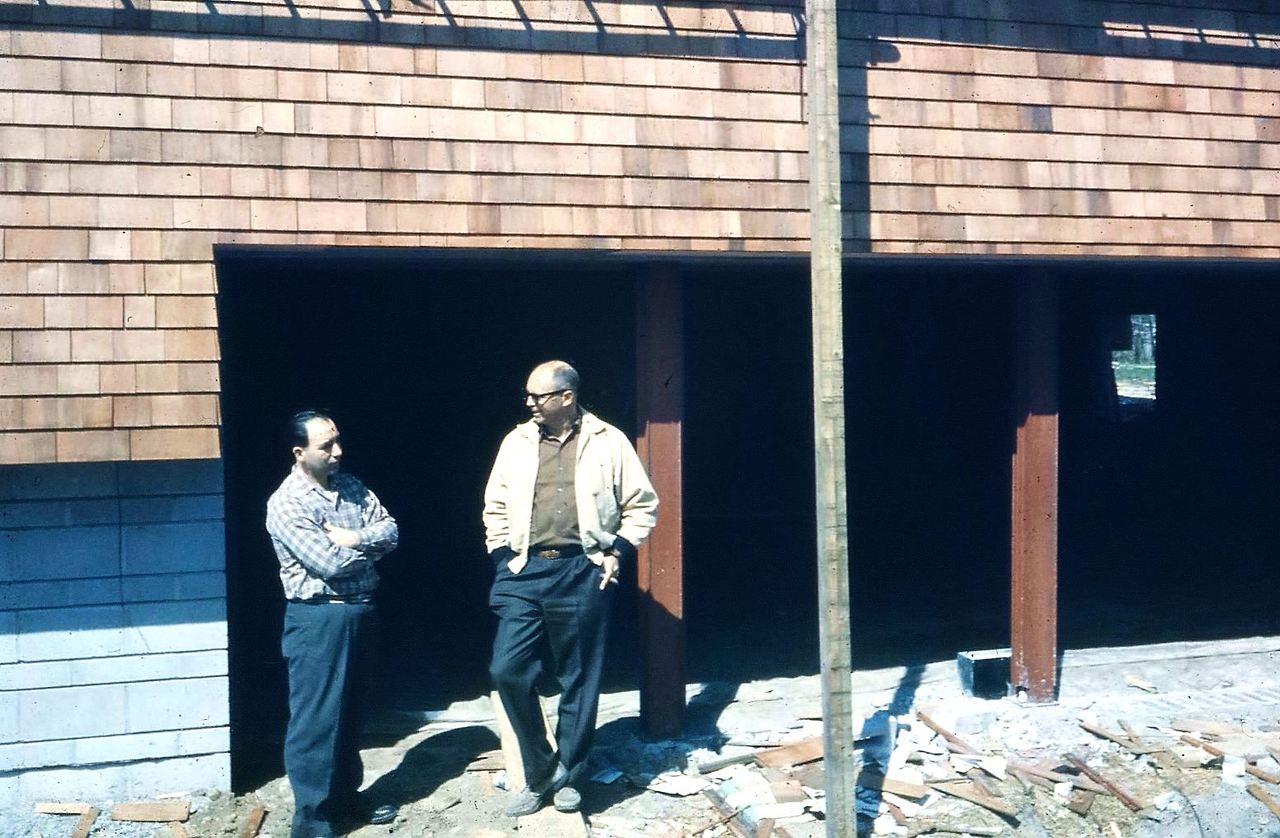
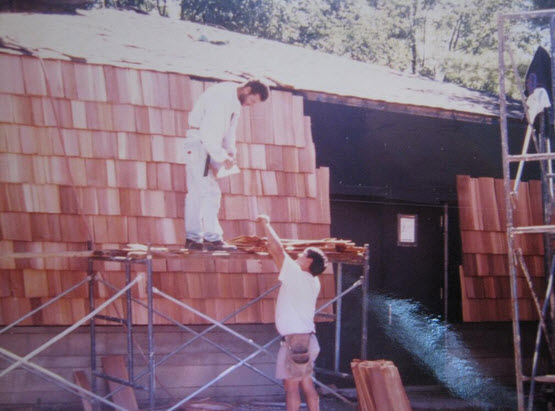
Shingle application. 1964
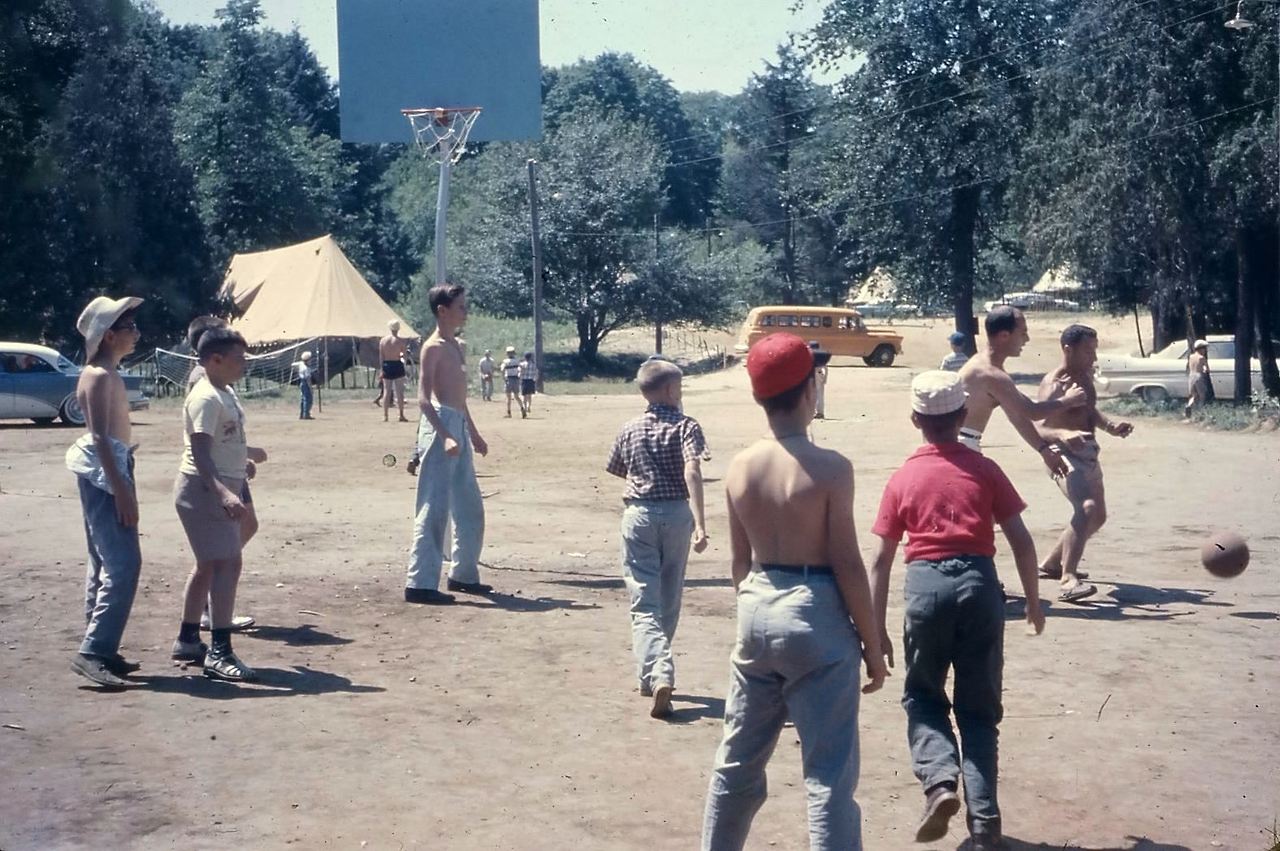
Likely the first year on the site. Looking west toward the hill.
ca. 1957
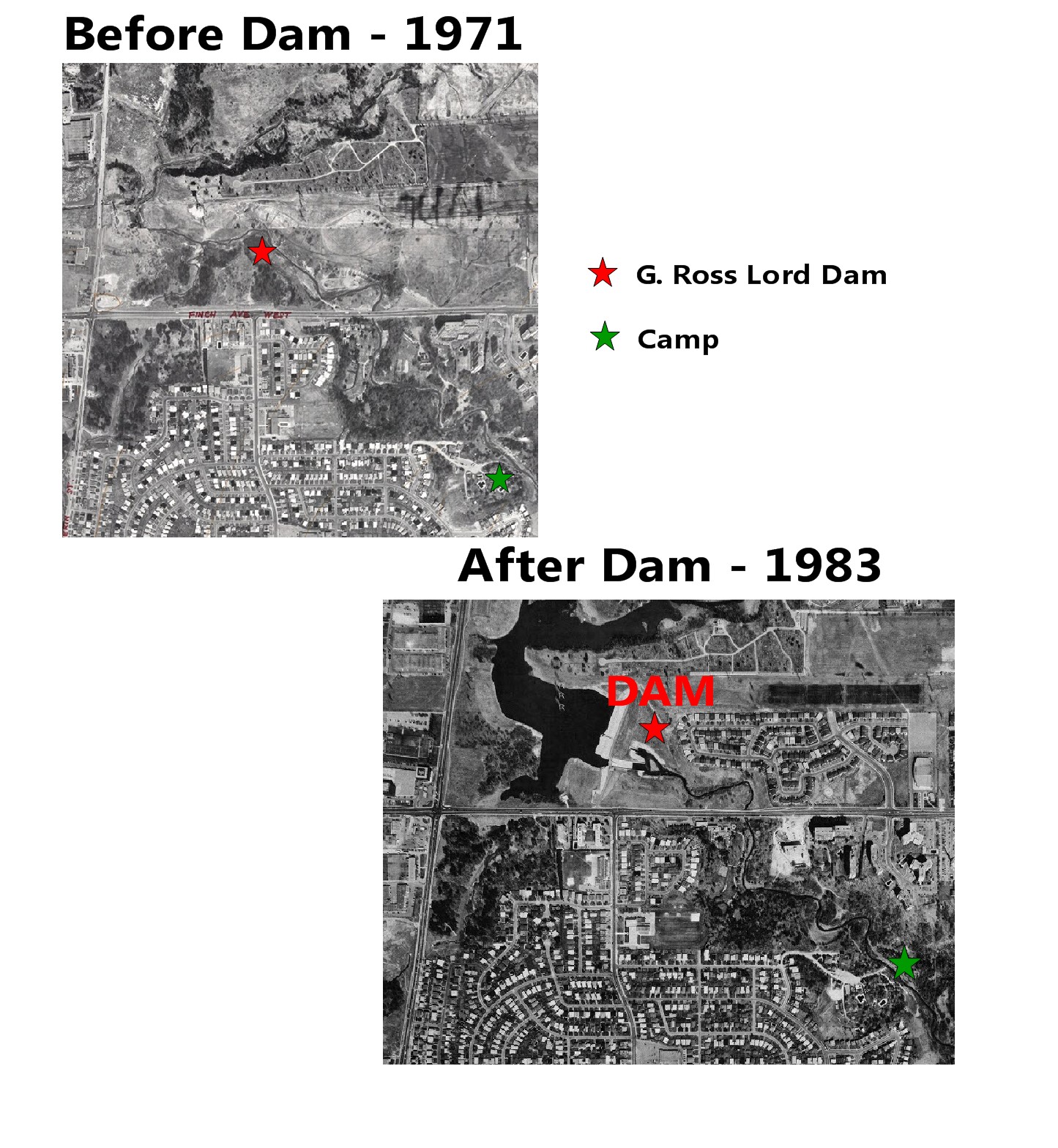
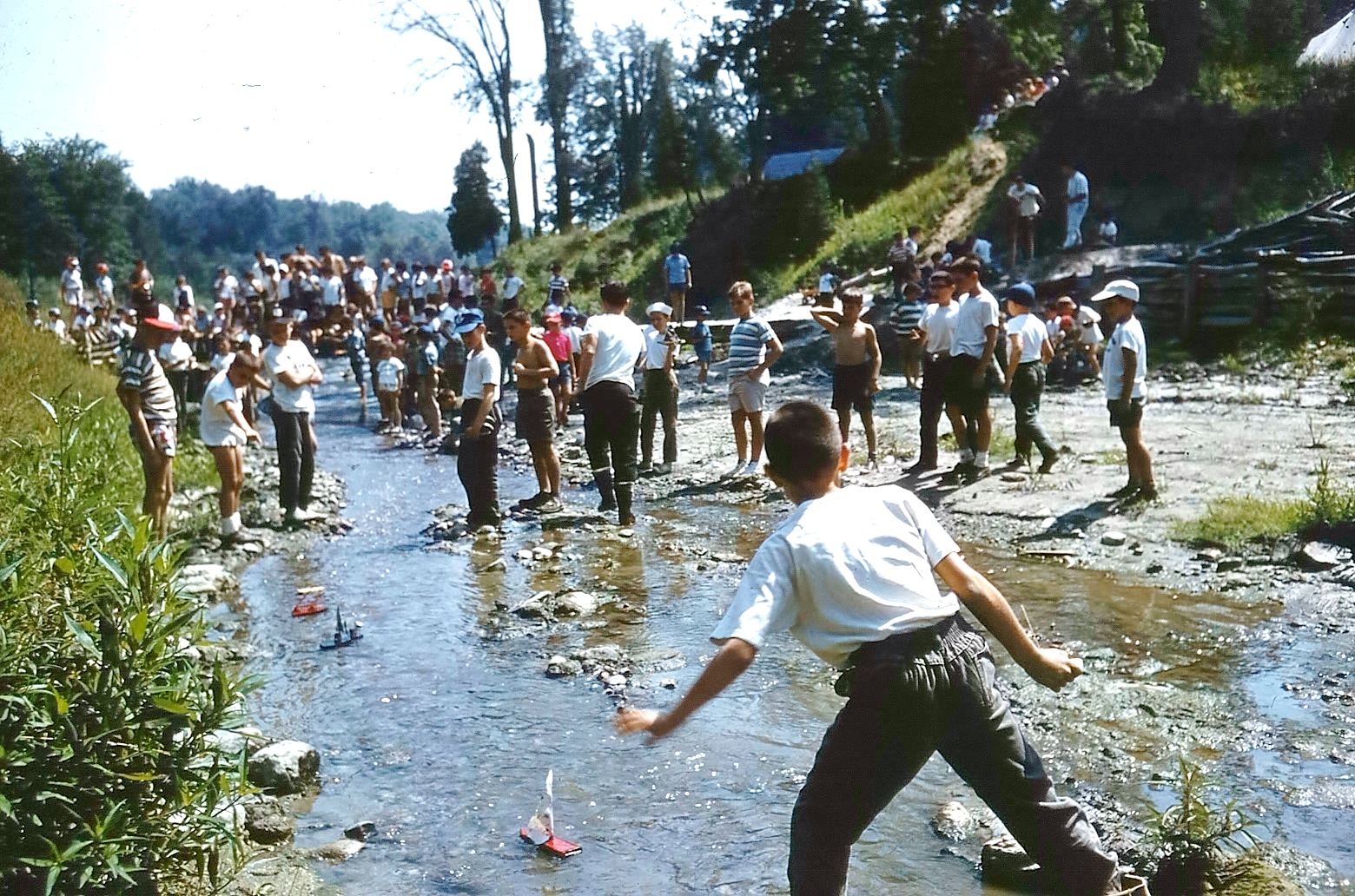
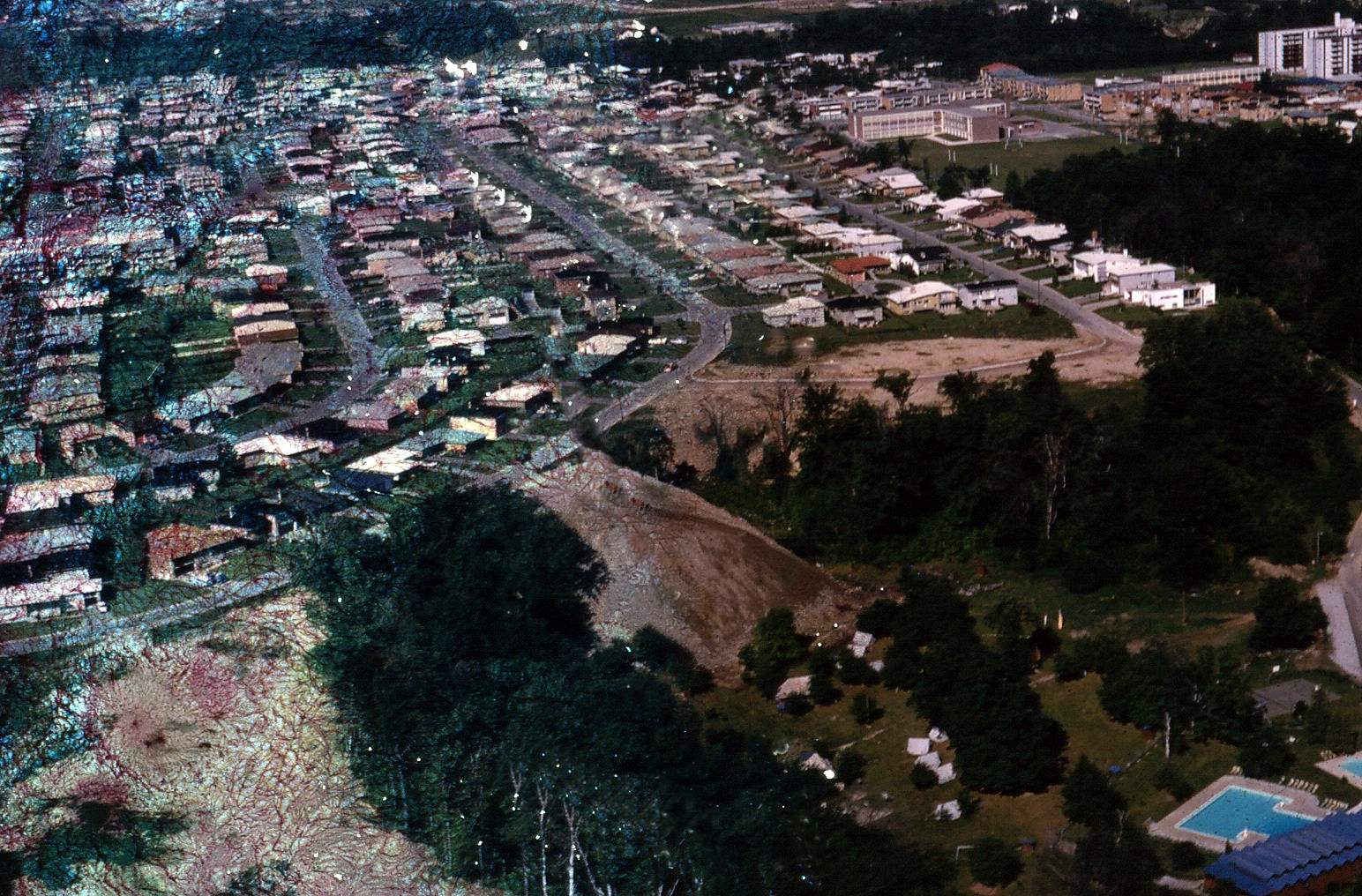
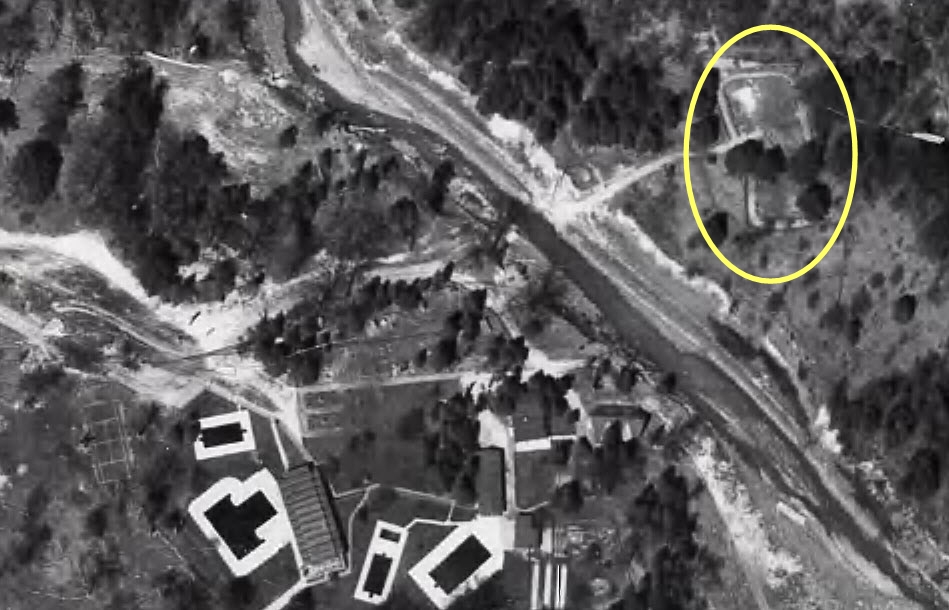
Boat races on the river. 1961. Before the G. Ross Lord Dam was built – just north of camp – the level of the river changed regularly with the rainfall. When water levels were low, the river was accessible for activities like the one seen here. After storms, the river would run very fast and very high and signs were posted warning campers and staff to stay away. After the dam was built in 1973, the water level was kept consistently higher and the river essentially became off limits to camp activities. The following aerial photos show camp before and after construction of the G. Ross Lord Dam:
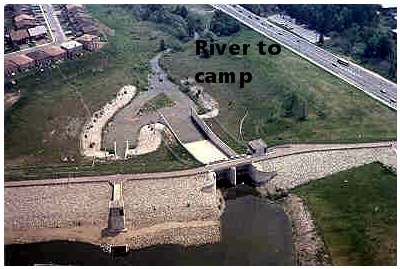

Aerial photo – labelled.
ca. 1974
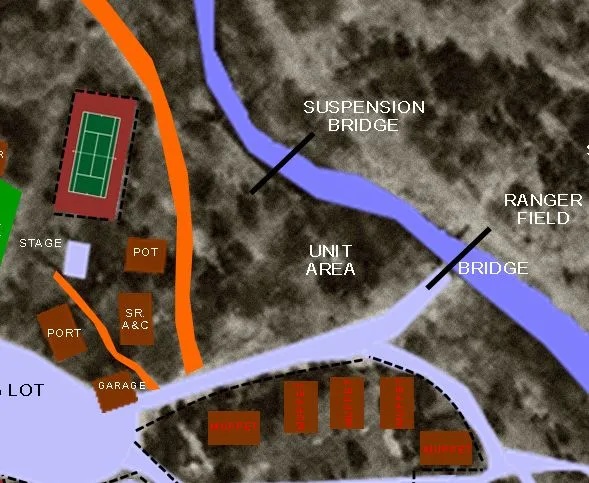
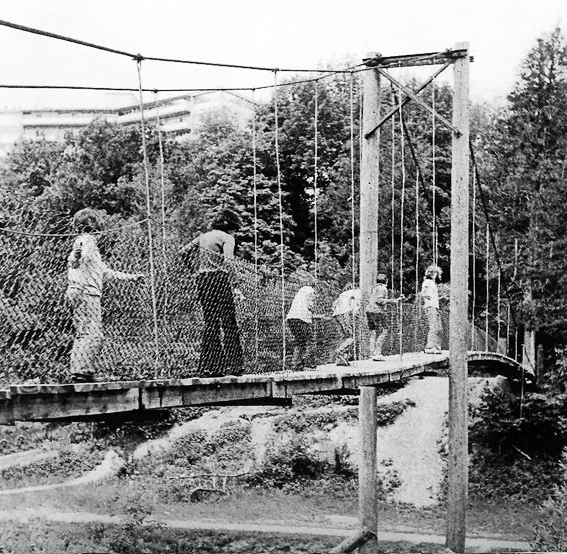
In 1973, the grade ten students from Downsview Secondary School built a suspension bridge across the ravine as part of their workshop experience. The bridge crossed the river from the Pottery Field. It was dismantled around 1980 when it was considered an insurance liability.
Location of bridge shown below:

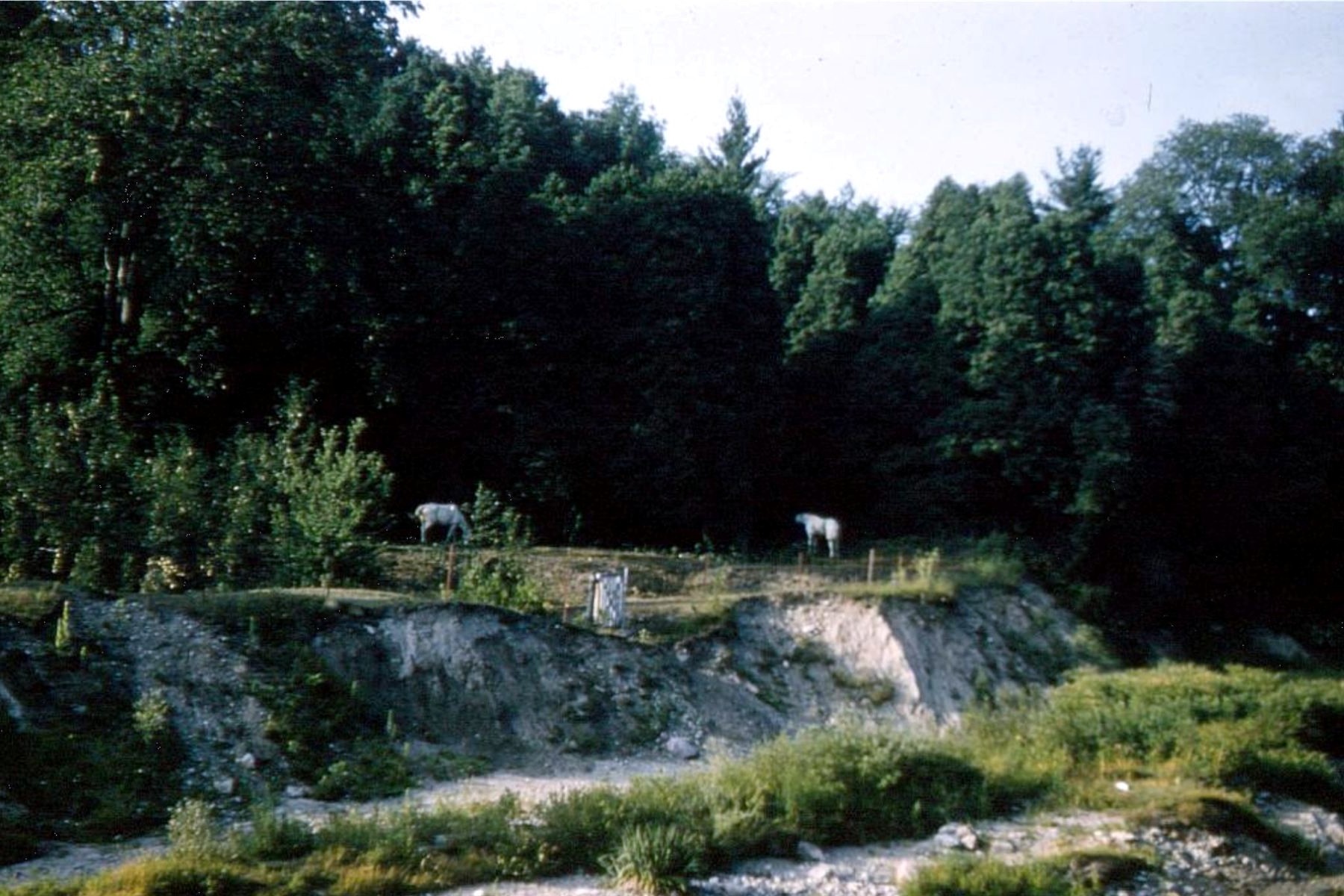
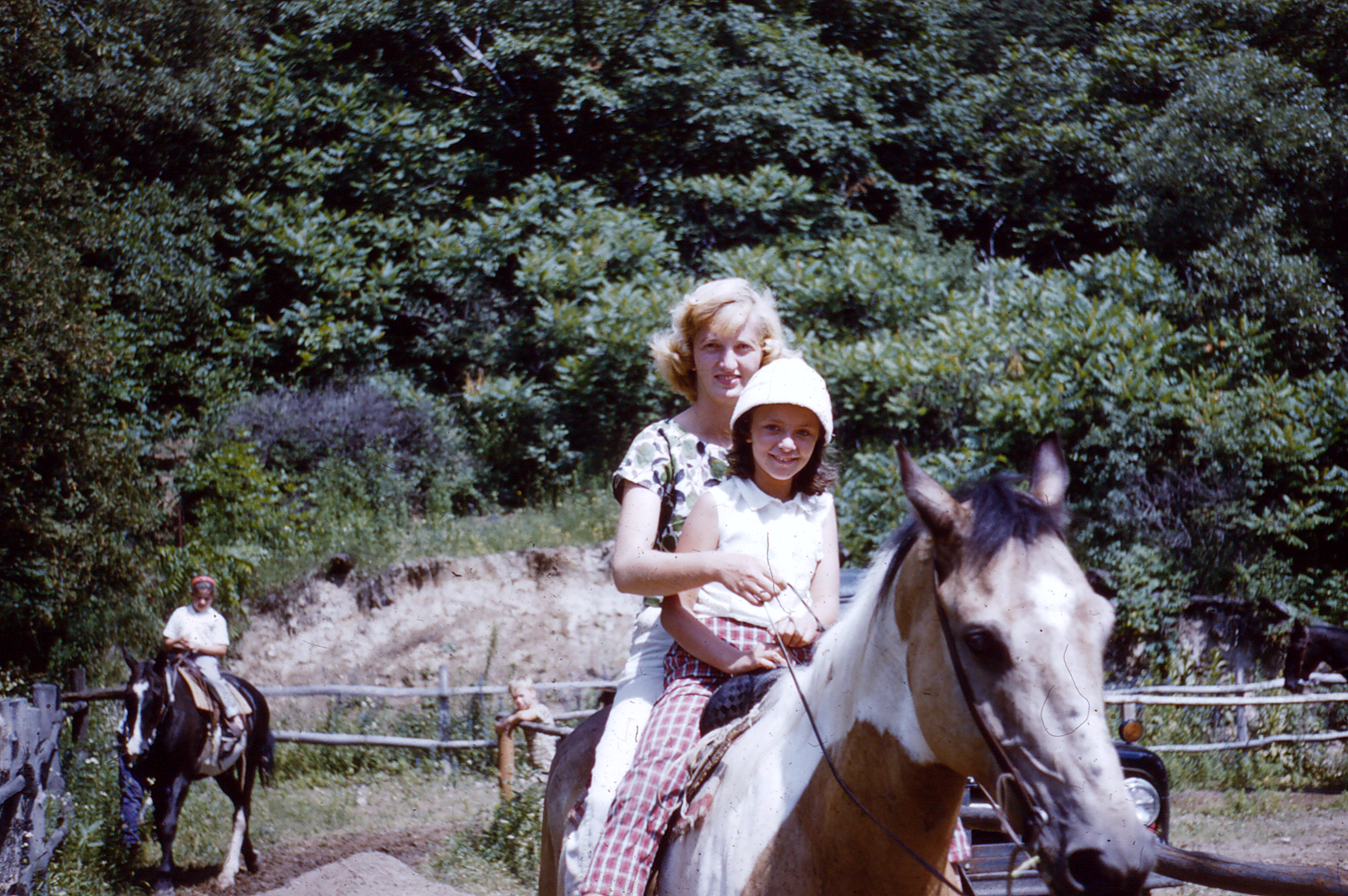
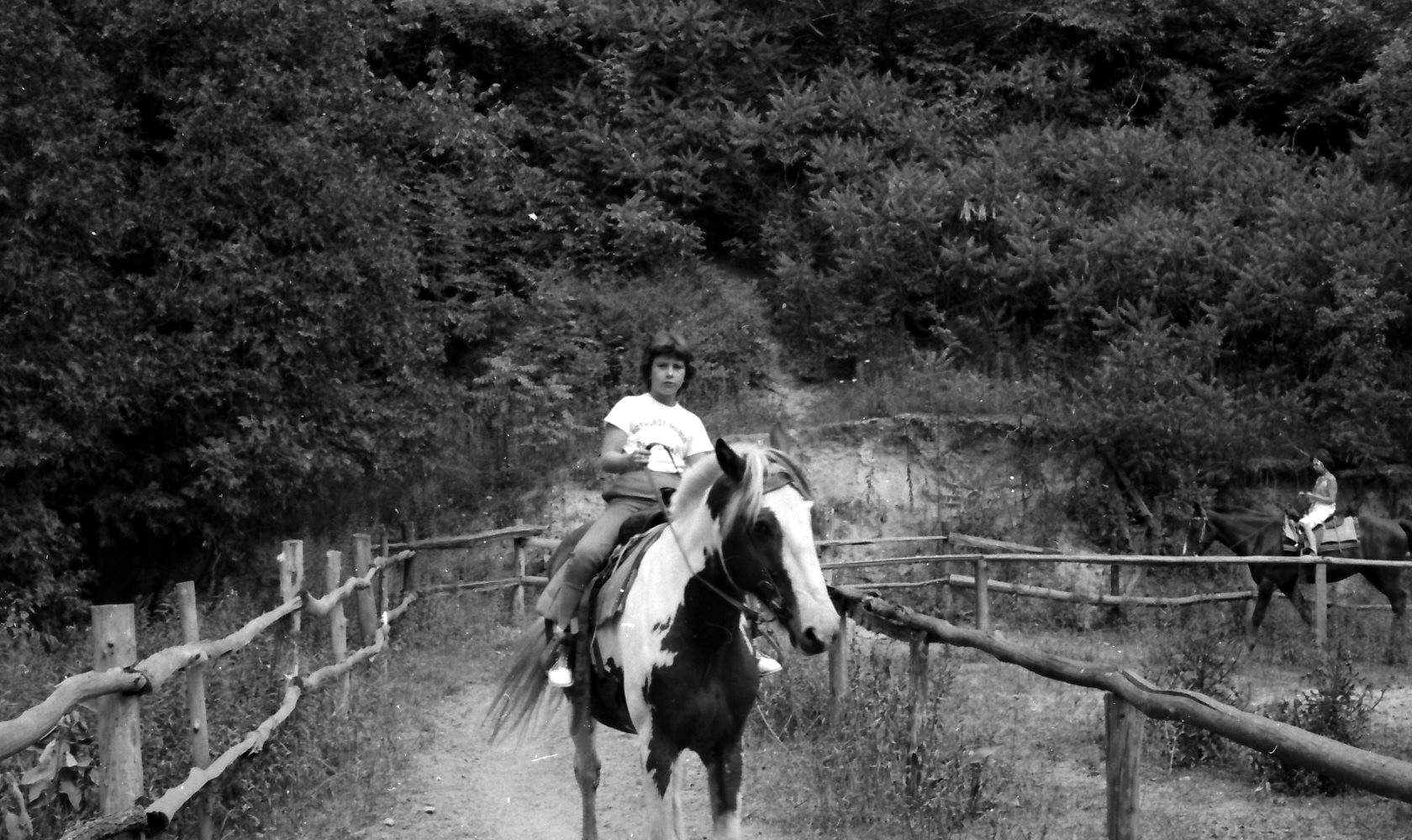
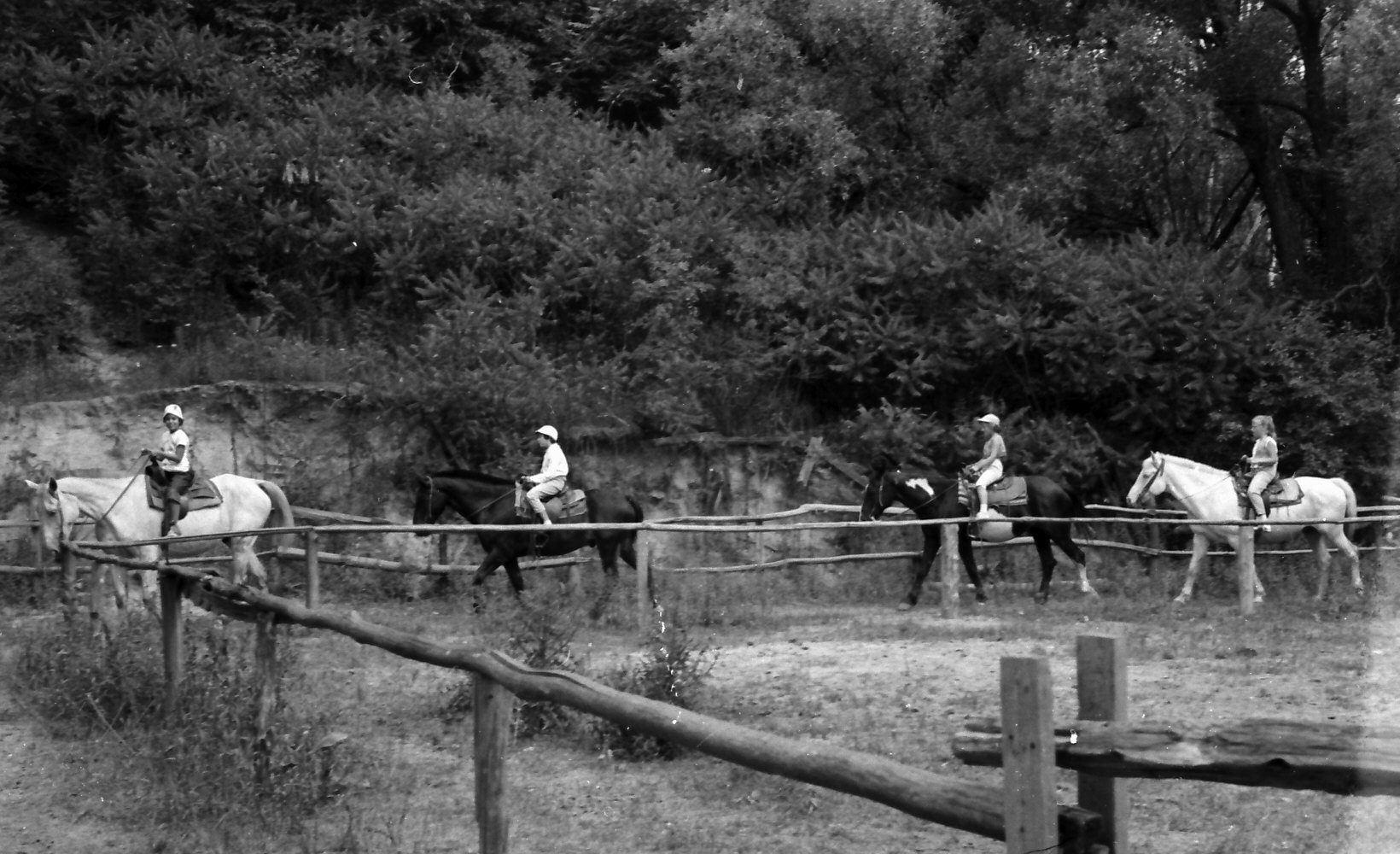
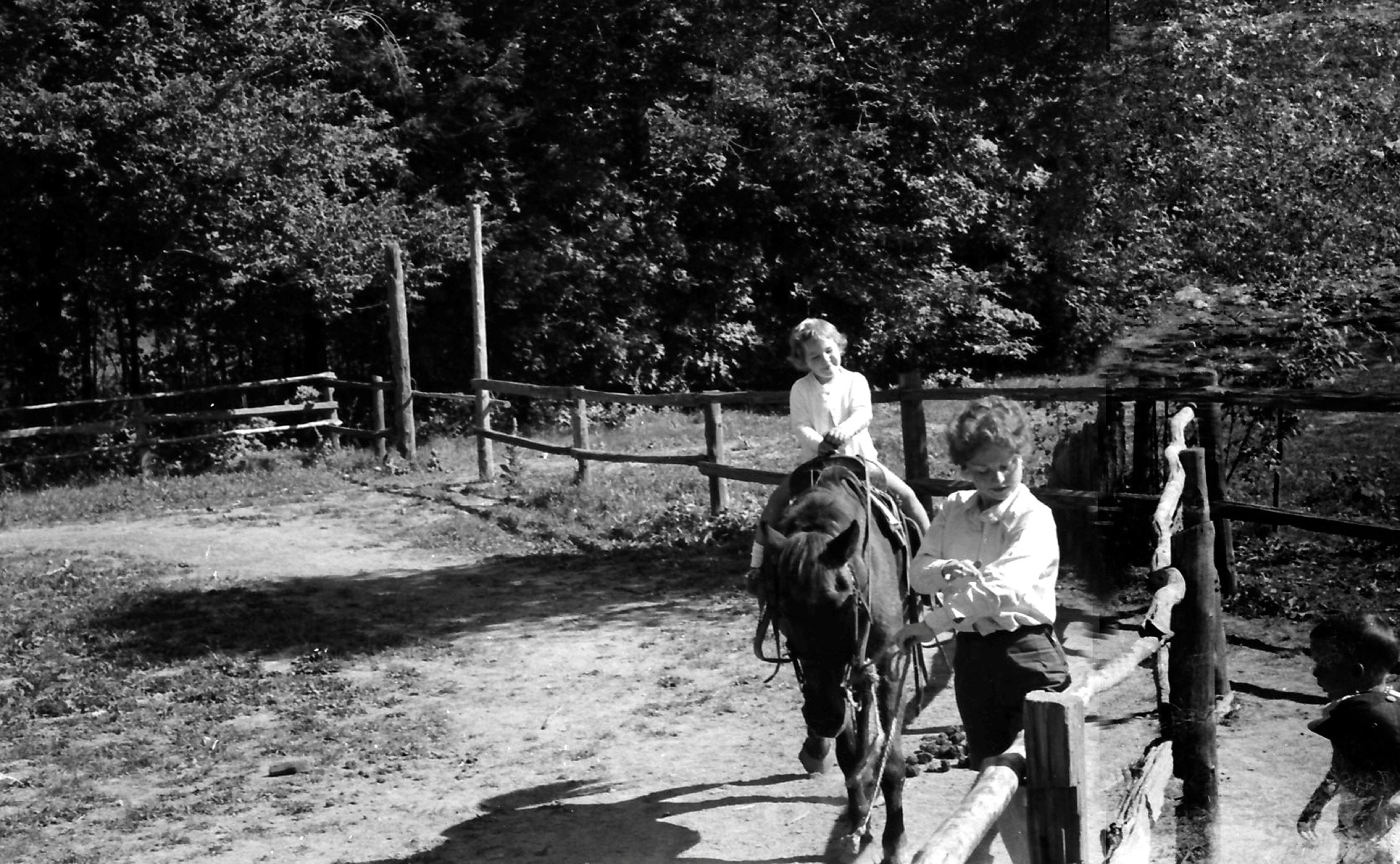
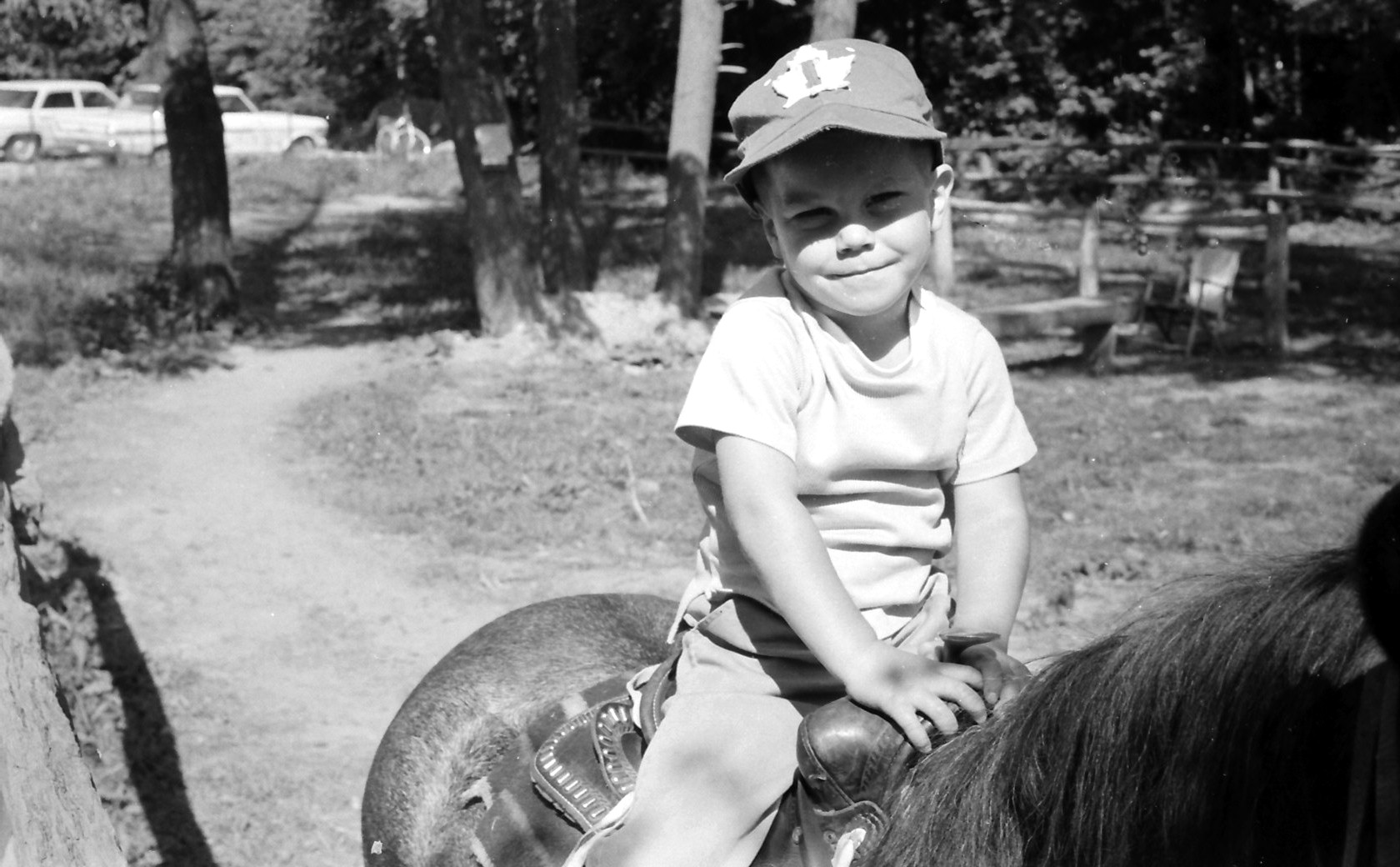
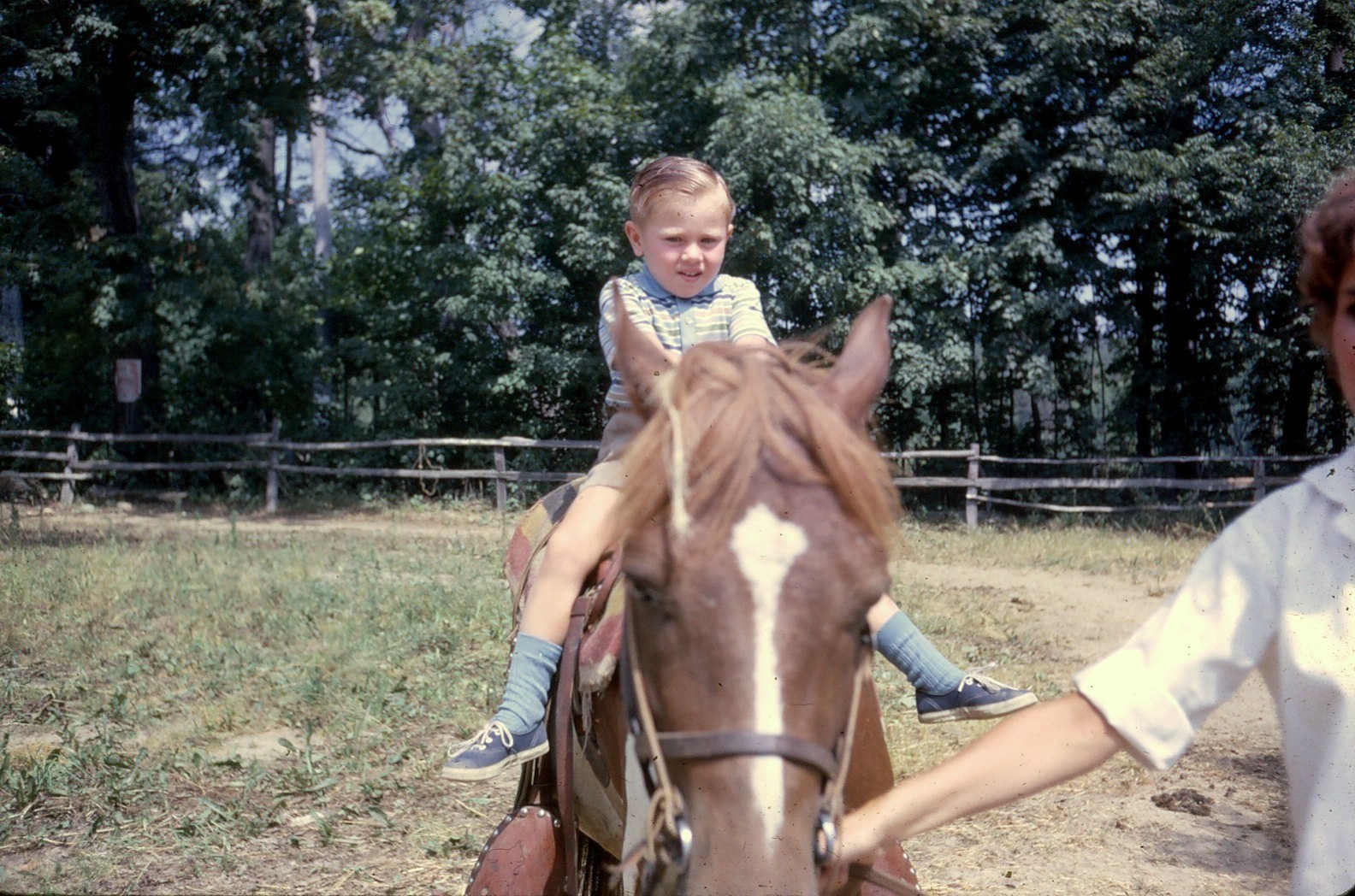
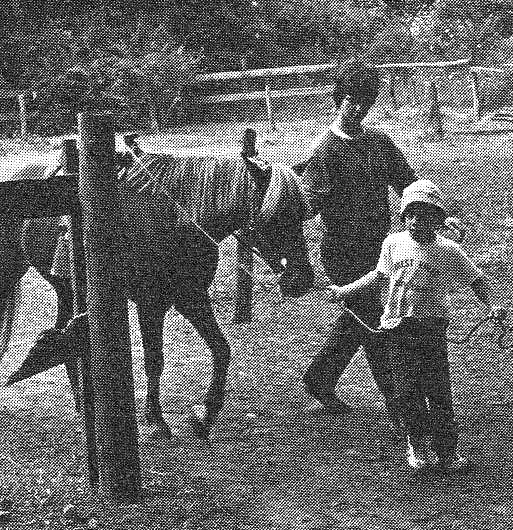
View across the river to the ponies grazing in what later became the Ranger Area. The stables were set back about 100 feet from this spot and were accessible along a path that met the original bridge.
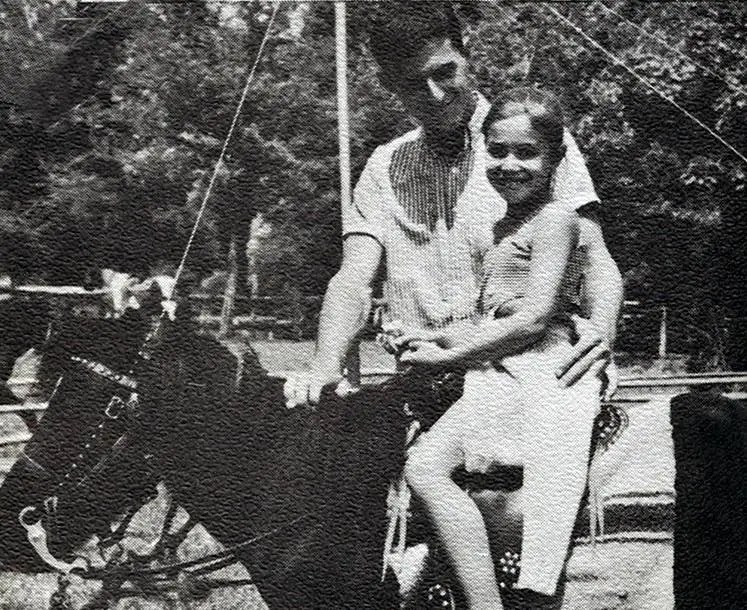
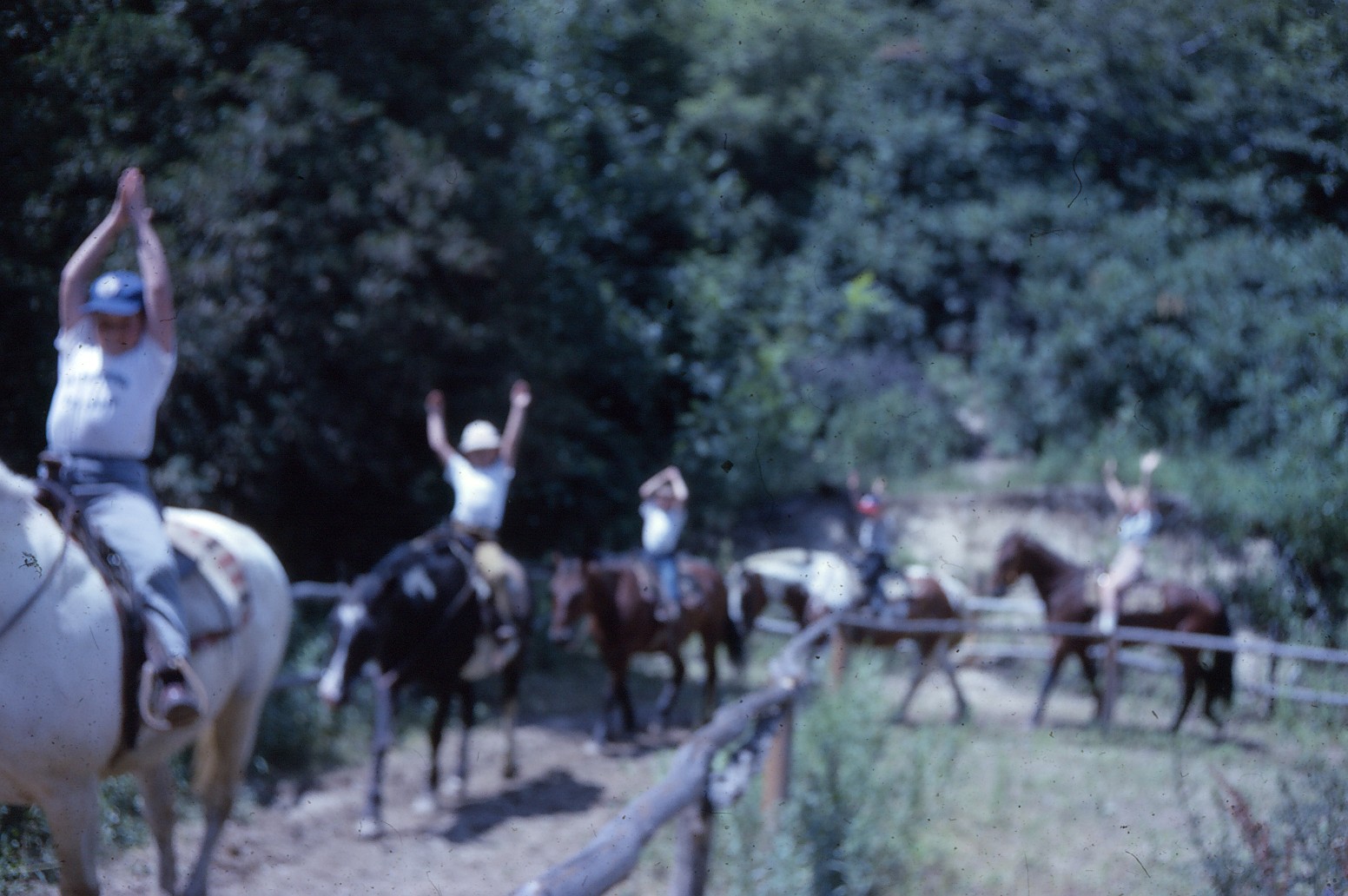
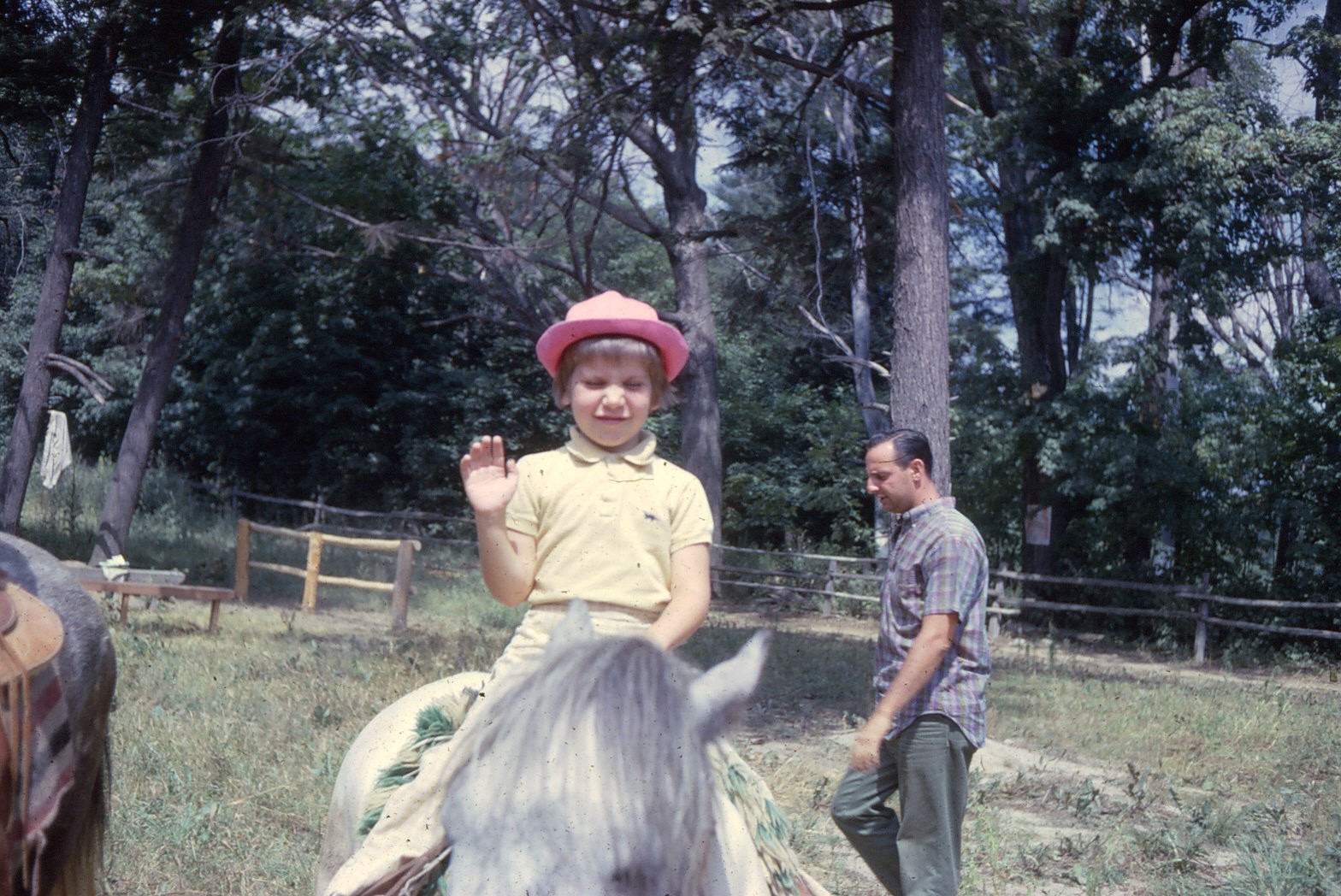
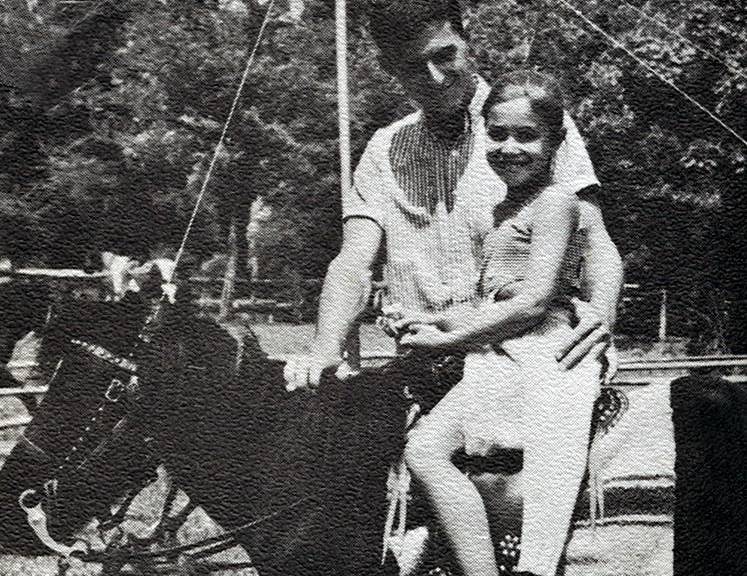
The pony program was discontinued in mid-1970’s. Photo ca. 1969:
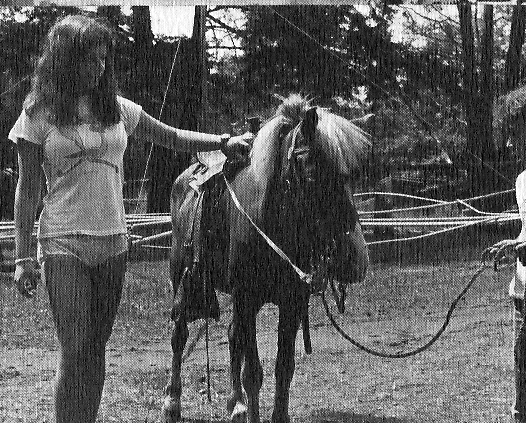
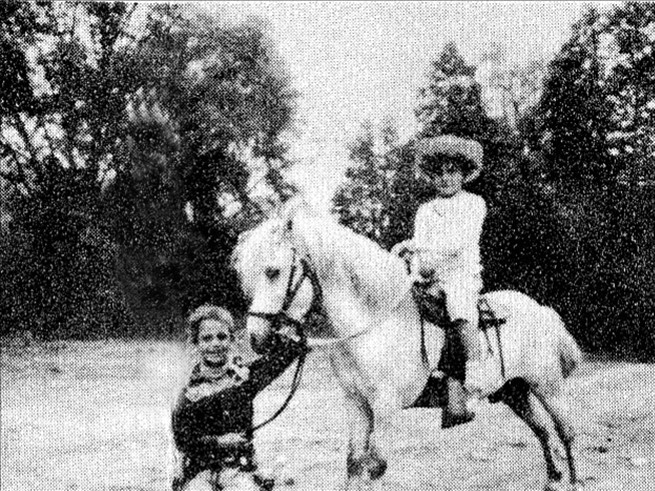
The Pony Carousel as shown in the second camp brochure. ca. 1960. Trivia: Bert received the carousel and a stagecoach as settlement on a debt.
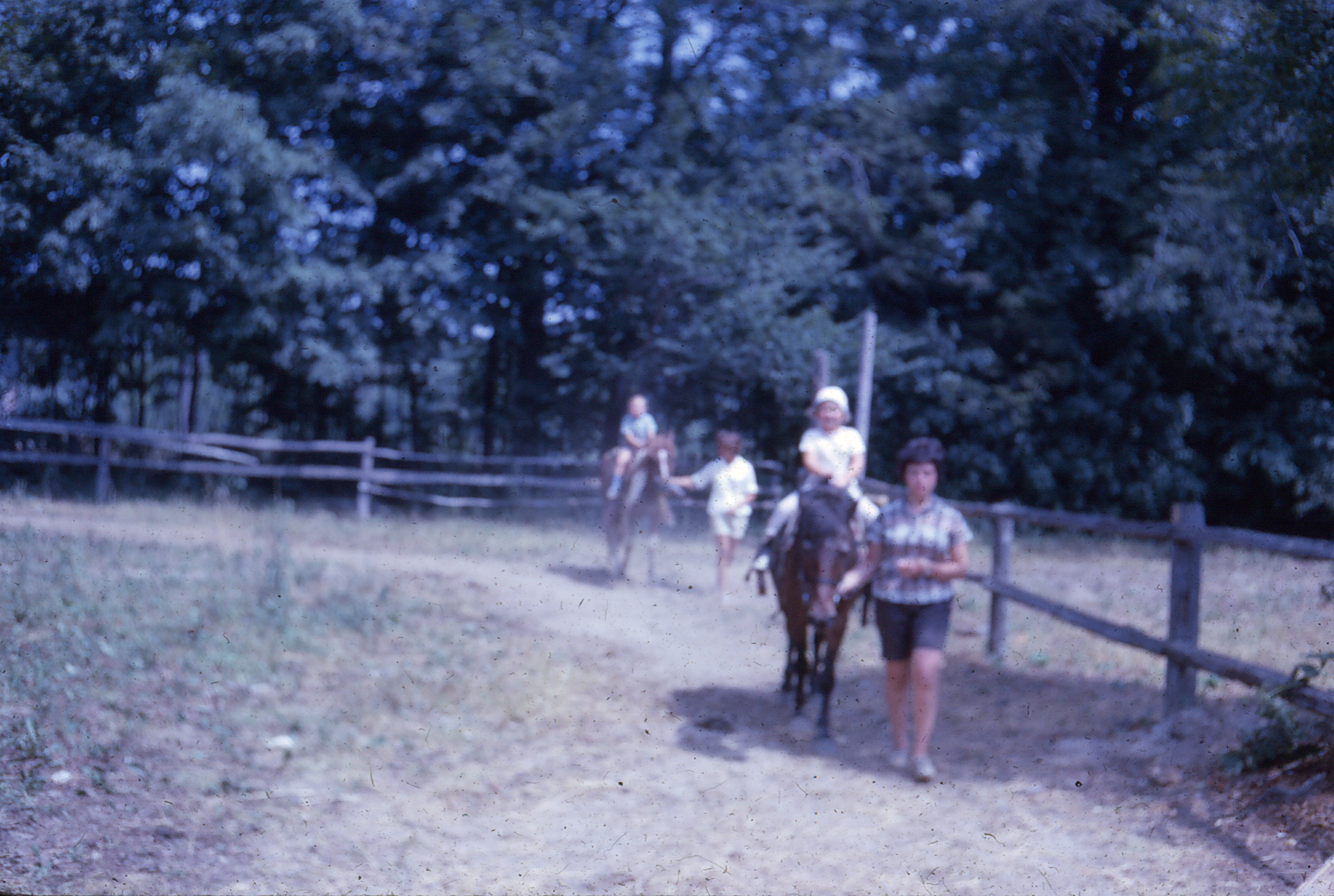
1967:
Dimensions: Learner: 20′ x 36′ Peewee: 20′ x 10′
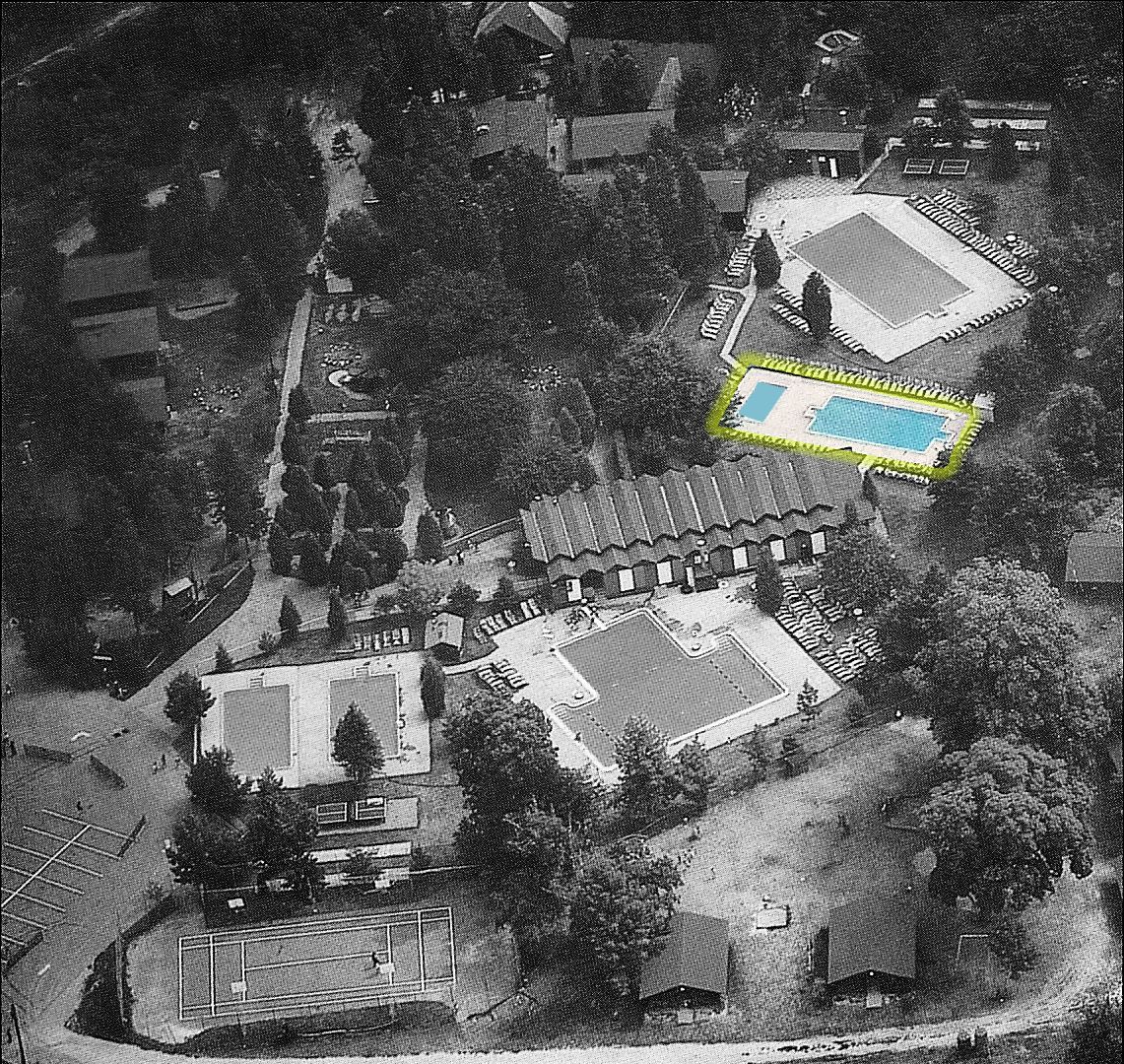
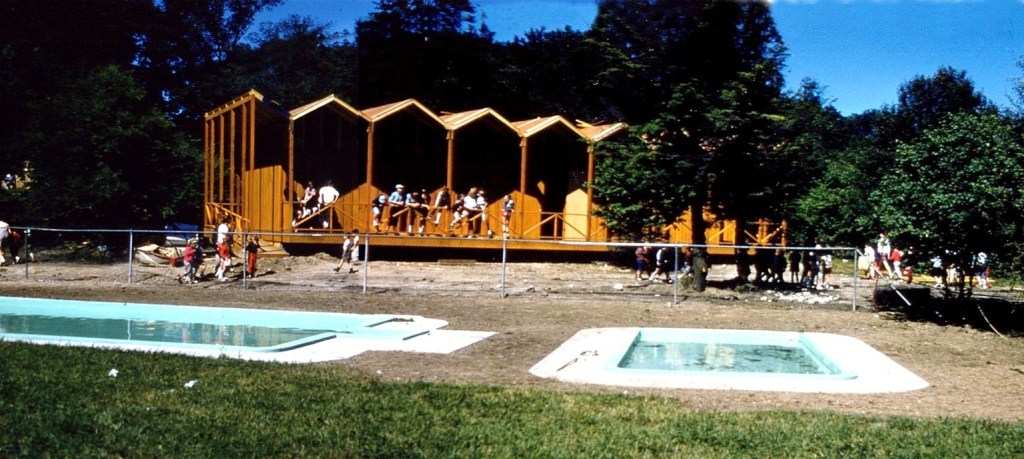
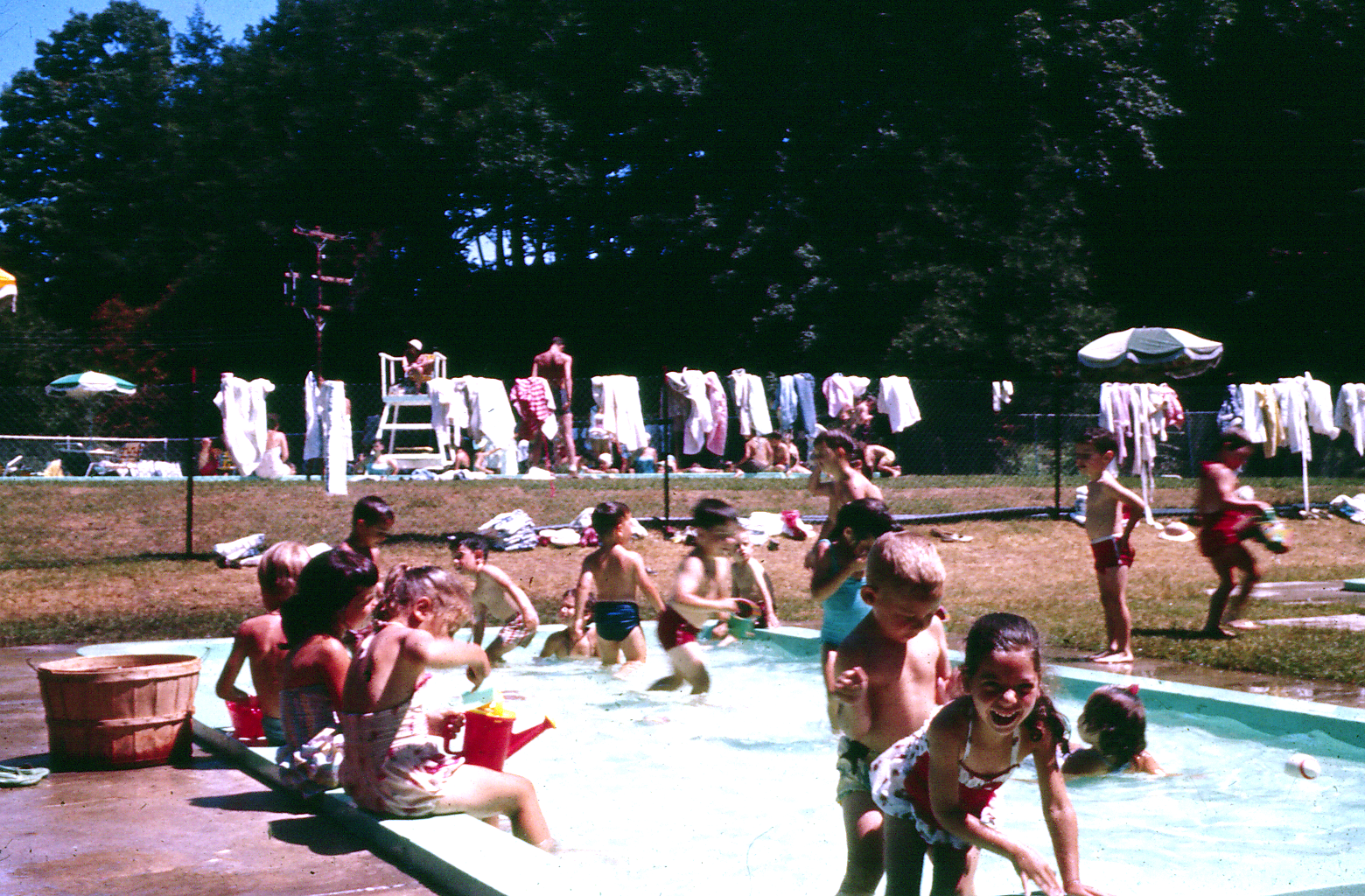
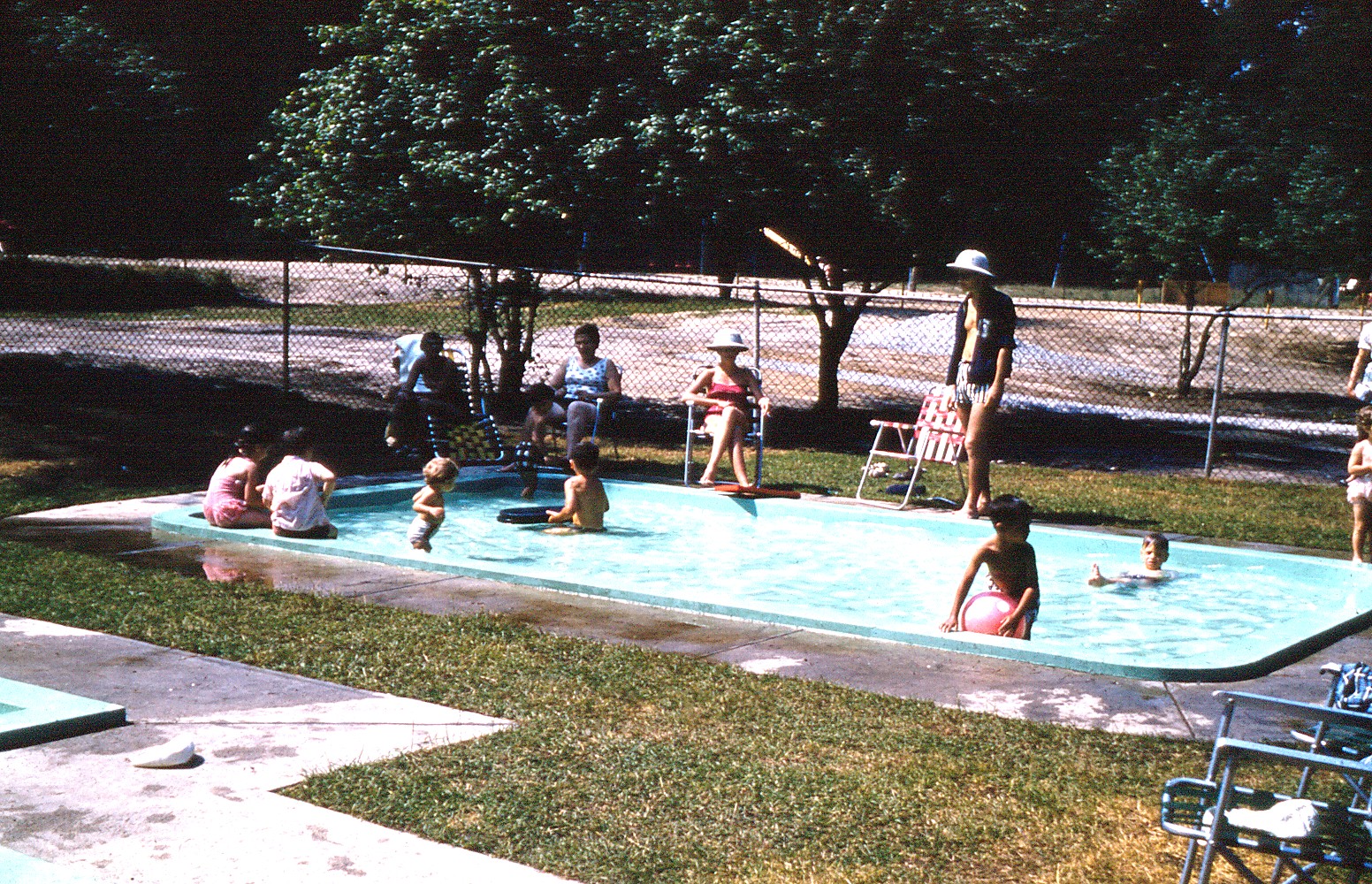
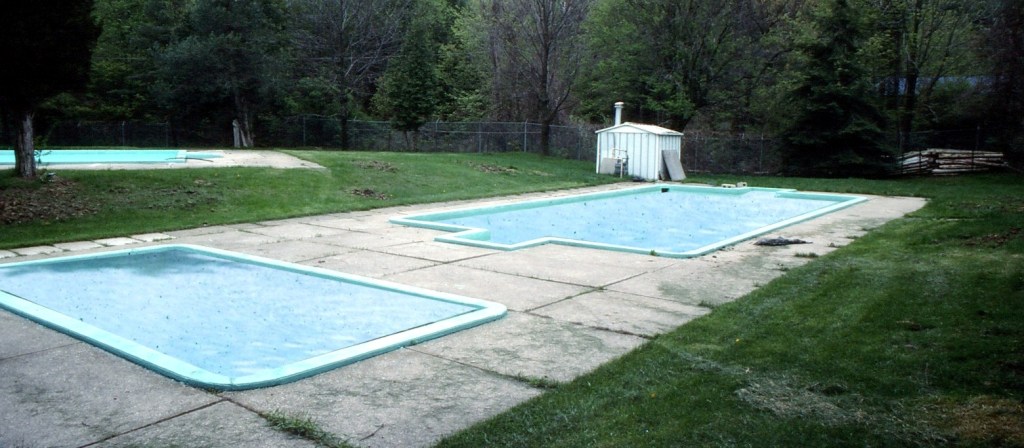
The ‘baby pool’ AKA “The ‘P’ Pool”.
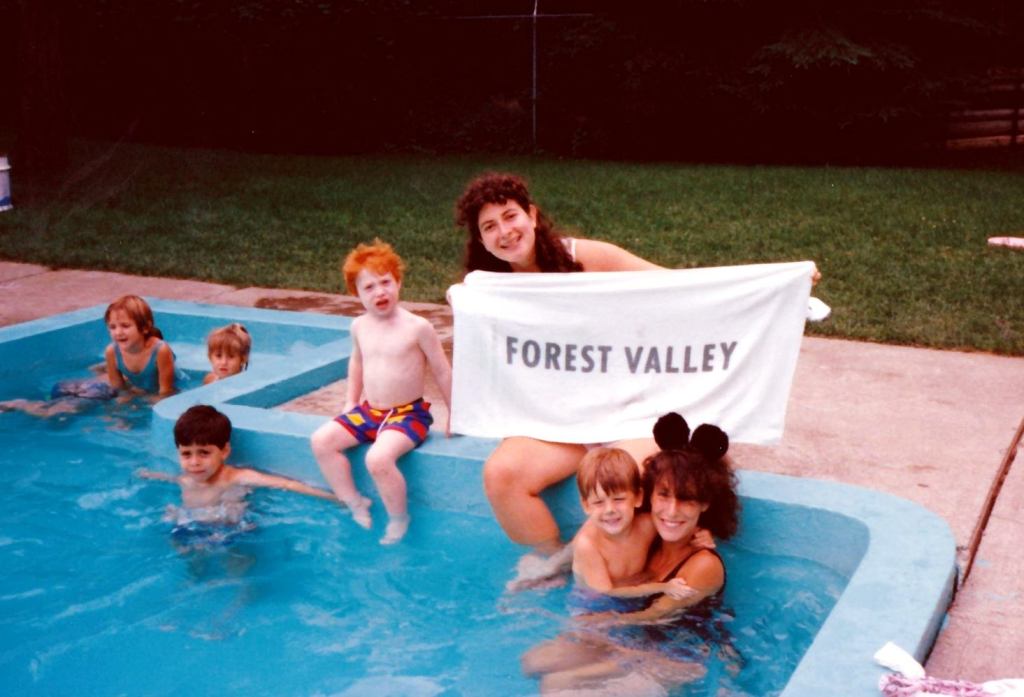
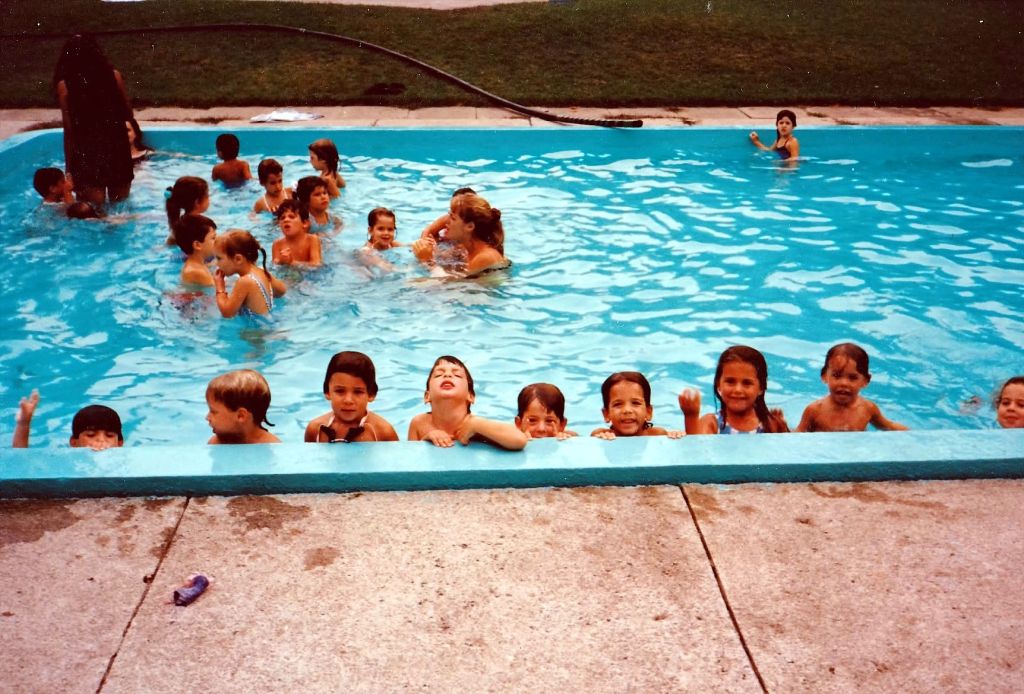
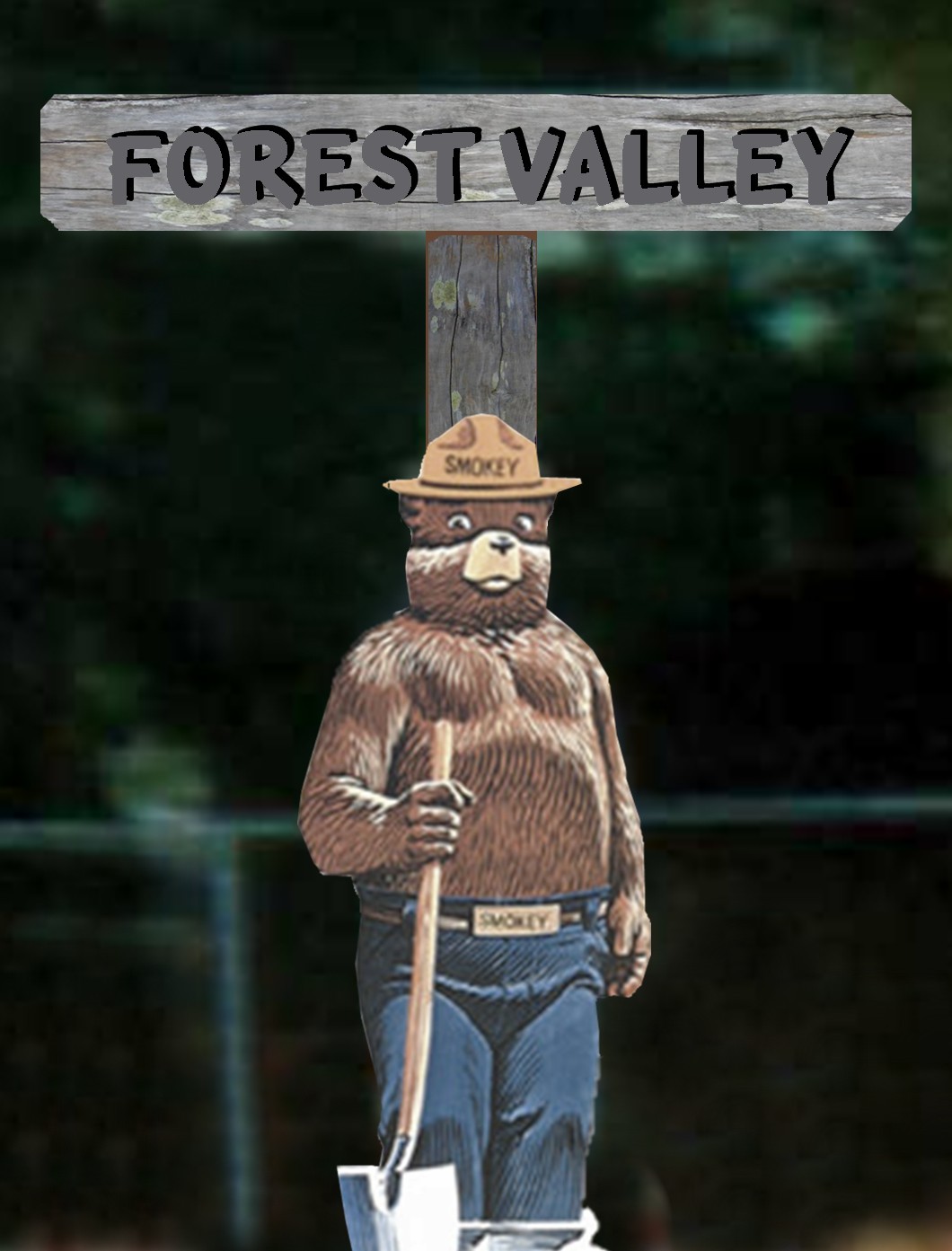
Smokey the Bear standing guard at the bottom of the parking lot.
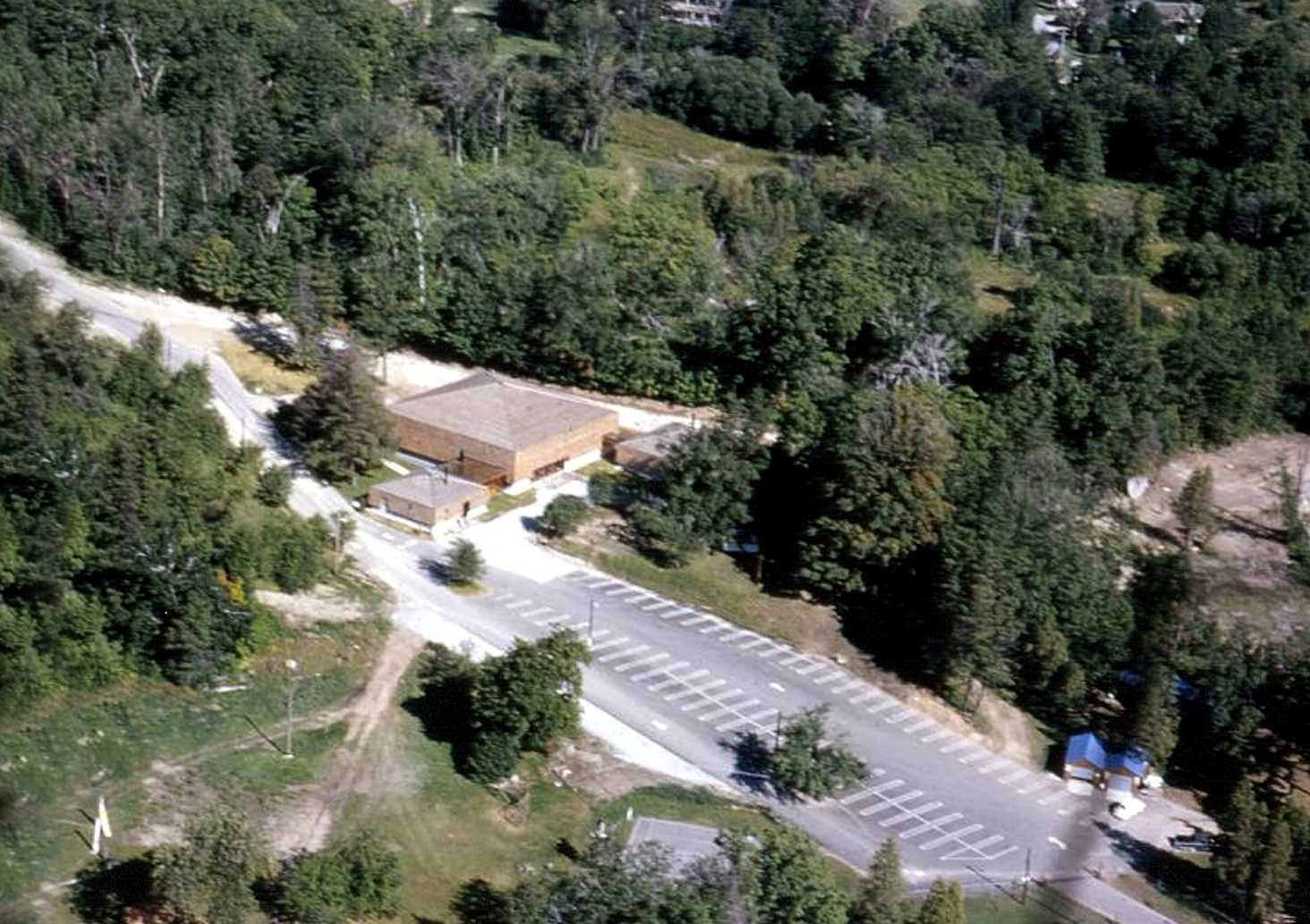
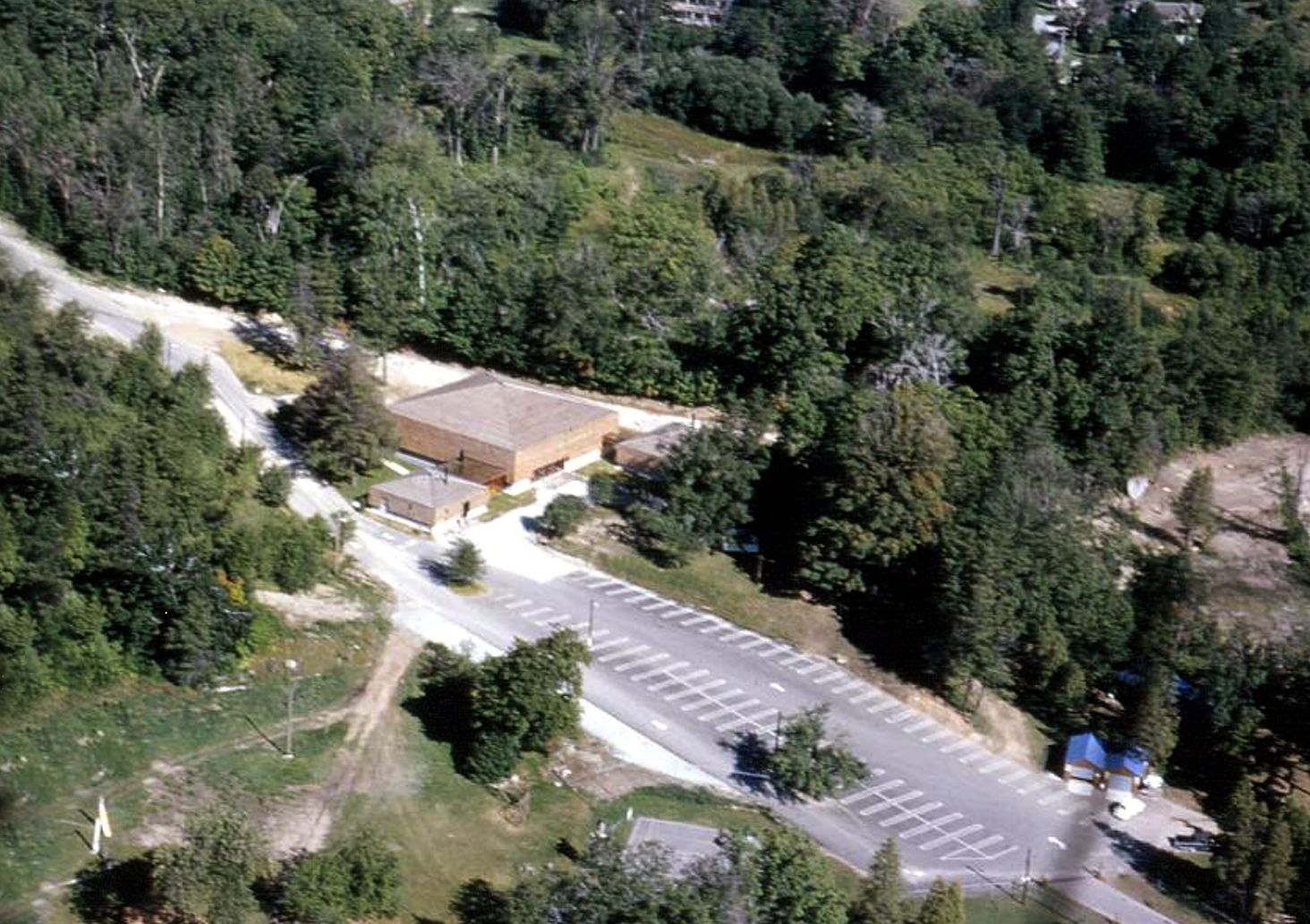
Aerial view showing newly constructed office, auditorium and terrace. An additional office would be built 2 years later in front of the one on the left and joined via a corridor. Future location of tennis court shown as open field on right.
1964
Dimensions: 20′ x 36′
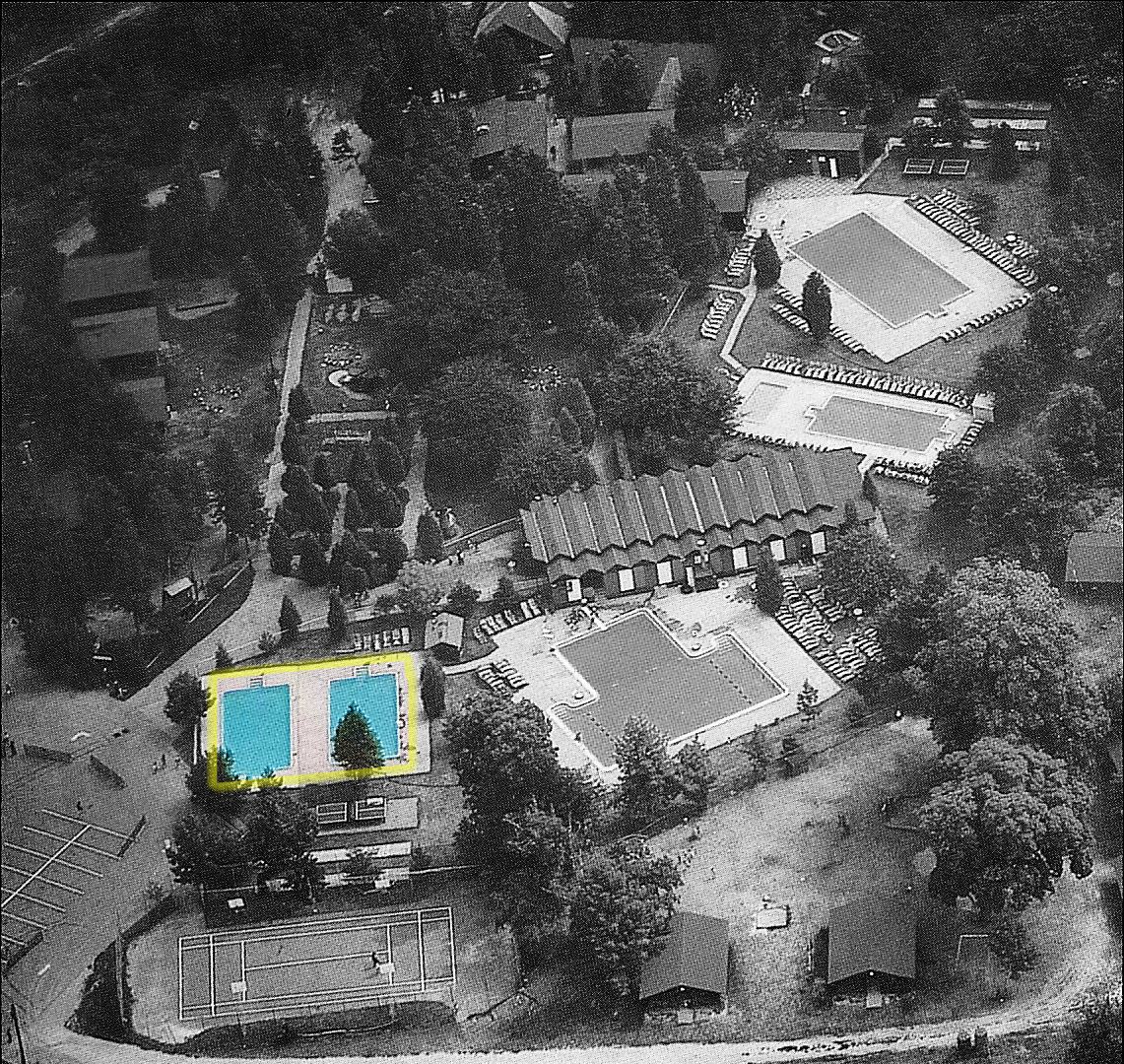
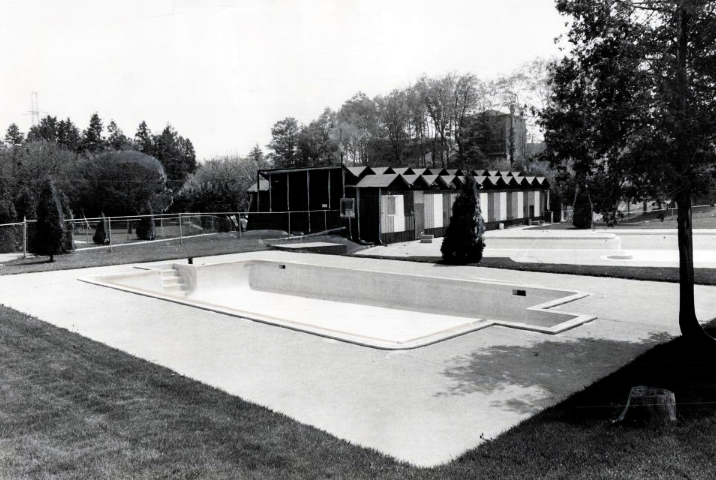
After construction of the first T-Learner – 1963:
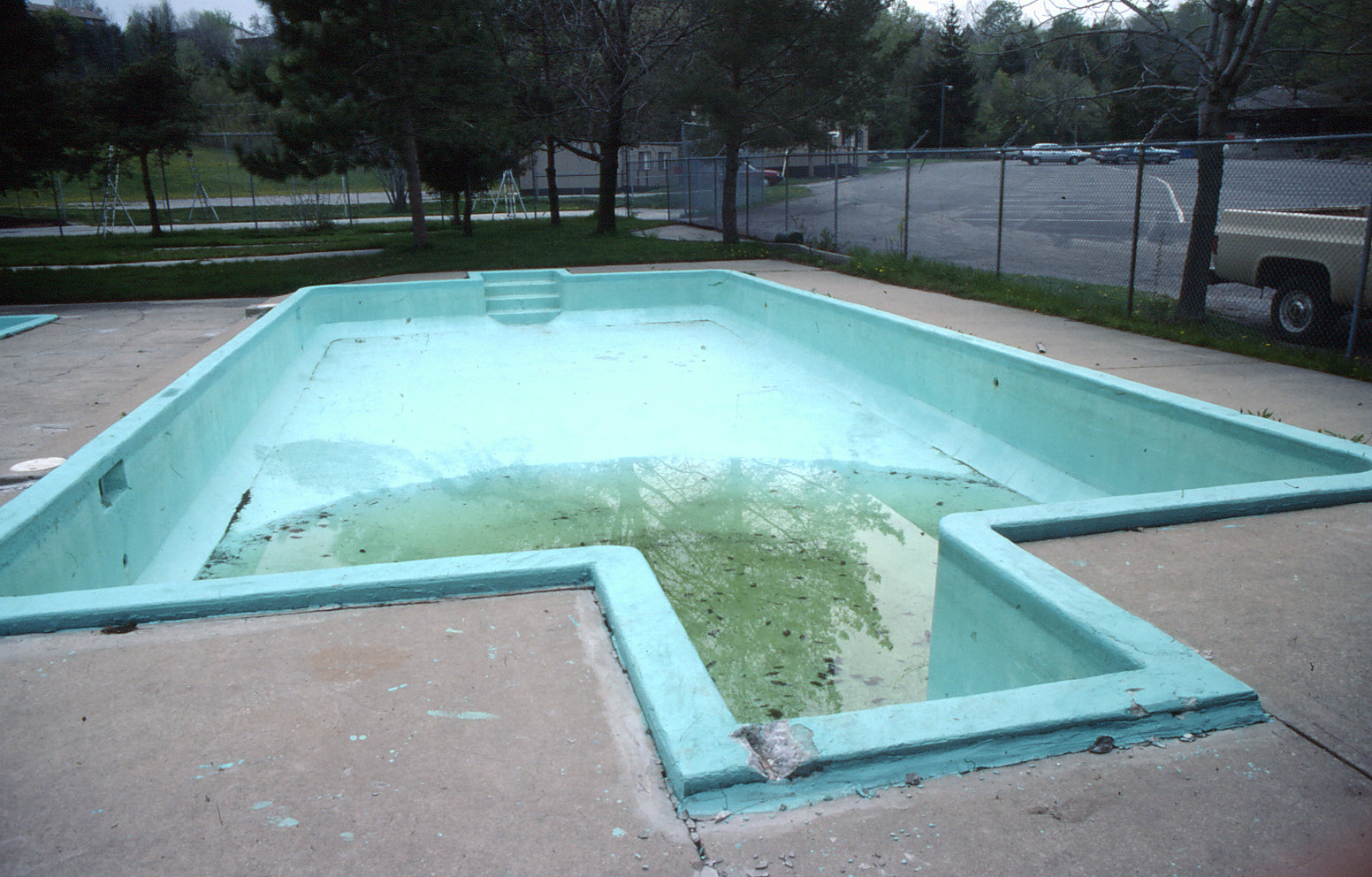
The second T-Learner was built in 1972.
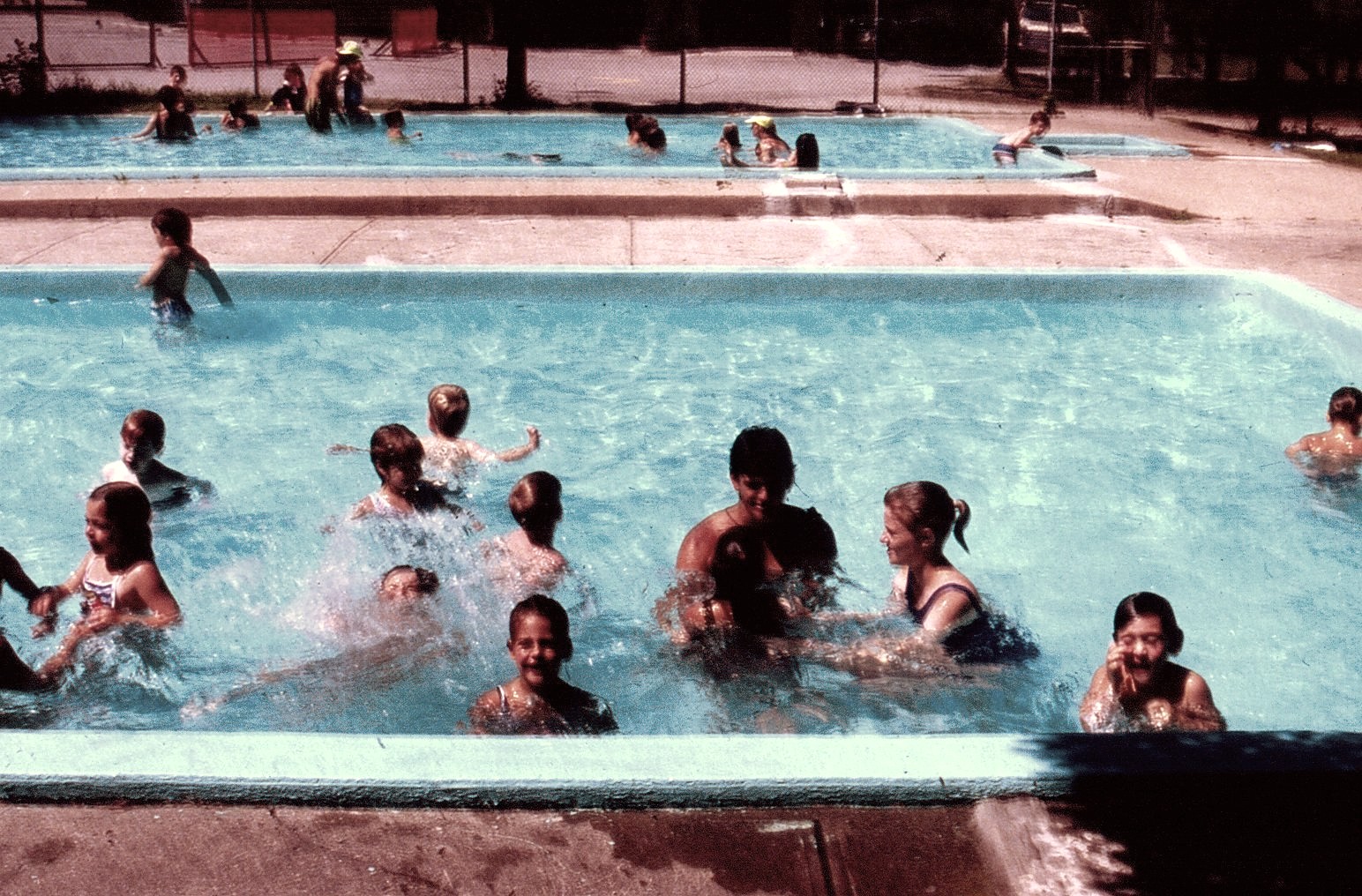
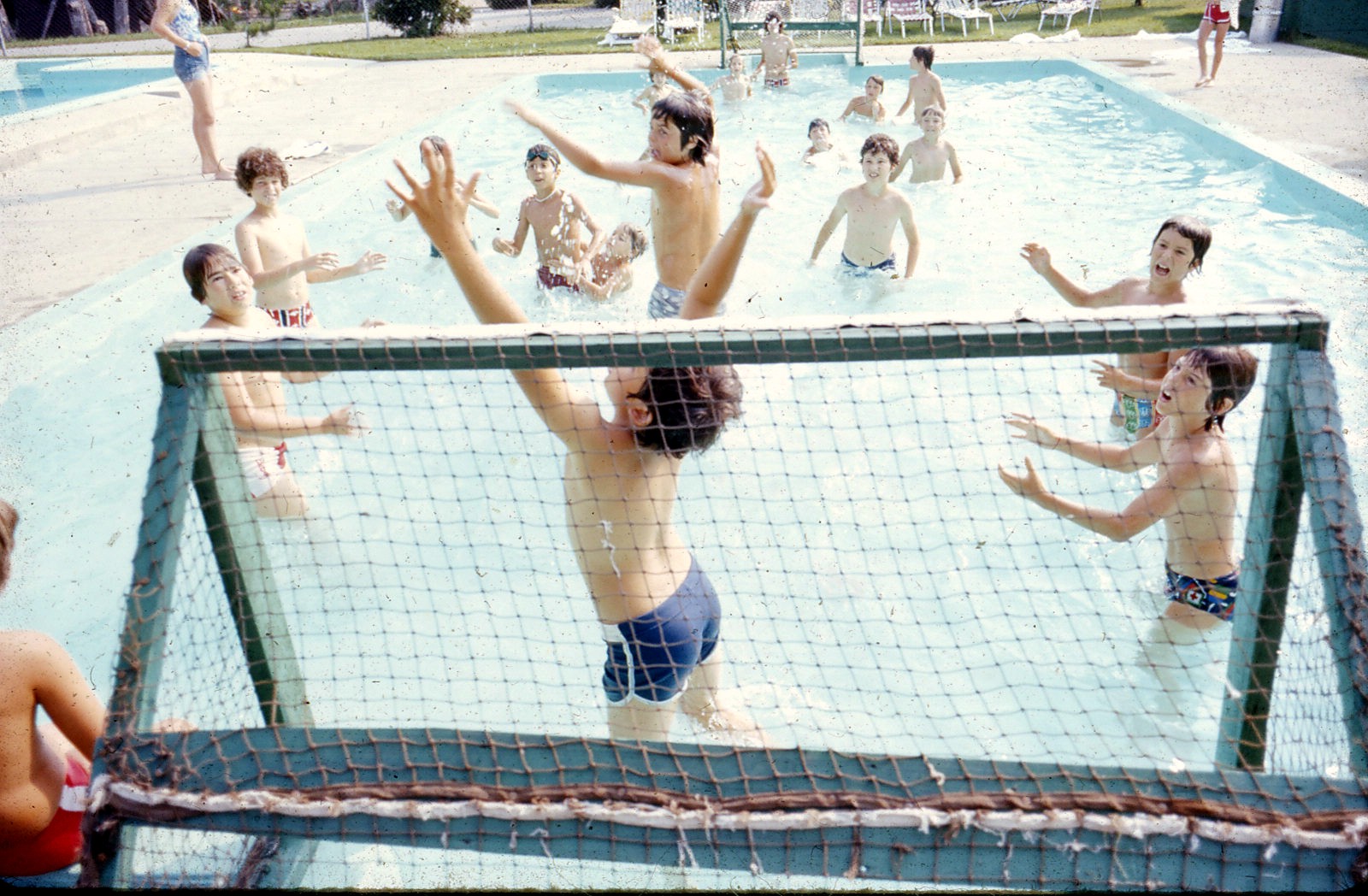
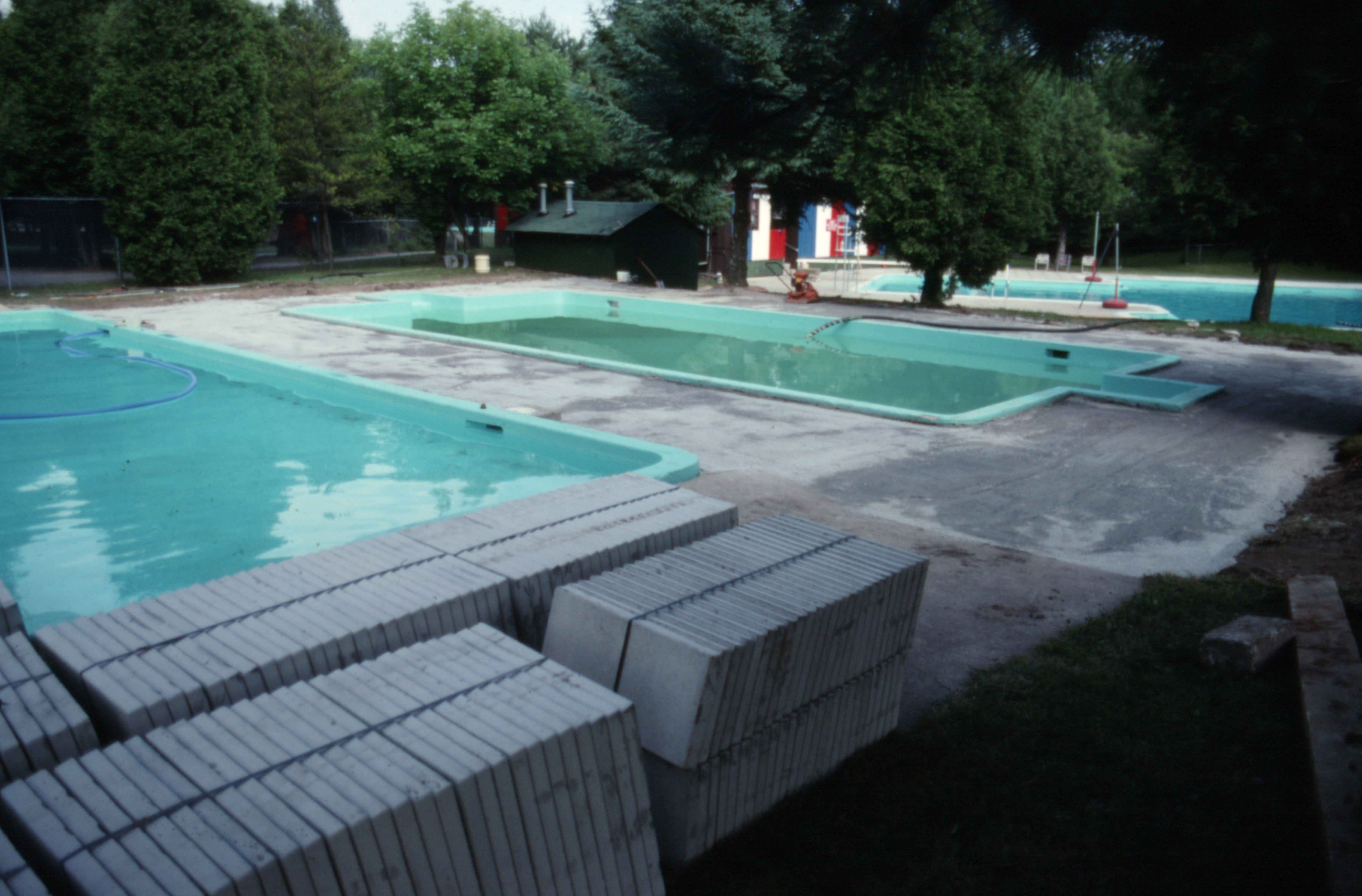
Below, replacing the concrete deck with pavers in 1988:
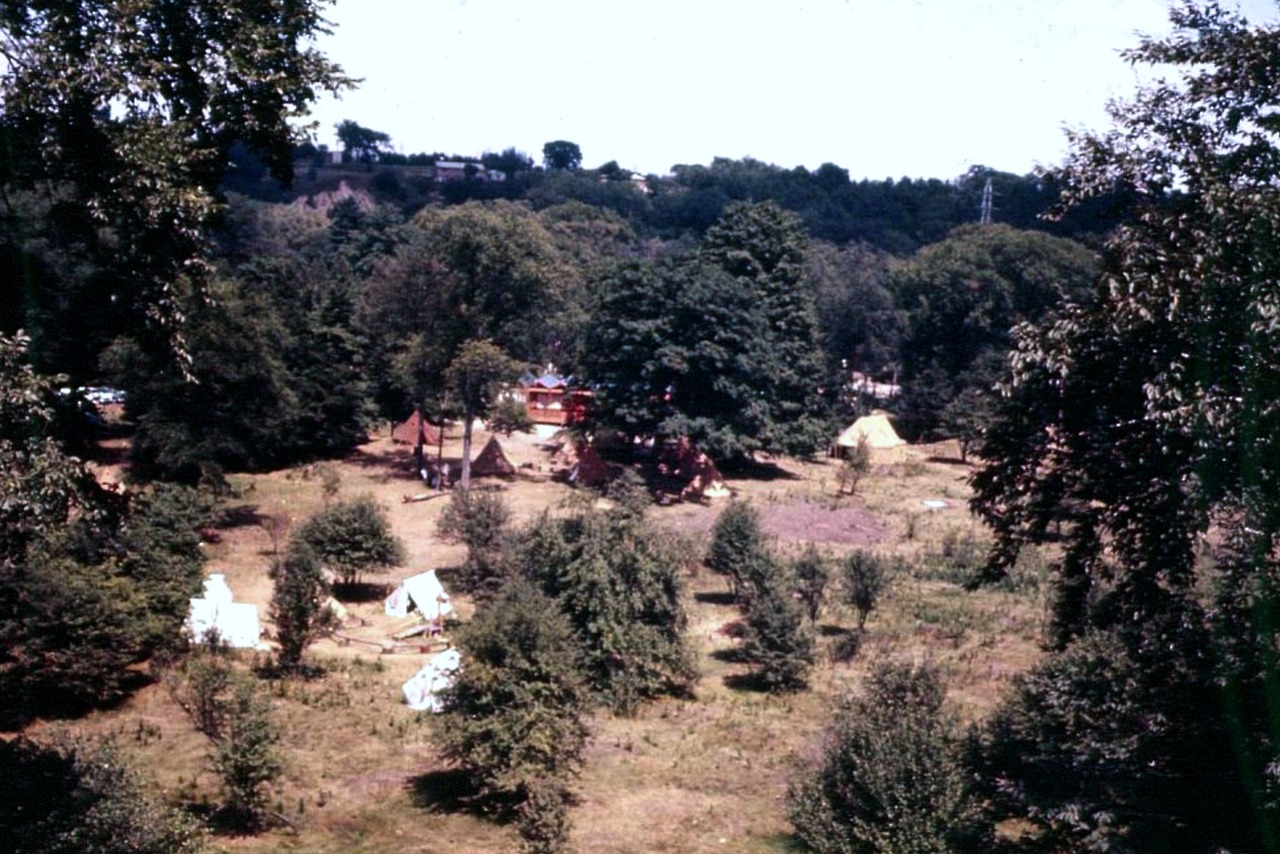
Early View from Hill – just after I-pool construction. Looking east from hill.
ca. 1962
 Forest Valley Day Camp 1956 - 1993