
Prior to building the first pool, plans were created for a village-concept, including a recreation hall, kitchen and dining area. The initial idea for a dining area was a round, open-air pavilion (in yellow):
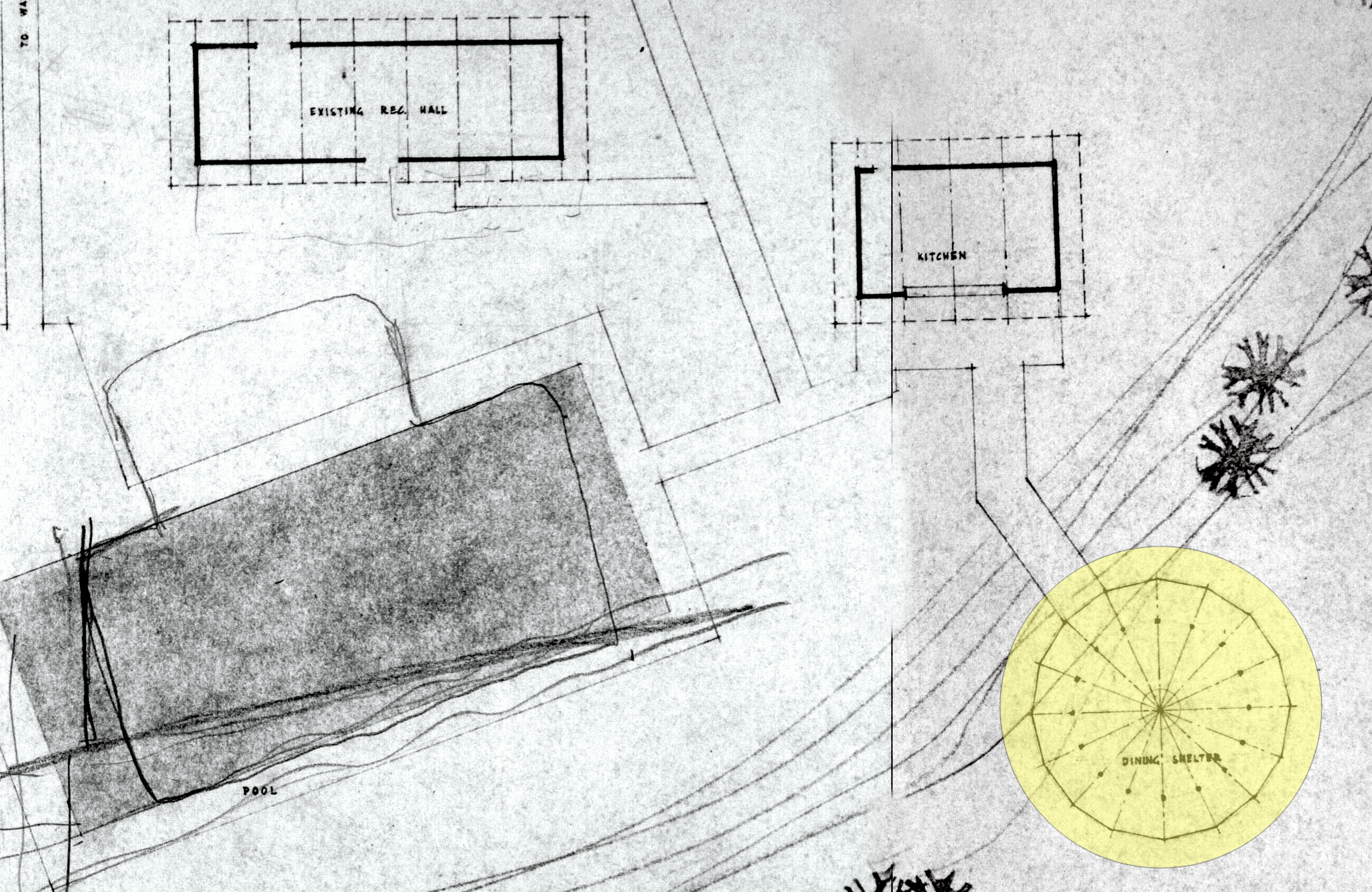
As plans evolved and the I-Pool was built, new designs were developed for the A-Frames by architect Mandel Sprachman. He was a friend of Bert and went on to design most of the other camp buildings as well. The A-Frames were envisioned as rainy day shelters rather than lunch rooms. Plans were developed for a dining hall and kitchen to be located near the I-Pool, but it was ultimately decided that the A-Frames could satisfy this need. The kitchen was then relocated near the A-Frames.
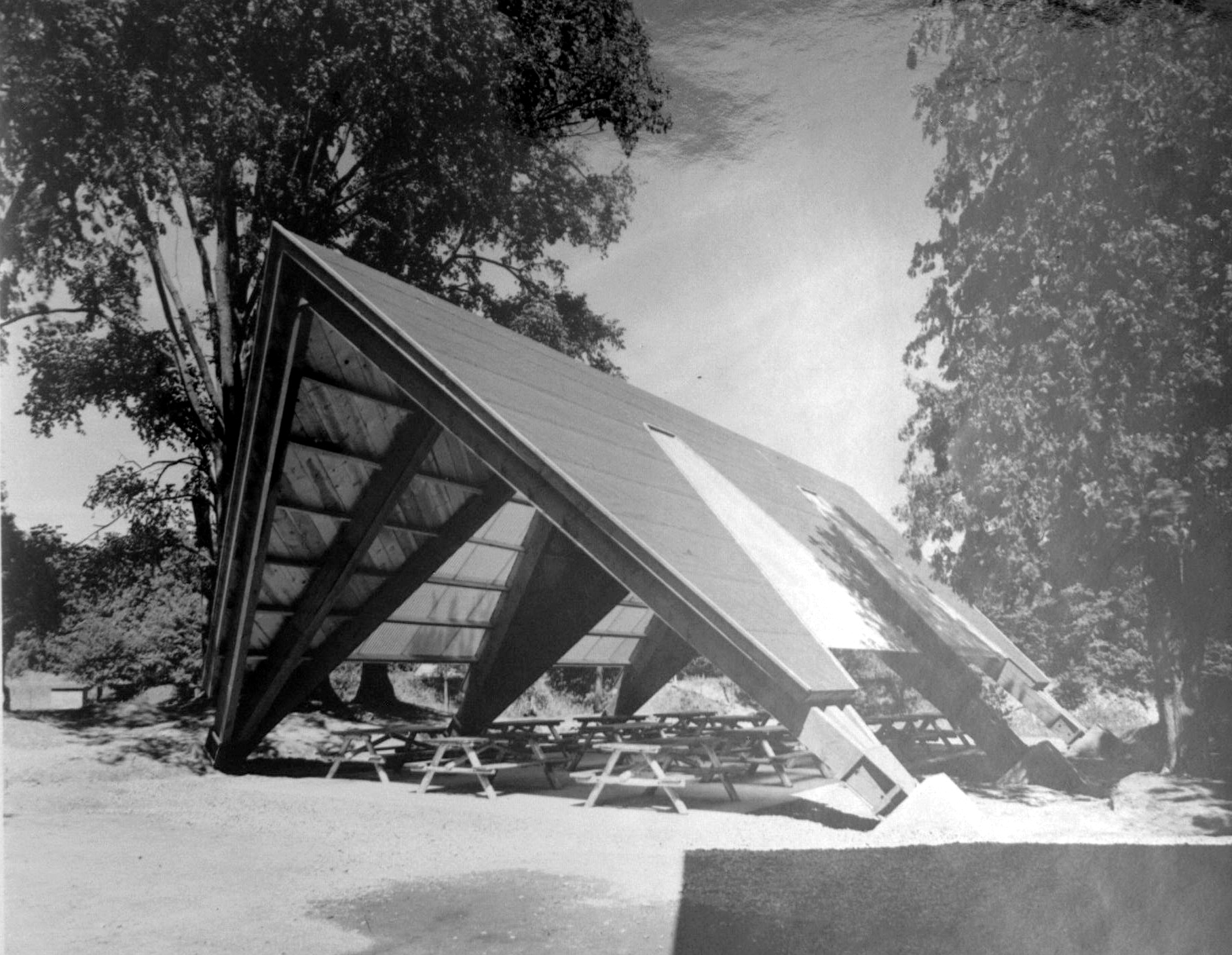
As originally constructed, the A-Frames were open on the sides and on each end. Revisions were made several years later to fully close the buildings.
The following images are from the architect’s original documents housed at the Toronto Archives.
Preliminary design concept:
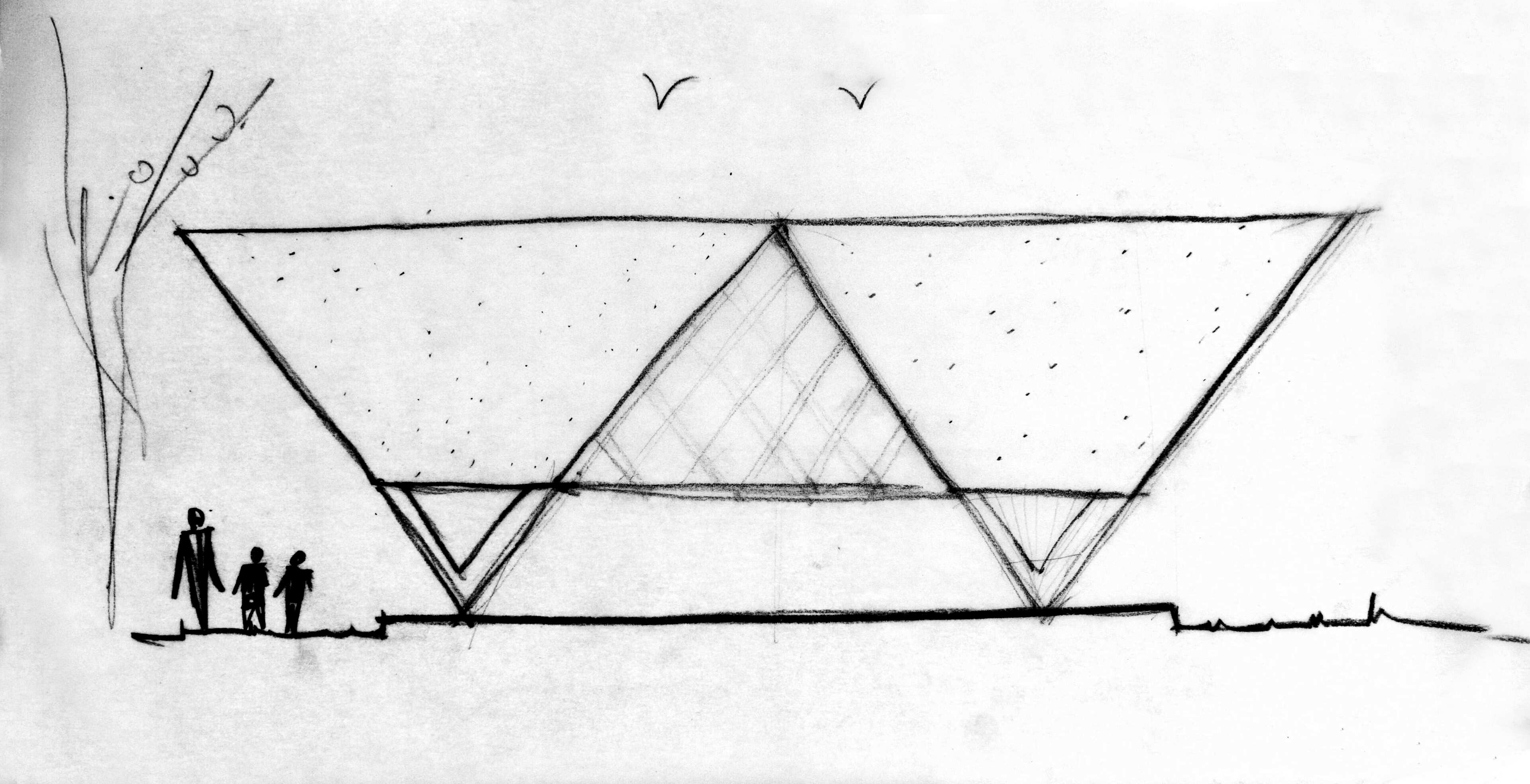
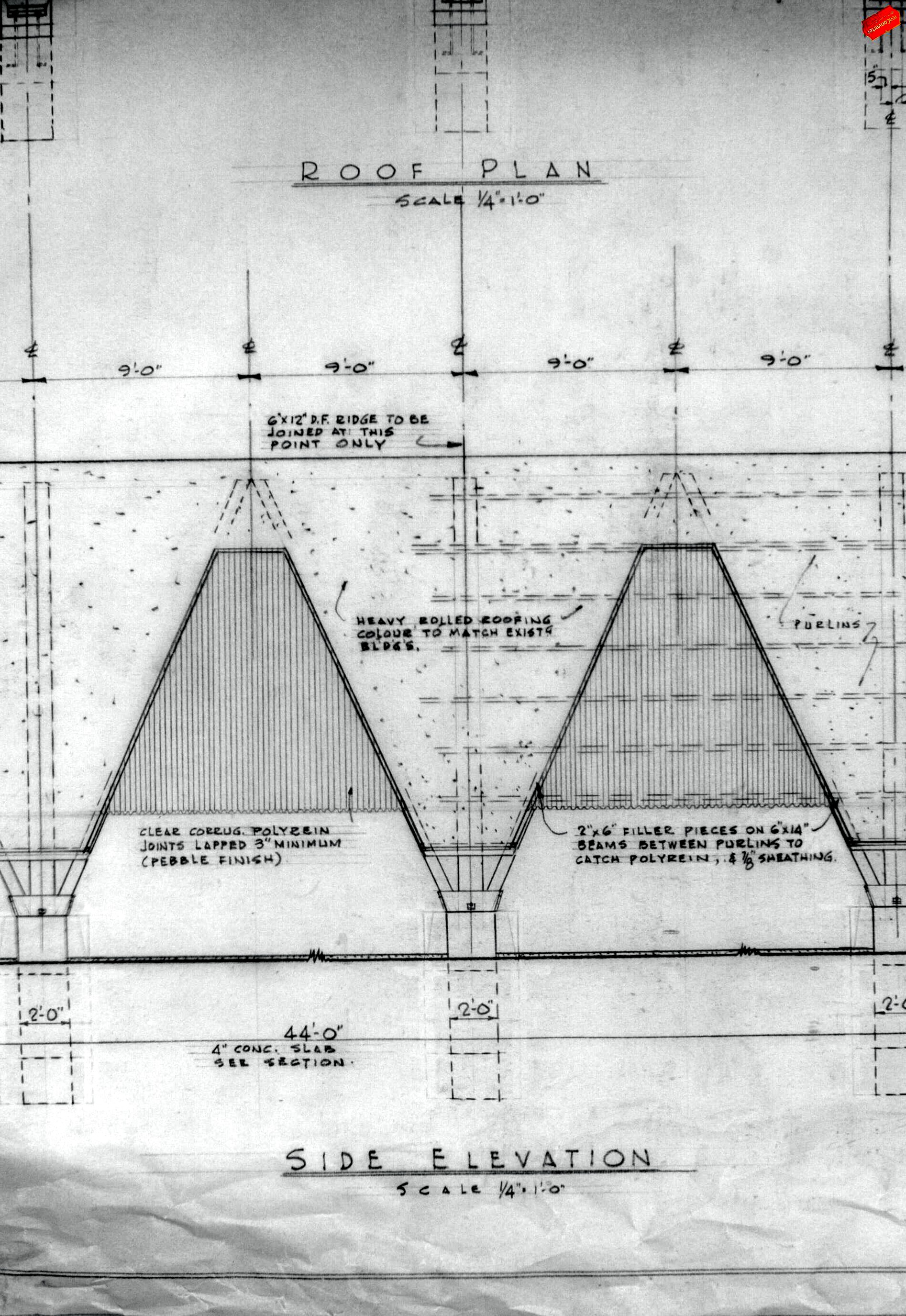
Original Blueprints:

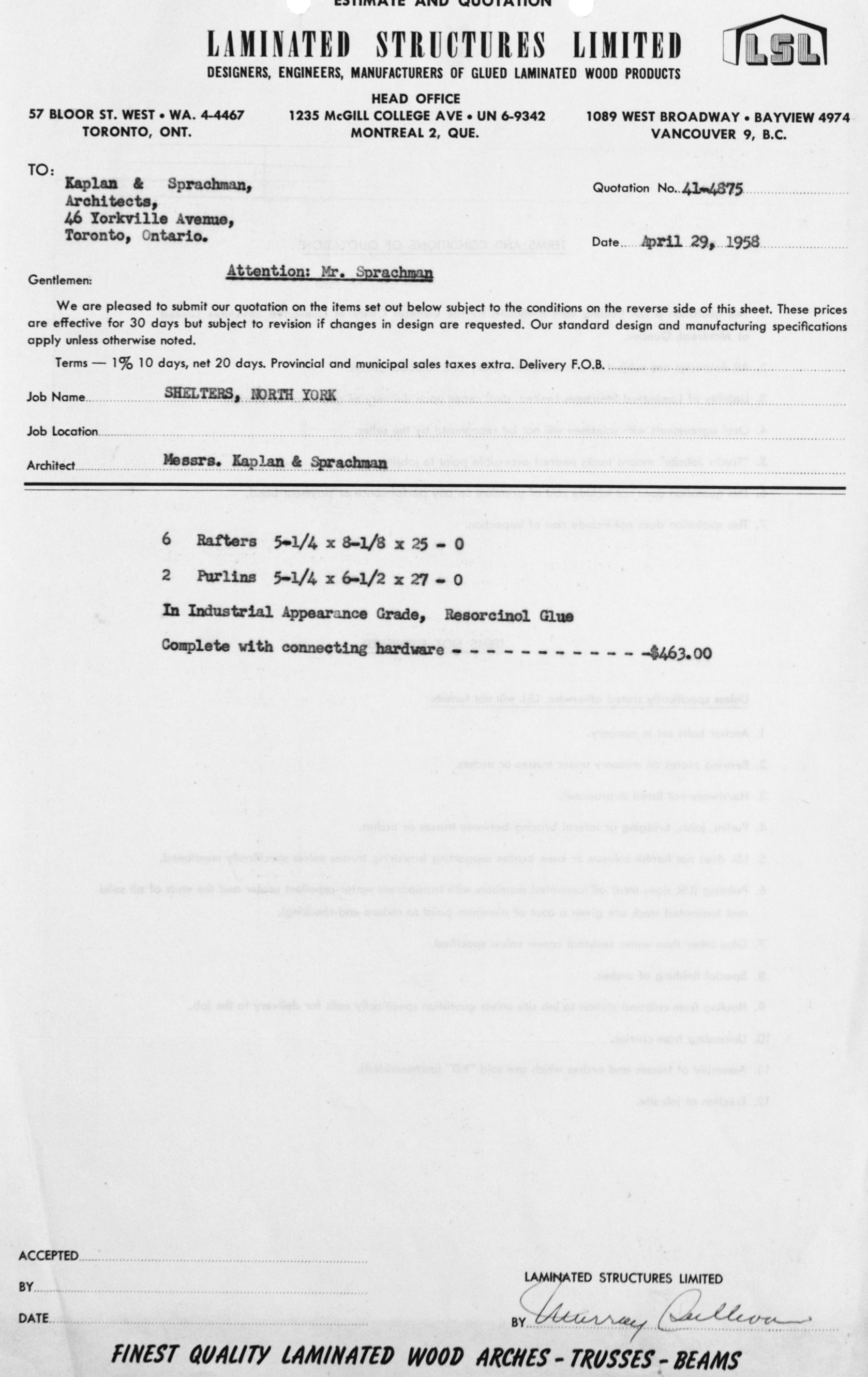
Invoice for Rafters:
Construction Letter:

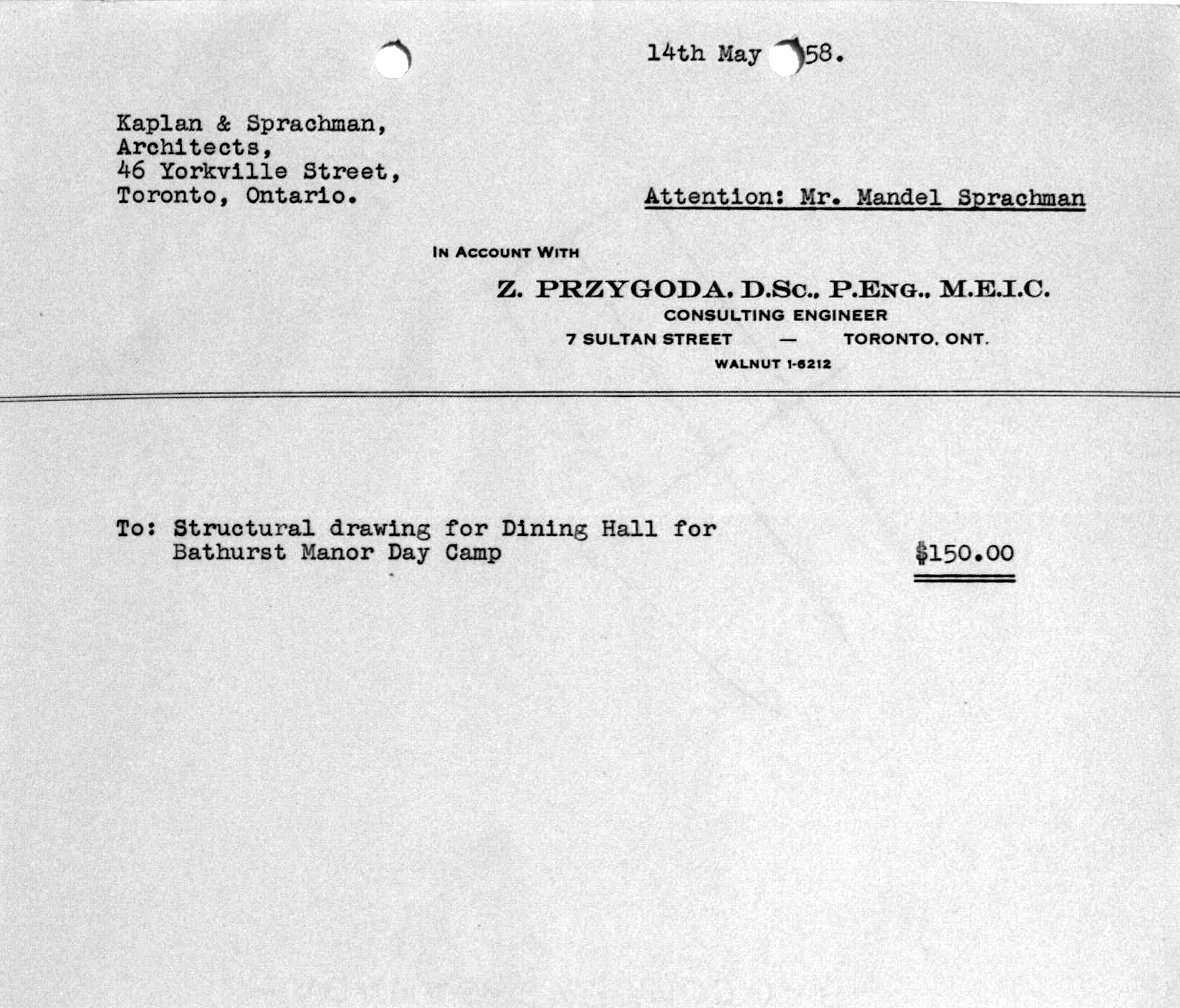
Engineering Invoice
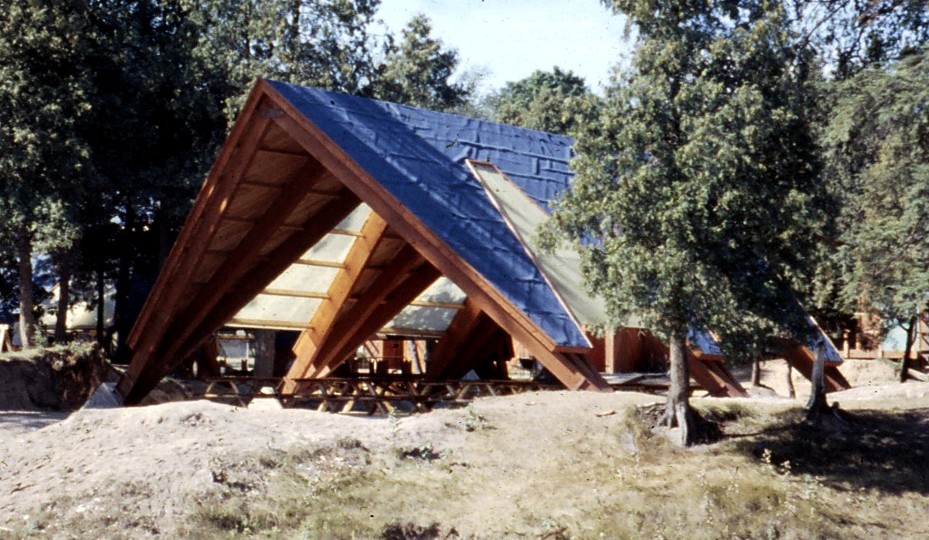
During roof installation – 1958:
After completion in 1958:
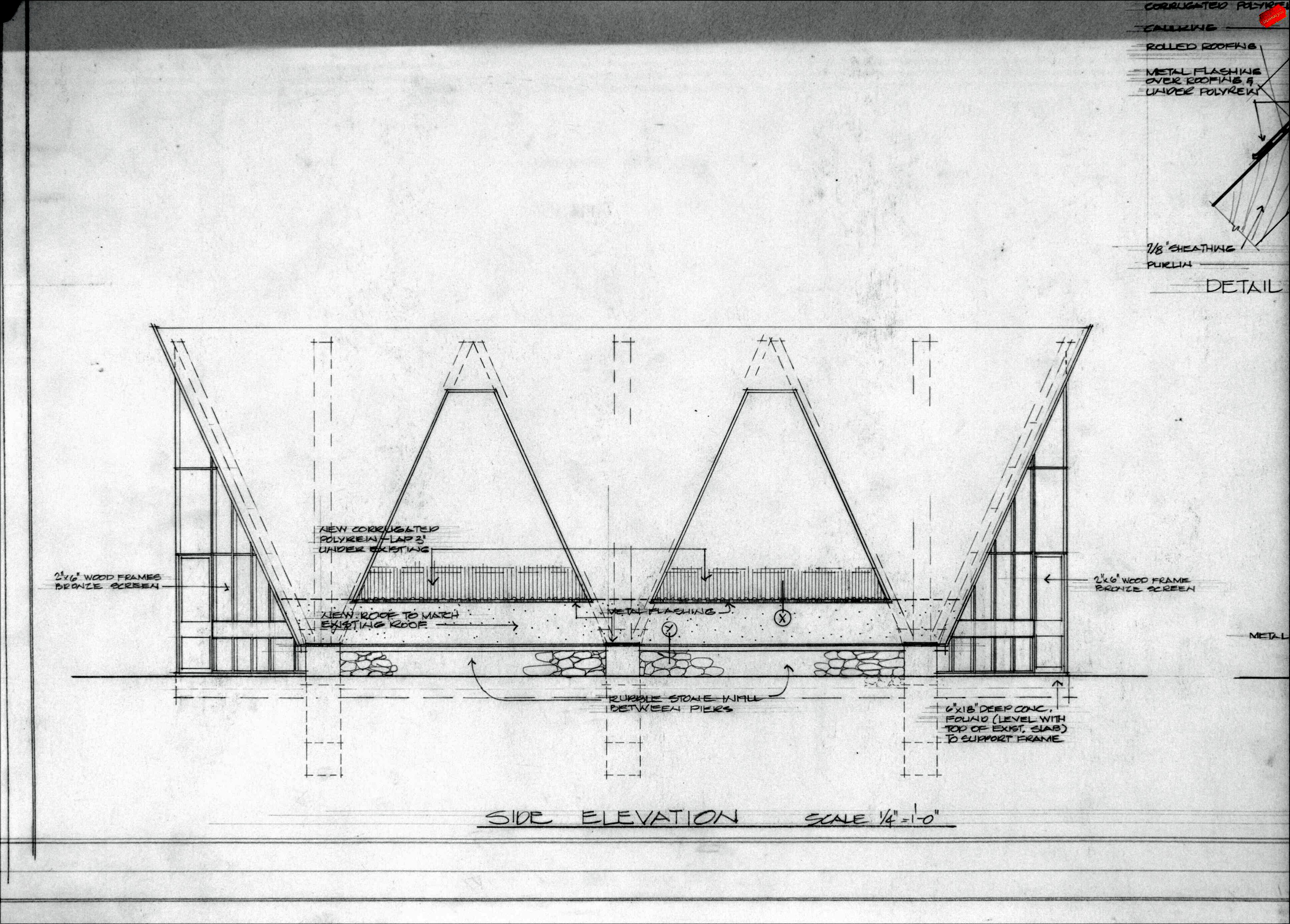
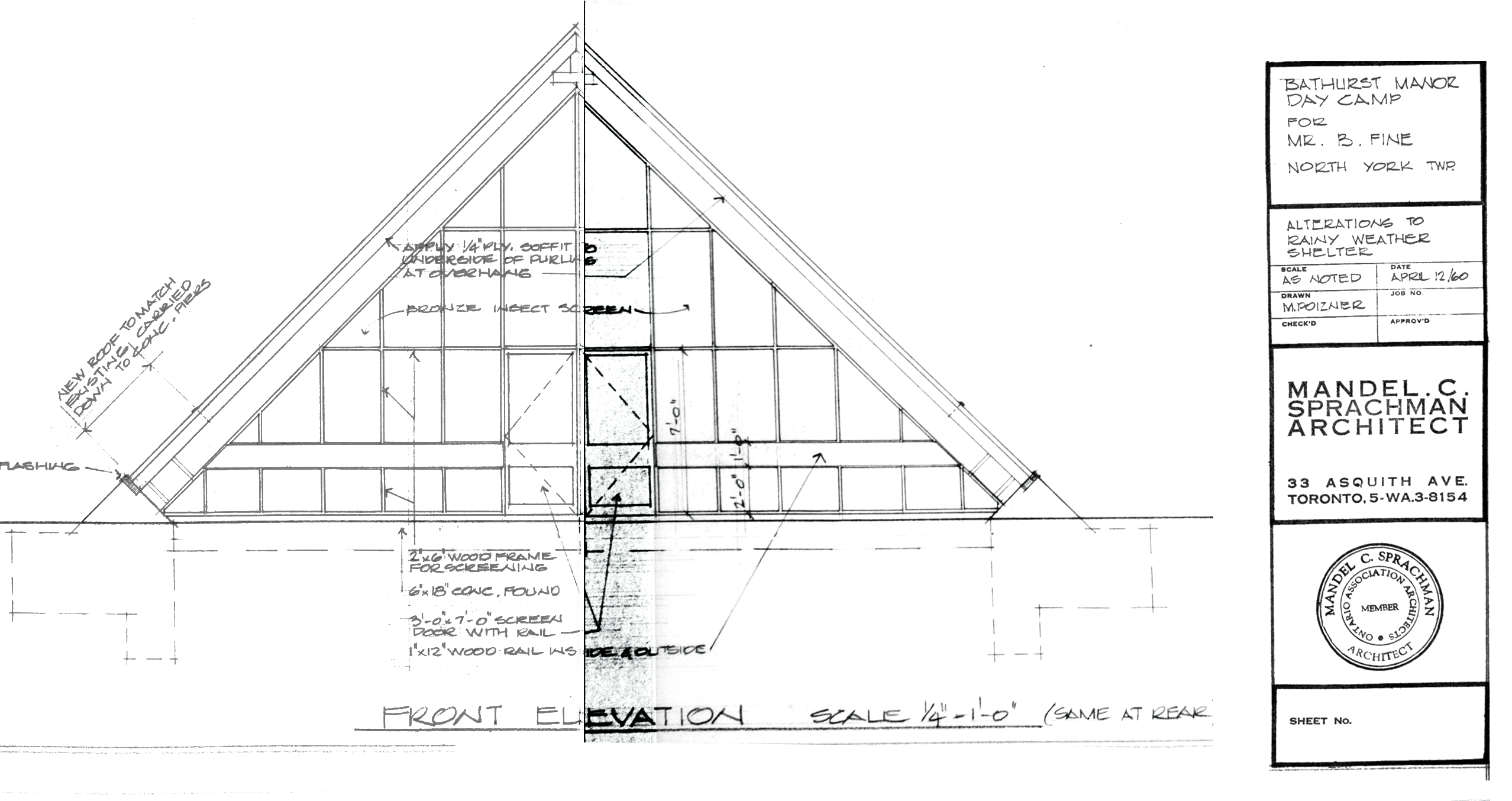
Notice that the original design left the sides open as well as the front and back. After using the structure, it became apparent that these areas needed to be closed off to provide proper shelter. In 1960, revisions to the original design were prepared by the architect. Details are shown in the following images:
The specifications called for stone to be applied to the side walls, however this was not done in order to reduce costs.
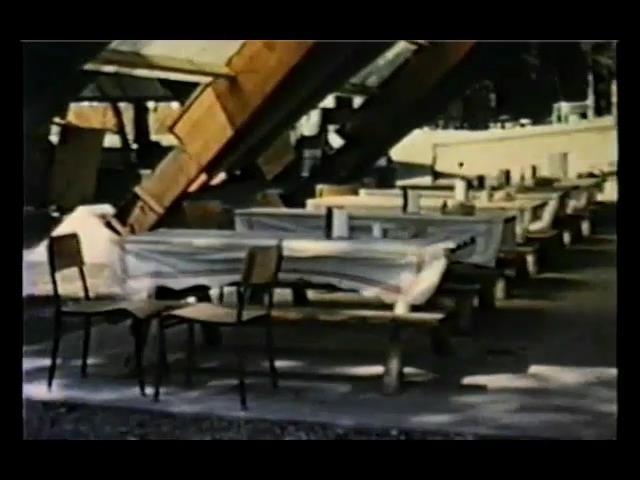
Interior view before alterations (open ends):
Similar view after alterations:
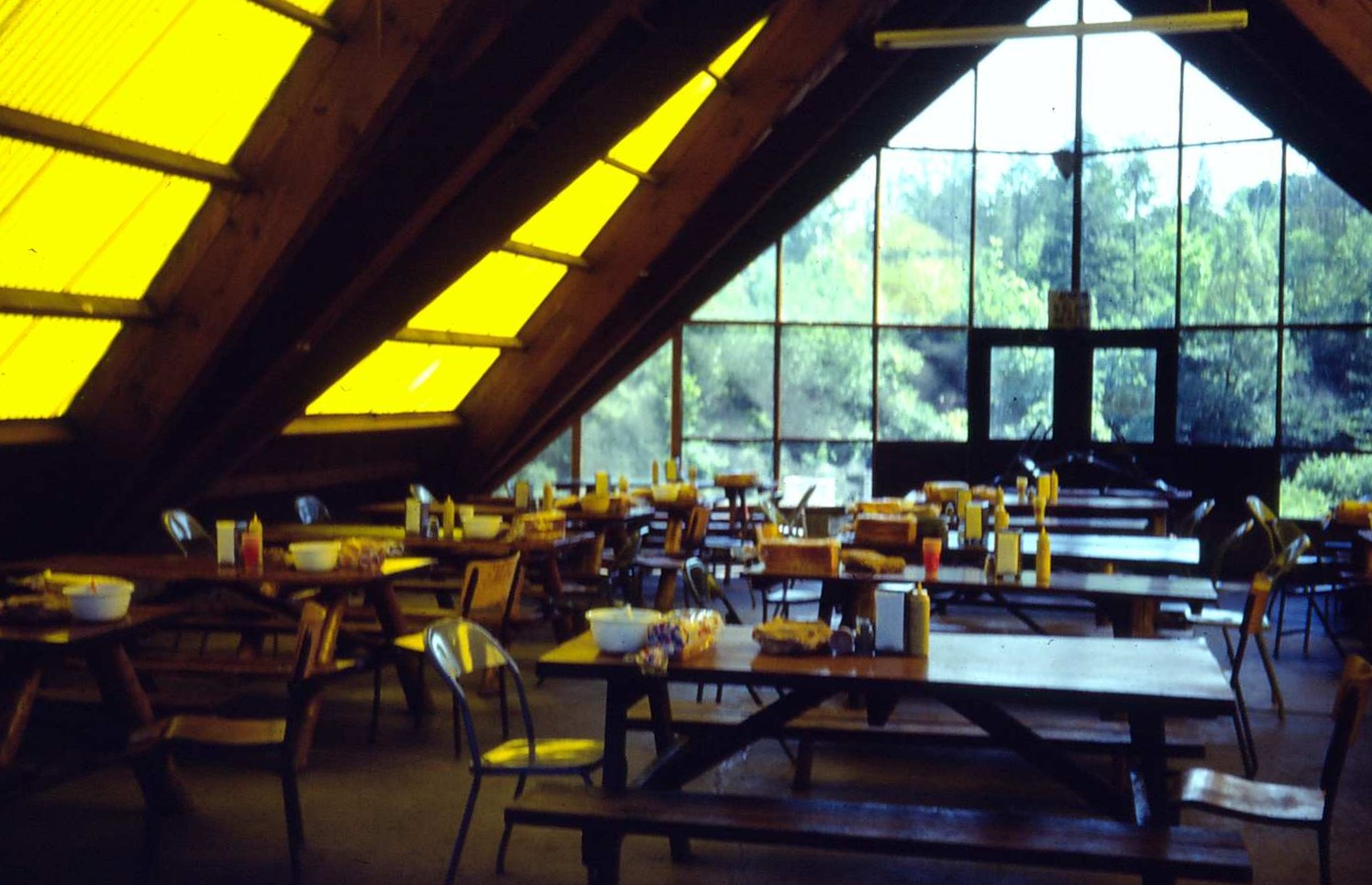
When the additions were made, the ends of the buildings were screened. However, the ends extended beyond the roofline which allowed rain to blow into the structures. After years of inconvenience, the screens were replaced with plexiglass panels in the early 70’s.
The original concept looked great on paper, but the design evolved based on trial and error rather than foresight.
1965:
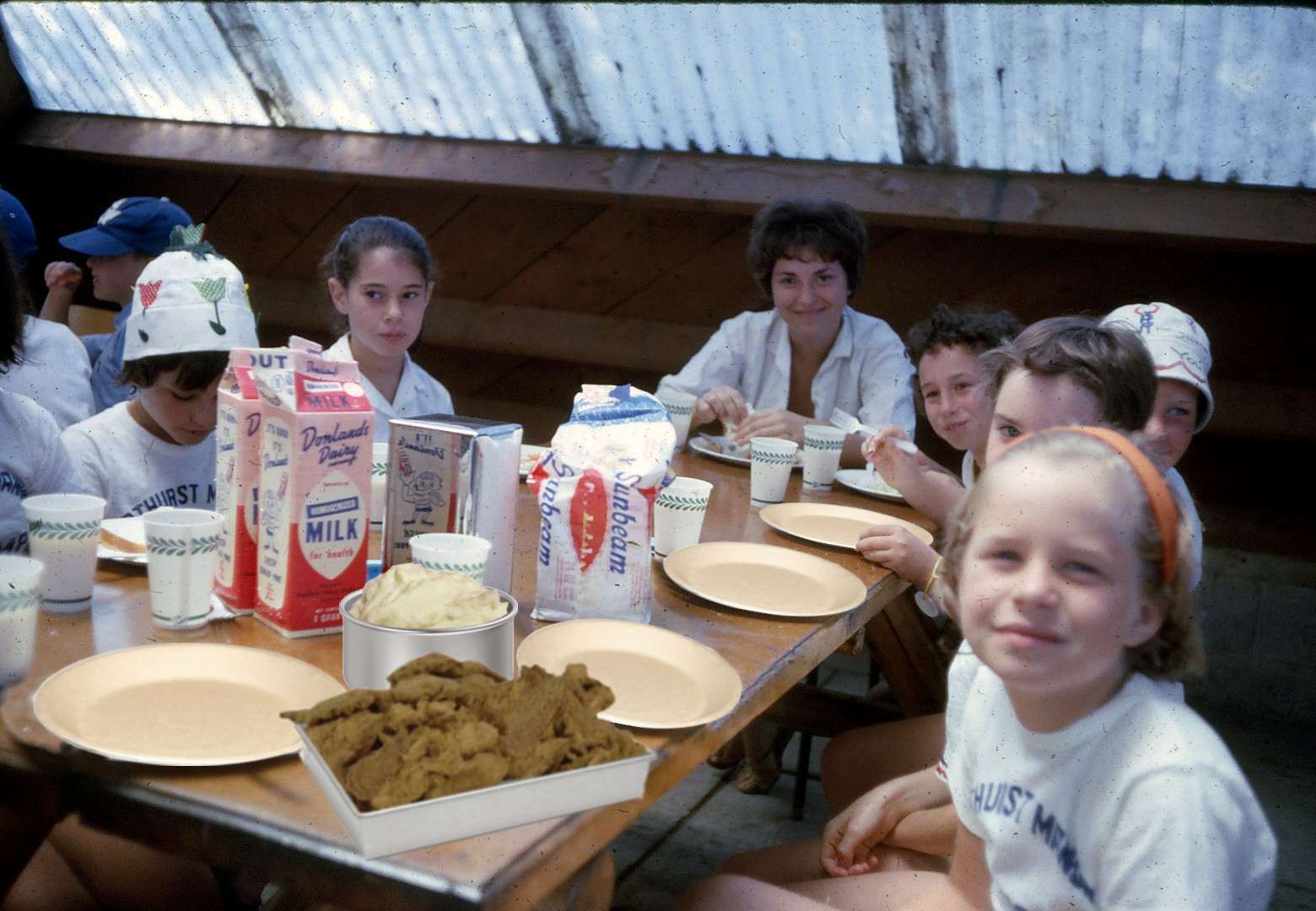
1965:
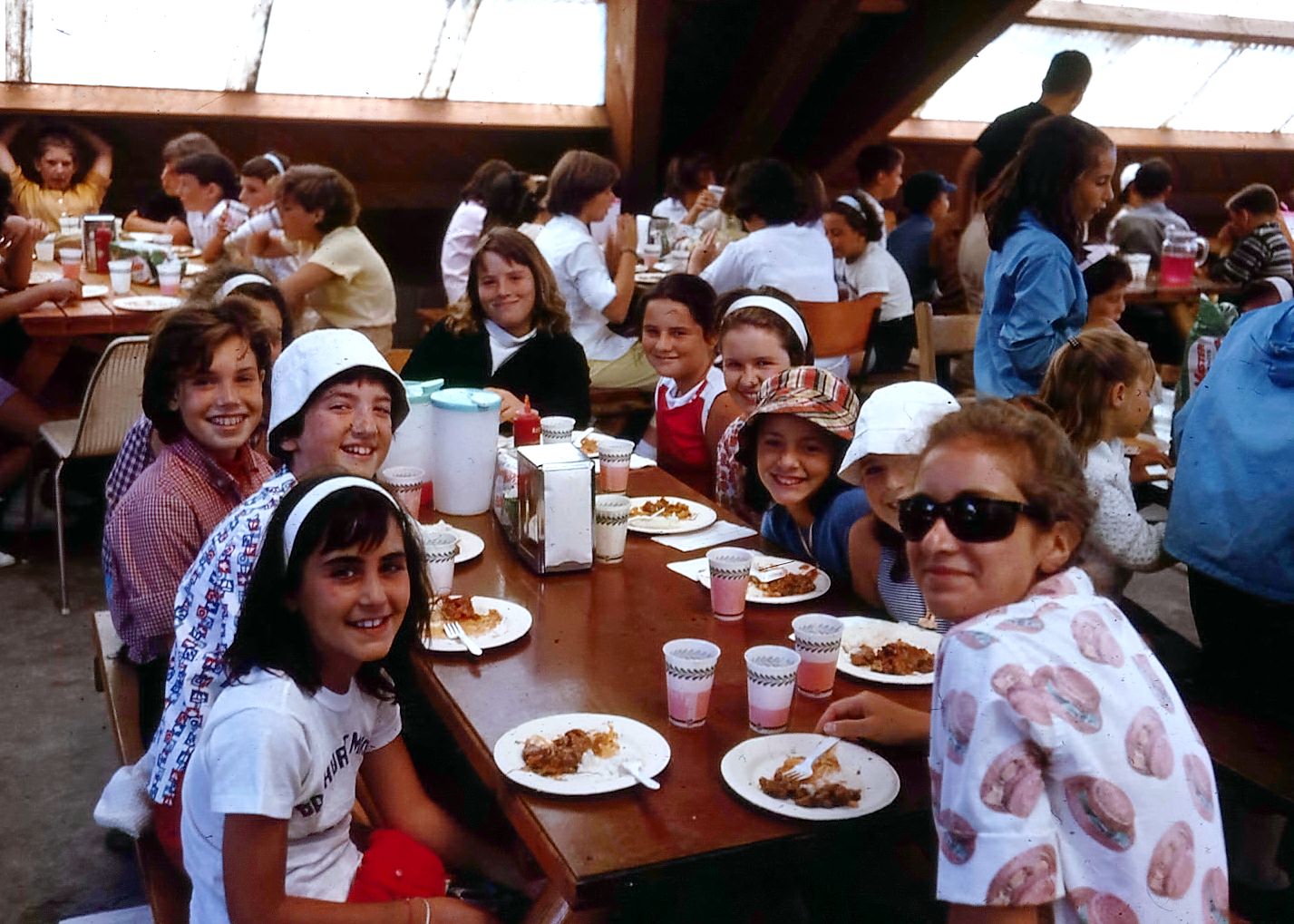
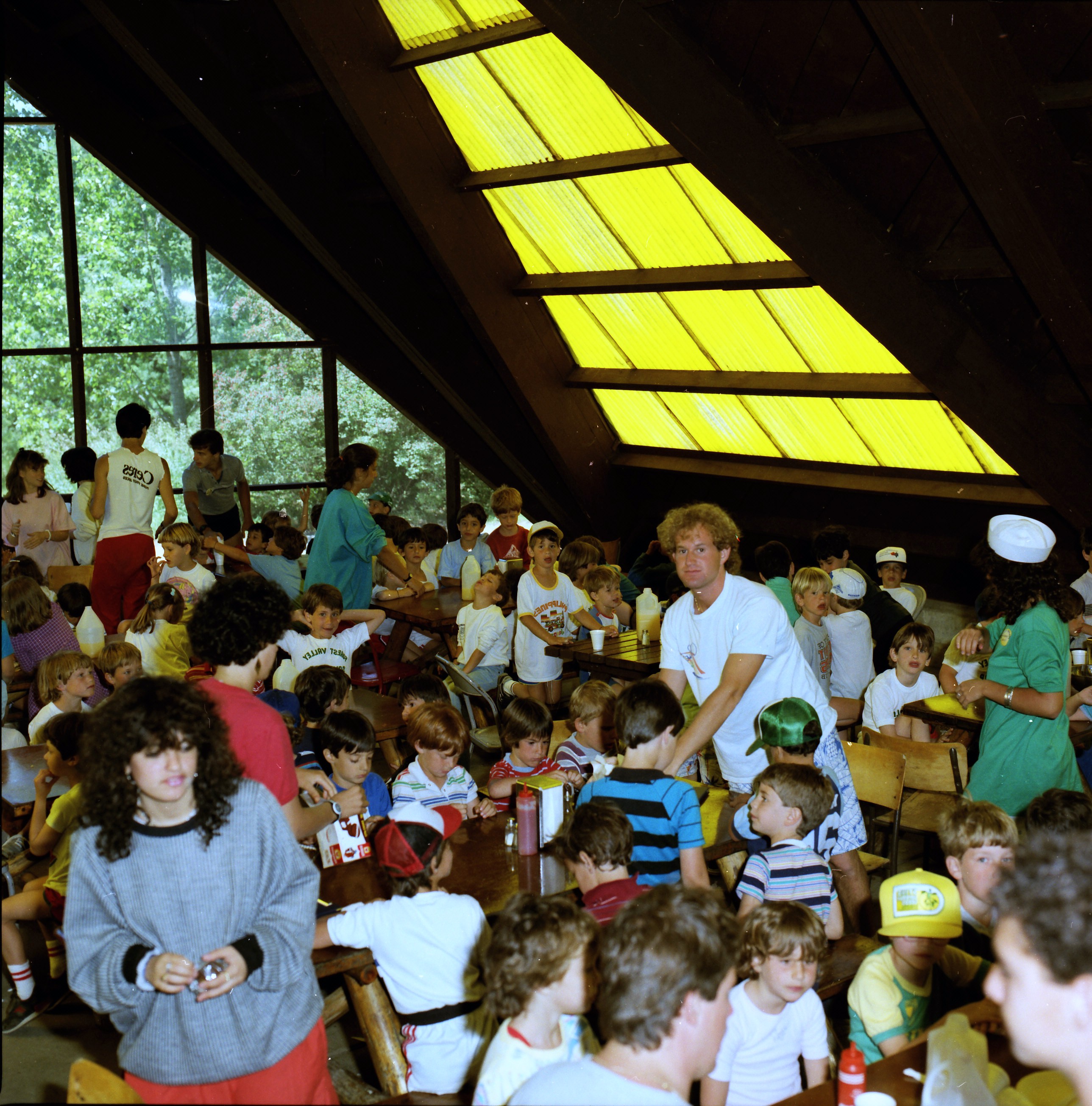
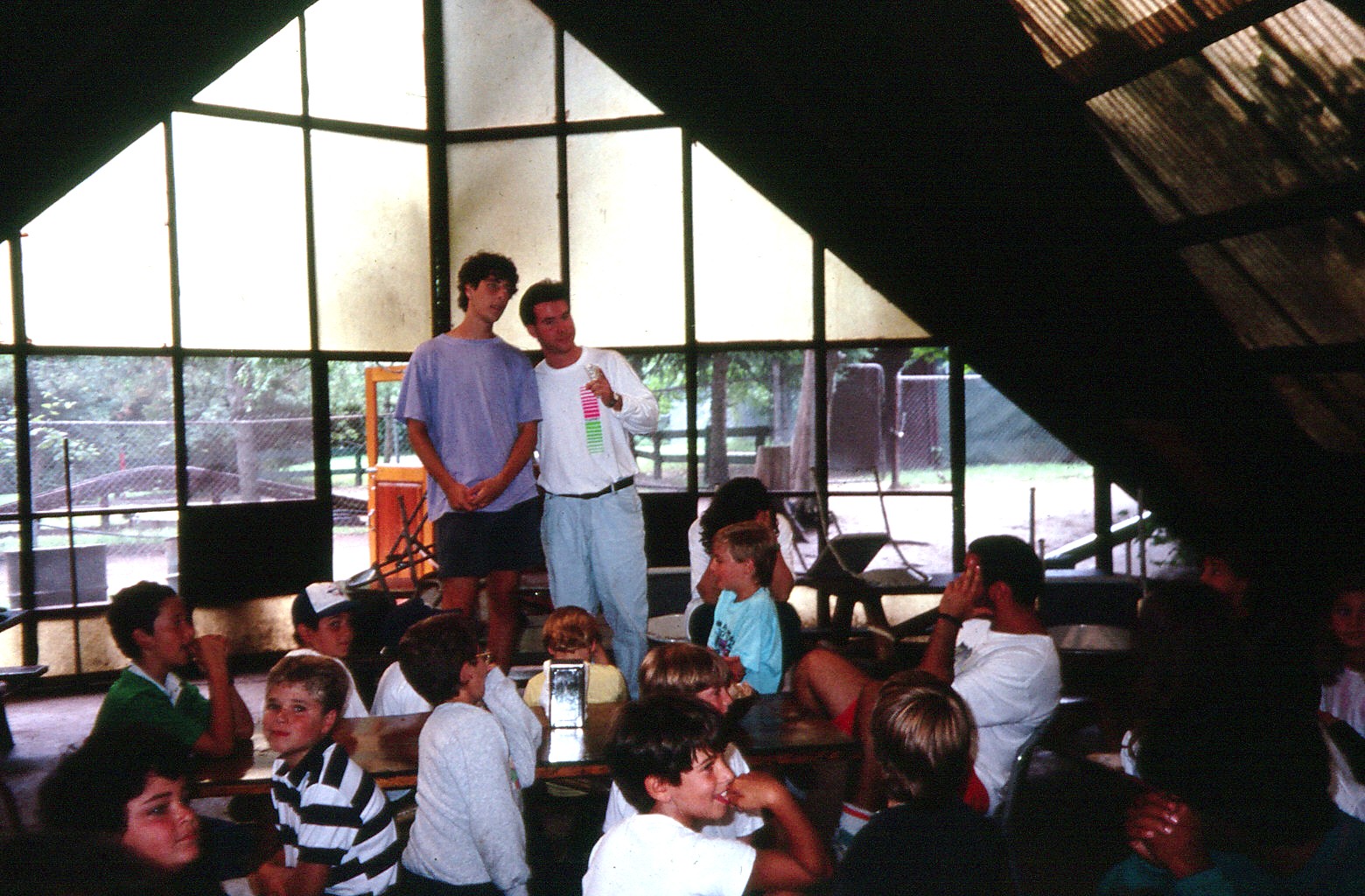
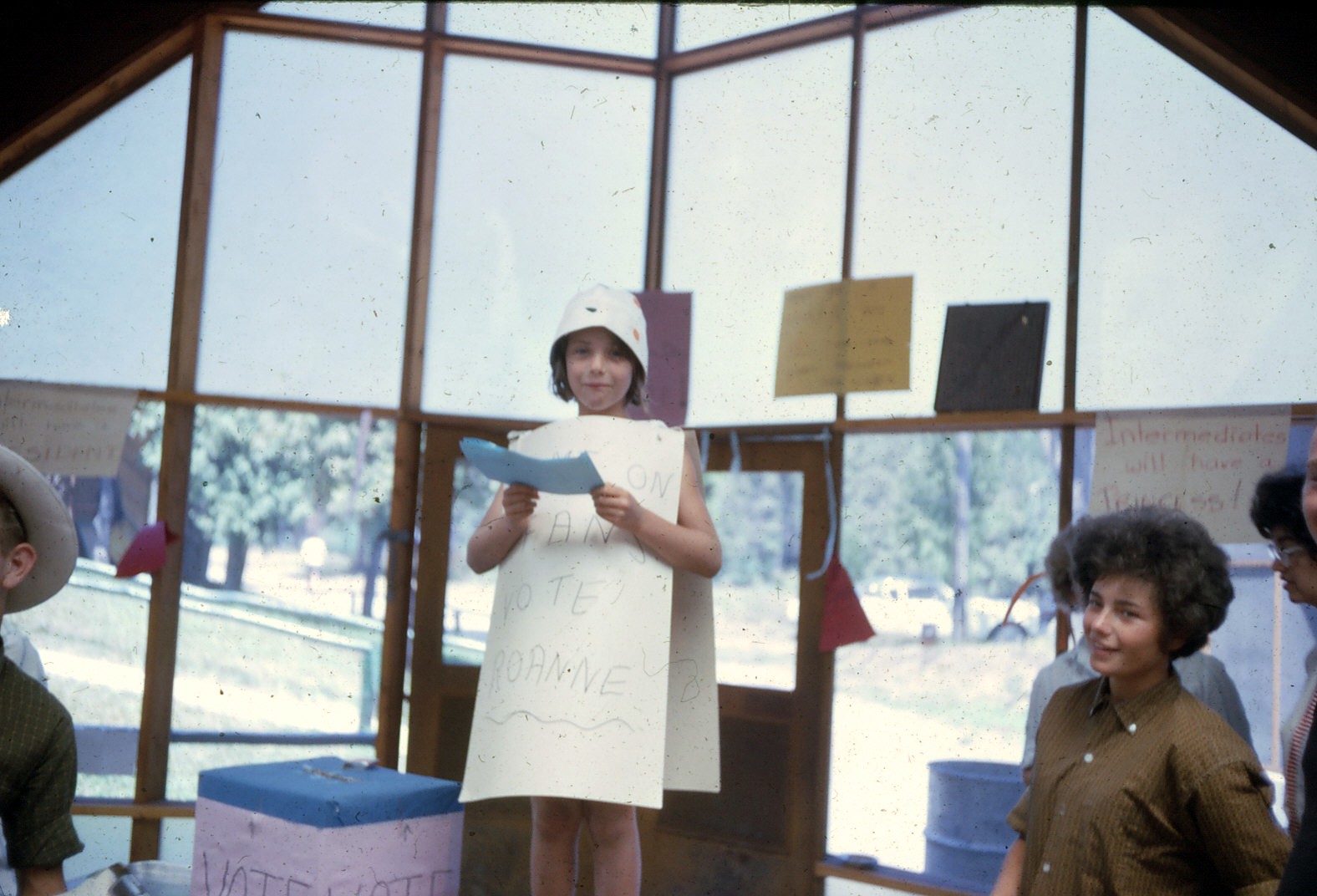
1962:

 Forest Valley Day Camp 1956 - 1993
